
Creating Career Path...

Finding Further Careers...

Costume Maker

View this career for different education levels:

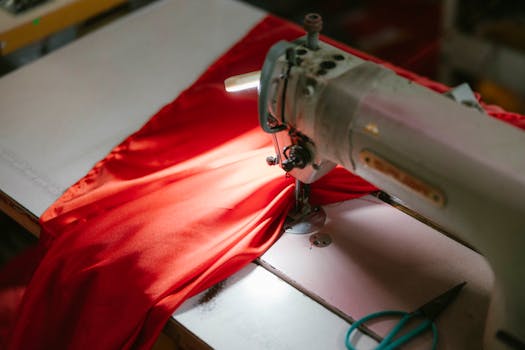
A Costume Maker in the UK is a skilled artisan responsible for the creation of costumes for various mediums, including theatre, film, television, dance, opera, and even fashion displays. This role involves translating a designer's vision and sketches into tangible garments and accessories. They work with a wide range of materials, from fine silks to robust leathers, and employ diverse techniques such as cutting, draping, sewing, tailoring, pattern cutting, and embellishment. The work of a Costume Maker is highly detailed and requires precision, creativity, and problem-solving skills. They often work closely with costume designers, production teams, and performers to ensure costumes are not only aesthetically accurate to the design and historical period (if applicable) but also comfortable, durable, and functional for the wearer's performance. Many roles are project-based or freelance, requiring individuals to be adaptable and manage their own time and client relationships effectively.

Costume Maker

Flag Media

Please select a reason for flagging this content.

📊 Statistics

Average Salary (UK)

Starting salaries for Costume Makers in the UK typically range from 18,000 to 22,000 GBP per year. With experience, this can increase to 25,000 to 35,000 GBP, and highly experienced or specialist makers in film/TV can earn 40,000 GBP or more.

Job Outlook (UK)

The costume making field in the UK is competitive, often project-based, and relies heavily on the success of the arts, entertainment, and fashion industries. While specific 'number of positions' statistics are hard to pinpoint, the demand is often tied to productions in theatre, film, television, and major fashion houses, with roles frequently advertised by production companies, costume houses, and design studios.

Typical Working Hours

Working hours for Costume Makers can be variable. While standard hours are often 9am-5pm, project deadlines, especially in film or theatre productions, can demand longer and irregular hours, including evenings and weekends, particularly during fittings and production run-ups. Freelance work offers more flexibility but less stability.

🚀 Careers in this path

Flag Media

Please select a reason for flagging this content.

Costume Designer

Focuses on the conceptualisation and design of costumes for theatre, film, TV, or live performance, often involving research, sketching, fabric selection, and working closely with directors and production teams.

Flag Media

Please select a reason for flagging this content.

Wardrobe Assistant

Works behind the scenes in theatre, film, or TV to manage, maintain, and organise costumes during production. This often involves assisting actors with changes, carrying out repairs, and ensuring continuity.

Flag Media

Please select a reason for flagging this content.

Costume Buyer

Specialises in sourcing and purchasing costumes, fabrics, and accessories for productions. This role requires excellent negotiation skills, an understanding of budgets, and an eye for period accuracy or specific design needs.

Foundation & Skill Building

Develop Core Sewing Skills

Master fundamental hand and machine sewing techniques, which are crucial for costume making.

Start by practising basic stitches, seams, and closures (zips, buttons, poppers). Familiarise yourself with different fabric types and how they behave. Consider taking introductory sewing courses at a local college, community centre, or through online tutorials. Practice on personal projects like simple garments or alterations to build confidence and precision.

Gain Design & Pattern Knowledge

Understand the principles of costume design, pattern drafting, and garment construction.

Learn about historical costume periods, fabric properties, colour theory, and how to interpret a design brief. Explore pattern cutting techniques, from modifying commercial patterns to drafting your own from scratch. Understanding how garments are constructed will be invaluable, so look into books, workshops, or online resources dedicated to fashion design and garment technology.

Build a Portfolio of Work

Create a collection of your work to showcase your skills and creativity to potential employers or educators.

Your portfolio should feature a range of projects demonstrating your sewing, design, and pattern-making abilities. Include photographs of finished costumes, design sketches, fabric swatches, and even mock-ups or process photos. Document personal projects, university coursework, or voluntary work. Aim for variety, showing different styles, periods, and construction challenges.

Education & Specialisation

Pursue Higher Education

Enrol in a relevant degree or diploma programme to gain in-depth knowledge and industry connections.

Consider a BA (Hons) in Costume Design, Costume Production, or Fashion and Textiles. These courses will provide comprehensive training in design, construction, historical research, and professional practices. Look for programmes that offer practical experience, industry placements, and strong links with theatre or film production companies. University fairs and online research are great starting points.

Specialise in an Area

Identify and develop expertise in a particular niche within costume making, such as historical, theatrical, or film costumes.

While a broad skill set is valuable, specialising can help you stand out. You might focus on corsetry, tailoring, millinery, costume breaking down and distressing, or working with specific materials like leather or period fabrics. Attend specialist workshops, take advanced courses, or seek out mentors who excel in your chosen area. This focus will refine your craft and define your unique selling proposition.

Undertake Work Experience

Gain practical, hands-on experience in a professional costume department.

Look for internships, work placements, or voluntary roles with theatre companies, film sets, television studios, opera houses, or even independent designers. This experience is vital for understanding the pace, demands, and collaborative nature of the industry. It also provides networking opportunities and a chance to apply your academic knowledge in a real-world setting. Even a short placement can significantly boost your CV.

Career Launch & Growth

Network and Build Contacts

Connect with professionals in the industry to open doors for opportunities and collaborations.

Attend industry events, trade shows, graduate showcases, and online forums. Join professional organisations like the Guild of British Theatre Designers or the Costume Society. Building a network is crucial in a freelance-heavy industry; many jobs come through referrals. Be proactive in reaching out to people whose work you admire and always follow up after meeting new contacts.

Seek Entry-Level Positions

Apply for junior roles to get your foot in the door and gain further professional experience.

Look for roles such as Wardrobe Assistant, Costume Assistant, Dresser, or Trainee Costume Maker. These positions, often freelance or fixed-term contracts, are excellent for learning the practicalities of a working costume department, from costume breakdown to on-set dressing. Be prepared to start at the bottom and work your way up, showing enthusiasm and a willingness to learn.

Continuous Professional Development

Stay updated with new techniques, materials, and industry trends to remain competitive.

The costume industry is constantly evolving. Attend masterclasses, workshops, and short courses to learn new skills like digital pattern cutting, advanced tailoring, or sustainable costume practices. Follow industry publications, blogs, and social media for inspiration and news. Continuously refining your craft and adapting to new technologies or historical research findings will ensure your skills remain relevant and highly sought after.

🎯 View Apprenticeships

Explore relevant apprenticeships that can help you kickstart your career in Costume Maker. Apprenticeships offer hands-on experience and training while earning a wage.

Career Progressions

This page showcases various career options and the pathways to reach them. Each career listed here shares transferable skills and knowledge, making it easier for individuals to transition between them.

Your current career is highlighted to help you see how it fits into the broader landscape of potential career choices. By clicking on any career, you can learn more about it, including the training and education required to pursue it.

Remember, progressing in your career often involves further learning and training. This page provides insights into future career options as well as those that can lead up to your current one.

These career progression decisions are informed by comparing the skills and knowledge needed for different occupations, along with data on how people move between them. Explore the possibilities and discover the exciting journey ahead in your career!

Sample Qualifications

While 'Costume designer' involves design, a 'Costume Maker' primarily constructs the costumes, often from existing designs or patterns. A 'Prop maker' has a very similar skillset involving crafting three-dimensional items for performance or display, which aligns closely with the hands-on fabrication aspect of costume making.

How to become

You can get into this job through:

  • a university course
  • a college course
  • an apprenticeship
  • working towards this role
  • applying directly

University

You could take a foundation degree or degree in:

  • prop making
  • scenic arts
  • production arts
  • art and design

The Federation of Drama Schools has information on performance-based higher education courses in UK conservatoires that include production arts.

Entry requirements

You'll usually need:

  • a foundation diploma in art and design
  • at least 1 A level, or equivalent, for a foundation degree
  • 2 to 3 A levels, or equivalent, for a degree

More Information

College

You can do a college course that can give you some of the practical skills needed to get a trainee job. 

Courses include:

  • art and design
  • creative crafts
  • 3D design and crafts
  • technical theatre
  • carpentry

Entry requirements

Entry requirements for these courses vary.

More Information

Apprenticeship

You could apply to do a Props Technician Level 3 Advanced Apprenticeship.

The apprenticeship takes between a year and a half  and 2 years to complete. It is a mix of workplace learning and time spent with a training provider.

You might apply to do a Model Maker Level 6 Degree Apprenticeship. Training includes skills in physical and digital model making, building prototypes and creating mock-ups.

Entry requirements

You'll usually need:

  • 5 GCSEs at grades 9 to 4 (A* to C), or equivalent, including English and maths, for an advanced apprenticeship
  • 4 or 5 GCSEs at grades 9 to 4 (A* to C) and A levels, or equivalent, for a higher or degree apprenticeship

More Information

Work

You may start by working in a theatre as a props assistant or stage technician, then move into prop making through training and promotion. In film and TV you would start as an art department trainee.

Volunteering

Volunteering for student productions, festivals and amateur theatre is a good way to get experience and make contact with people working in the industry. This could help when searching for jobs.

Look out for work experience opportunities with theatres and production companies. Sometimes these are advertised under their vacancies section or on social media. They may also run workshops and short schemes for people to learn more about working in the creative arts.

Direct Application

You may be able to apply directly for jobs if you have training and experience in related areas like graphic design, furniture making or model making.

More Information

Career tips

Your creative talent and model making skills. along with experience, can often be as important as formal qualifications.

You can create a portfolio of your work to show employers your range of skills.

Further information

You can find out more about working in props from Get Into Theatre and ScreenSkills.

Interested in More Career Paths?

Explore other careers or use our AI to discover personalised paths based on your interests.

Stay connected

Join our newsletter to stay up to date on features and releases

Address
Developing Experts Limited
Exchange Street Buildings
35-37 Exchange Street
Norwich
NR2 1DP
UK

Phone
01603 273515

Email
[email protected]

Copyright 2026 Developing Experts, All rights reserved.
