
Creating Career Path...

Finding Further Careers...

Costume Maker

View this career for different education levels:

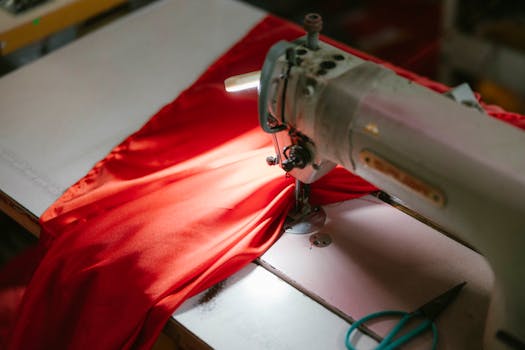
Imagine a magical job where you get to bring characters to life by making their clothes! A Costume Maker does exactly that. They create amazing outfits for actors in plays, TV shows, and movies. This job involves lots of creativity and skill. You might be asked to sew a glittering fairy dress, a brave knight's tunic, or even an astronaut's suit! You will need to be good at drawing, cutting fabric, and using a sewing machine. Sometimes you even get to invent costumes from scratch, while other times you follow special drawings called designs. It is a bit like being a fashion designer, but for characters in stories. Being a Costume Maker is a very hands-on job. You might start by looking at pictures and talking about what the character needs to wear. Then you choose the right fabrics, measure the actor, and start cutting and sewing. Sometimes you even add special details like glitter, buttons, or embroidery to make the costume perfect. You have to make sure the costume fits well and that the actor can move easily in it. It is a super exciting job for someone who loves clothes, art, and helping stories come alive!

Costume Maker

Flag Media

Please select a reason for flagging this content.

📊 Statistics

Starting Salary

A new Costume Maker in the UK might earn around 18,000 to 22,000 pounds per year. This is like getting pocket money for doing something you love!

Experienced Salary

With more experience, a Costume Maker in the UK could earn between 25,000 and 35,000 pounds per year. If you become really good, you could earn even more!

Job Opportunities

There are usually many exciting opportunities for Costume Makers in different places like theatres, TV shows, and film sets all across the UK. It is a creative job with different projects popping up all the time.

🚀 Careers in this path

Flag Media

Please select a reason for flagging this content.

Children's Book Illustrator

If you love designing costumes, you could draw pictures for children's story books. You'd get to create exciting characters and scenes for children to enjoy.

Flag Media

Please select a reason for flagging this content.

Toy Designer

Just like designing costumes, you could design new toys for children to play with. You'd get to think about what makes a toy fun and how it should look and feel.

Flag Media

Please select a reason for flagging this content.

Puppet Maker

Making costumes is a bit like making puppets. You could design and build puppets for shows or films, making sure they look just right for their characters.

Learning and Playing

Get Creative with Clothes

Start by having fun with clothes at home! You can use old clothes, fabric scraps, or even paper to make new outfits for your toys or yourself.

You don't need fancy tools to start. Ask a grown-up if you can have some old T-shirts, socks, or pillowcases. You can use child-safe scissors to cut shapes, and maybe a bit of tape or glue to stick things together. Imagine what kind of outfit your favourite teddy bear would like to wear and try to make it!

Draw Your Ideas

Before you make something, it's a great idea to draw what you imagine it will look like. You can draw costumes for your favourite characters or dream up new ones.

Grab some pencils, crayons, or pens and a piece of paper. Try drawing a superhero costume, a fairy dress, or even an alien outfit! Think about the colours and shapes you want to use. This helps you plan your design, just like real costume makers do.

Learn About Different Fabrics

Touch and feel different types of fabric like soft cotton, smooth silk, or rough hessian. Think about what kind of fabric would be best for different costumes.

Ask a grown-up if you can look at different clothes or fabric scraps around the house. Feel how some fabrics are soft and stretchy, others are smooth and shiny, and some are thick and warm. Think about which fabric would be best for a superhero's cape (maybe something flowing!) or a monster's fur (something fluffy!).

Hands-On Fun

Try Simple Sewing

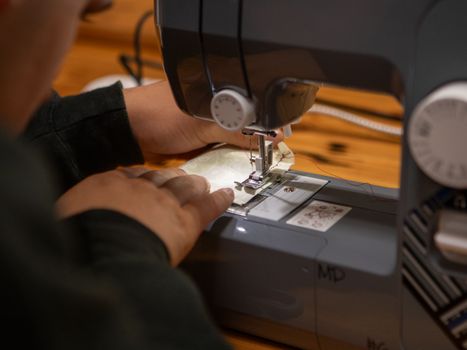
With a grown-up's help, you can learn to do simple sewing. Start with big stitches and easy projects like making a little bag or a cushion for a doll.

A grown-up can show you how to thread a needle and make simple stitches by hand. You could start by sewing two pieces of felt together to make a small pouch, or adding buttons to a piece of fabric. This helps you get used to using a needle and thread safely, which is a big part of being a costume maker.

Visit a Theatre or Museum

Go to a play at a theatre or visit a museum with a costume display. See how costumes are made and what they look like up close.

When you watch a play, pay attention to what the actors are wearing. How do their clothes help tell the story? At a museum, you might see old costumes and notice the details like embroidery or special fabrics. This helps you understand how costumes are used to make characters look special and real.

Help with Dress-Up

Offer to help your friends or family with dress-up games, school plays, or fancy dress parties. You can help choose outfits or even make small accessories.

If there's a school play or a themed party, see if you can help. You could suggest what kind of clothes would be good for a character, or even help make a simple prop like a hat from paper or a magic wand. This gives you practice putting together costumes and seeing how they work in real life.

Growing Your Skills

Join a Craft Club

Look for a craft club at school or in your local community where you can learn more about sewing, textiles, or other creative skills.

A craft club is a great place to learn new things and meet other children who love making things. You might learn to knit, crochet, or even use a simple sewing machine safely with an adult's help. These skills are very useful for a costume maker!

Read About Costumes

Find books about famous costumes from history, films, or theatre. Learn about how different costumes were made and why they were chosen.

Your local library will have lots of books! Look for books about fashion history, theatre costumes, or even how costumes are made for Disney movies. You'll learn about different styles, colours, and materials used over many years, which will give you lots of ideas for your own creations.

Create a 'Costume Box'

Start collecting interesting bits and bobs like fabric scraps, ribbons, buttons, and old jewellery in a special box. These can be used for future costume projects.

Ask a grown-up if you can keep a box for your costume treasures. Whenever you find an interesting piece of fabric, a colourful ribbon, or a unique button, pop it in your box. This is like having your own little costume workshop materials ready for when inspiration strikes!

🎬 Useful Videos

🎯 View Apprenticeships

Explore relevant apprenticeships that can help you kickstart your career in Costume Maker. Apprenticeships offer hands-on experience and training while earning a wage.

Career Progressions

This page showcases various career options and the pathways to reach them. Each career listed here shares transferable skills and knowledge, making it easier for individuals to transition between them.

Your current career is highlighted to help you see how it fits into the broader landscape of potential career choices. By clicking on any career, you can learn more about it, including the training and education required to pursue it.

Remember, progressing in your career often involves further learning and training. This page provides insights into future career options as well as those that can lead up to your current one.

These career progression decisions are informed by comparing the skills and knowledge needed for different occupations, along with data on how people move between them. Explore the possibilities and discover the exciting journey ahead in your career!

Sample Qualifications

While 'Costume Designer' is related, 'Costume Maker' focuses on the creation and fabrication aspect, which aligns more closely with the hands-on building and crafting duties of a Prop maker, who constructs items for productions, often from designs.

How to become

You can get into this job through:

  • a university course
  • a college course
  • an apprenticeship
  • working towards this role
  • applying directly

University

You could take a foundation degree or degree in:

  • prop making
  • scenic arts
  • production arts
  • art and design

The Federation of Drama Schools has information on performance-based higher education courses in UK conservatoires that include production arts.

Entry requirements

You'll usually need:

  • a foundation diploma in art and design
  • at least 1 A level, or equivalent, for a foundation degree
  • 2 to 3 A levels, or equivalent, for a degree

More Information

College

You can do a college course that can give you some of the practical skills needed to get a trainee job. 

Courses include:

  • art and design
  • creative crafts
  • 3D design and crafts
  • technical theatre
  • carpentry

Entry requirements

Entry requirements for these courses vary.

More Information

Apprenticeship

You could apply to do a Props Technician Level 3 Advanced Apprenticeship.

The apprenticeship takes between a year and a half  and 2 years to complete. It is a mix of workplace learning and time spent with a training provider.

You might apply to do a Model Maker Level 6 Degree Apprenticeship. Training includes skills in physical and digital model making, building prototypes and creating mock-ups.

Entry requirements

You'll usually need:

  • 5 GCSEs at grades 9 to 4 (A* to C), or equivalent, including English and maths, for an advanced apprenticeship
  • 4 or 5 GCSEs at grades 9 to 4 (A* to C) and A levels, or equivalent, for a higher or degree apprenticeship

More Information

Work

You may start by working in a theatre as a props assistant or stage technician, then move into prop making through training and promotion. In film and TV you would start as an art department trainee.

Volunteering

Volunteering for student productions, festivals and amateur theatre is a good way to get experience and make contact with people working in the industry. This could help when searching for jobs.

Look out for work experience opportunities with theatres and production companies. Sometimes these are advertised under their vacancies section or on social media. They may also run workshops and short schemes for people to learn more about working in the creative arts.

Direct Application

You may be able to apply directly for jobs if you have training and experience in related areas like graphic design, furniture making or model making.

More Information

Career tips

Your creative talent and model making skills. along with experience, can often be as important as formal qualifications.

You can create a portfolio of your work to show employers your range of skills.

Further information

You can find out more about working in props from Get Into Theatre and ScreenSkills.

Interested in More Career Paths?

Explore other careers or use our AI to discover personalised paths based on your interests.

Stay connected

Join our newsletter to stay up to date on features and releases

Address
Developing Experts Limited
Exchange Street Buildings
35-37 Exchange Street
Norwich
NR2 1DP
UK

Phone
01603 273515

Email
[email protected]

Copyright 2026 Developing Experts, All rights reserved.
