
Creating Career Path...

Finding Further Careers...

Heating Engineer

View this career for different education levels:

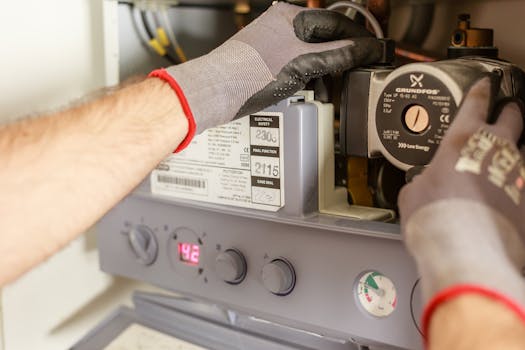
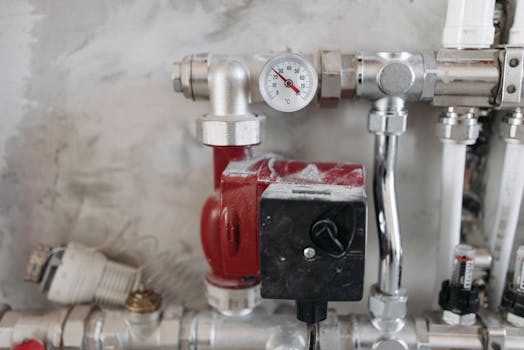
Imagine a chilly day outside. How do we keep our houses lovely and warm? That is where a Heating Engineer comes in! These clever people are like superheroes for warmth. They work with boilers, radiators, and pipes to make sure homes, schools, and offices have cosy heating and lovely hot water. They fix things when they break, like a broken boiler, and they also put in brand new heating systems when someone wants to build a new house or upgrade an old one. It is a very important job because everyone likes to be warm, especially in the UK when it can get quite cold! They use lots of tools and need to be good at solving puzzles to figure out why a heating system is not working properly. They also need to be careful and follow safety rules to make sure everything works perfectly and safely.

Heating Engineer

Flag Media

Please select a reason for flagging this content.

📊 Statistics

Starting Salary

A new Heating Engineer in the UK might earn around 20,000 to 25,000 pounds a year.

Experienced Salary

With more experience, a Heating Engineer in the UK could earn between 30,000 and 40,000 pounds a year, sometimes even more.

Job Opportunities

There are usually many jobs for Heating Engineers all over the UK because homes and buildings always need someone to look after their heating.

🚀 Careers in this path

Flag Media

Please select a reason for flagging this content.

Boiler Buddy

Imagine you help grown-ups make sure their home heaters, called boilers, are working just right so everyone stays warm. You might check pipes and make sure water flows properly.

Flag Media

Please select a reason for flagging this content.

Warm Water Wizard

You're like a superhero who makes sure everyone has lovely warm water for their baths and washing up. You check the special tanks that heat the water and fix them if they get a bit wobbly.

Flag Media

Please select a reason for flagging this content.

Radiator Rescuer

Your job is to make sure all the radiators in a house are warm and cosy, especially when it's cold outside. You might help fix them if they're not heating up properly or making funny noises.

Learning About Heat

Be Curious About How Things Work

Start by being curious! Look at how your home's heating works. Ask grown-ups about radiators and boilers. Why do they get warm? Where does the heat come from?

When you're curious, you ask lots of 'how' and 'why' questions. For example, you might wonder why the hot water tap feels warm, or how the shower gets hot. This is a great way to start thinking like an engineer. You could even draw pictures of what you think is happening inside the pipes!

Play with Building Toys

Use building toys like LEGO or building blocks to create your own heating systems. Imagine pipes and boilers. This helps you understand how things fit together.

Building toys are fantastic for developing your spatial awareness and problem-solving skills. Try to design a system that connects different rooms in your 'house' to a central 'boiler'. Think about how you would make the heat travel to each room. It's like being an architect and an engineer all at once!

Learn About Safety

It's super important to know that heating systems can be hot! Always remember to be careful around them and never touch hot pipes or boilers. Ask a grown-up to show you the safe parts.

Safety is the most important thing for a heating engineer. You will learn about gas safety and electrical safety when you are older. For now, just remember that some parts of heating systems can get very hot and should only be handled by trained adults. Always ask a grown-up before you touch anything to do with heating.

School Days & Skills

Do Well in Maths and Science

At school, try your best in Maths and Science. Maths helps you measure things, and Science helps you understand how heat and energy work.

Maths will help you calculate things like pipe lengths and sizes, and science will teach you about how water heats up and moves through pipes. These subjects are really useful for understanding how heating systems are designed and how to fix them when they go wrong. Pay attention in lessons and ask your teacher questions!

Join a School Club (if possible)

If your school has a science club or a design and technology club, join it! You can do fun experiments and build things.

Joining a club like this can give you extra chances to do hands-on projects and learn new skills. You might get to build simple circuits, experiment with different materials, or even try some basic plumbing. It's a great way to meet other kids who like making and fixing things.

Learn How to Follow Instructions

Heating engineers need to follow instructions carefully when fixing or installing things. Practise this skill by following recipes or instructions for building models.

Following instructions precisely is a very important skill. If you miss a step or do something in the wrong order, things might not work as they should, or they could even be unsafe. Whether it's baking a cake or building a Lego set, paying close attention to each step will help you become a super careful and effective engineer.

Becoming a Real Engineer

Think About College or Apprenticeships

When you're older, you can go to a special college to learn about heating systems, or you can do an apprenticeship, where you learn on the job with an experienced engineer.

After finishing school, there are a few paths to becoming a heating engineer. You could attend a college to get qualifications in plumbing and heating. Another excellent option is an apprenticeship, where you work for a company, learn from experienced engineers every day, and also go to college part-time to gain your qualifications. Both paths will teach you the practical skills and important safety rules.

Get Qualified

You'll need special certificates to show you know how to work safely with gas and heating systems. These are really important for becoming a professional engineer.

To be a qualified heating engineer in the UK, especially when working with gas, you need to be 'Gas Safe Registered'. This means you have the right training and qualifications to work safely and legally with gas appliances. You will also learn about installing and maintaining different types of heating systems, like boilers and heat pumps. These qualifications prove you are skilled and responsible.

Start Working and Keep Learning

Once you're qualified, you can start working as a heating engineer! But the learning never stops – new technologies come out all the time, so you'll always be learning new things.

The world of heating is always changing, with new, energy-efficient systems like heat pumps and smart thermostats. A good heating engineer always keeps up to date with the latest technology and best practices. You'll gain lots of experience solving different problems in people's homes and businesses, helping them stay warm and comfortable. It's a job where you get to help people every day!

🎬 Useful Videos

🎯 View Apprenticeships

Explore relevant apprenticeships that can help you kickstart your career in Heating Engineer. Apprenticeships offer hands-on experience and training while earning a wage.

Career Progressions

This page showcases various career options and the pathways to reach them. Each career listed here shares transferable skills and knowledge, making it easier for individuals to transition between them.

Your current career is highlighted to help you see how it fits into the broader landscape of potential career choices. By clicking on any career, you can learn more about it, including the training and education required to pursue it.

Remember, progressing in your career often involves further learning and training. This page provides insights into future career options as well as those that can lead up to your current one.

These career progression decisions are informed by comparing the skills and knowledge needed for different occupations, along with data on how people move between them. Explore the possibilities and discover the exciting journey ahead in your career!

Sample Qualifications

A Heating Engineer's primary duties align directly with the responsibilities of a Heating and ventilation engineer, encompassing the design, installation, maintenance, and repair of heating systems.

How to become

You can get into this job through:

  • a college course
  • an apprenticeship
  • applying directly

College

You can take a college course to learn some of the skills needed to get a trainee engineer job. 

Courses include:

  • plumbing and heating
  • building services engineering
  • T Level in Building Services Engineering for Construction

Entry requirements

Entry requirements for these courses vary.

  • 4 or 5 GCSEs at grades 9 to 4 (A* to C), or equivalent, including English and maths for a T Level

More Information

Apprenticeship

You can get into this job by applying to do an apprenticeship. Examples include:

  • Building Services Engineering Level 2 Foundation Apprenticeship
  • Building Services Engineering Installer Level 2 Intermediate Apprenticeship
  • Building Services Engineering Craftsperson Level 3 Advanced Apprenticeship

Foundation apprenticeship

You can apply for a foundation apprenticeship if you're aged 16 to 21.

If you're aged 22 to 24, you can apply if you:

Entry requirements

You'll usually need:

  • no specific qualifications or experience to apply for a foundation apprenticeship
  • some GCSEs, usually including English and maths, or equivalent, for an intermediate apprenticeship
  • 5 GCSEs at grades 9 to 4 (A* to C), or equivalent, including English and maths, for an advanced apprenticeship

More Information

Direct Application

You may be able to apply directly for jobs if you have qualifications and experience in building services engineering or plumbing.

More Information

Professional and industry bodies

You can join the Chartered Institute of Plumbing and Heating Engineering for professional development training and industry news.

Further information

You can get more advice about careers in heating and ventilation engineering from:

Interested in More Career Paths?

Explore other careers or use our AI to discover personalised paths based on your interests.

Stay connected

Join our newsletter to stay up to date on features and releases

Address
Developing Experts Limited
Exchange Street Buildings
35-37 Exchange Street
Norwich
NR2 1DP
UK

Phone
01603 273515

Email
[email protected]

Copyright 2026 Developing Experts, All rights reserved.
