

Creating Career Path...

Finding Further Careers...

Stage Designer

View this career for different education levels:

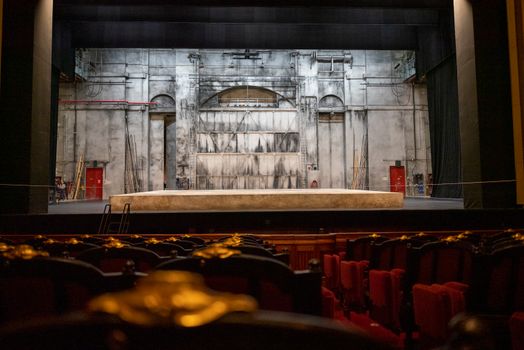
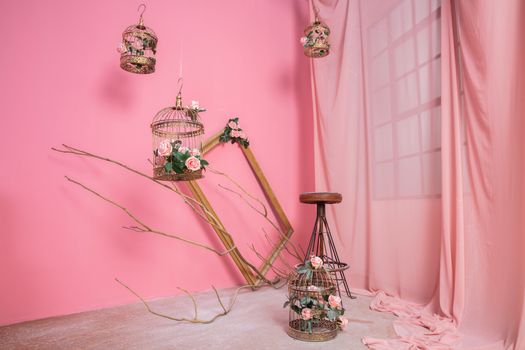
A Stage Designer, also known as a Set Designer, is responsible for creating the visual environment in which a performance takes place. This involves designing the scenery, props, and overall aesthetic of a stage production, whether it's for theatre, opera, dance, or live events. Your role begins with reading the script and collaborating closely with the director to understand their vision and interpret the text visually. You'll then develop concepts, produce sketches, models, and technical drawings, and source materials, working within a budget and timescale. This career demands a blend of artistic flair, technical drawing skills, an understanding of construction, and a strong ability to communicate your ideas effectively. The day-to-day work can vary significantly, from initial research and brainstorming to detailed design work using CAD software, model-making, and overseeing the construction and installation of sets. You'll be interacting with a wide range of professionals including carpenters, painters, lighting designers, sound designers, and costume designers to ensure all elements come together cohesively. It's a highly creative but also demanding role, requiring problem-solving skills, adaptability, and the ability to work under pressure, especially as opening night approaches. A strong portfolio showcasing your design skills and understanding of theatre is crucial for securing work in this field.

Stage Designer

Flag Media

Please select a reason for flagging this content.

📊 Statistics

Average Salary Range

Starting salaries for new stage designers can be around 18,000 to 25,000 GBP per year. With experience, this can rise to 30,000 to 45,000 GBP, and highly experienced or self-employed designers working on major productions may earn 50,000 GBP or more, though income can be project-based and variable.

Number of Positions / Industry Size

While precise figures for 'stage designers' alone are hard to isolate, the wider 'creative arts and entertainment' sector in the UK employs hundreds of thousands. The theatre design sub-sector is competitive, with many designers working on a freelance basis. Organisations like the Society of British Theatre Designers (SBTD) represent hundreds of professionals, indicating a significant but often project-based workforce.

Working Hours

Working hours are often irregular and can be long, particularly during the lead-up to a production or during technical rehearsals. Project-based work means periods of intense activity followed by quieter times, making a standard 9-5 week uncommon for many in this field.

🚀 Careers in this path

Flag Media

Please select a reason for flagging this content.

Costume Designer

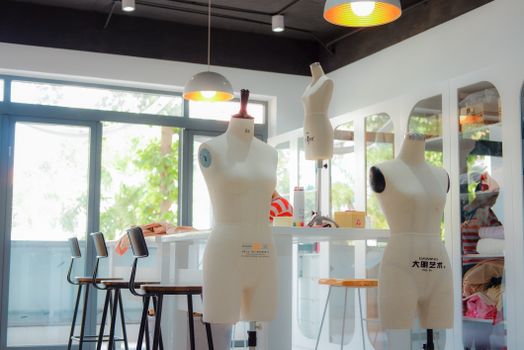
Designs and creates the clothing and accessories worn by performers on stage, ensuring they align with the play's themes, period, and character development. This role requires a strong understanding of fashion history, textiles, and practical skills in pattern making and tailoring.

Flag Media

Please select a reason for flagging this content.

Lighting Designer

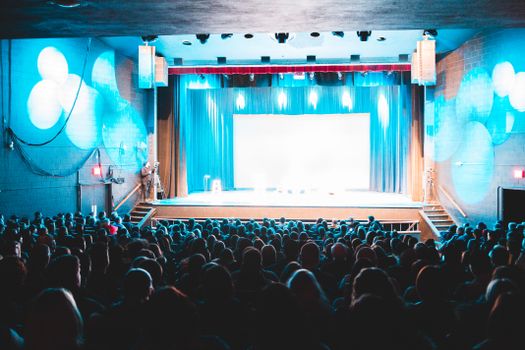
Responsible for creating the lighting plot and choosing the lighting fixtures, colour gels, and special effects used in a stage production. This involves understanding how light affects mood, atmosphere, and visibility, working closely with the director to enhance the overall theatrical experience.

Flag Media

Please select a reason for flagging this content.

Props Master

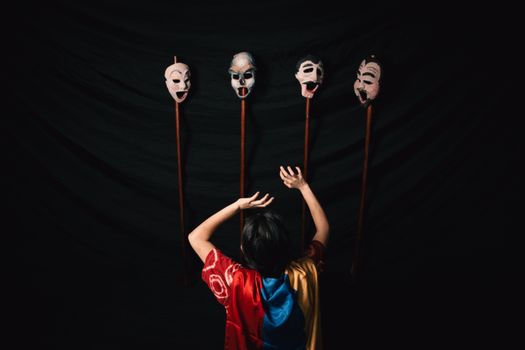
Sources, designs, creates, and maintains all the props used in a stage production. This includes handheld items, furniture, and set dressing elements, ensuring they are historically accurate, safe, and functional for the performers.

Foundation & Education

Build a Strong Portfolio

Start creating a diverse portfolio showcasing your artistic and design skills, even before formal training.

Your portfolio is crucial for demonstrating your potential. Include sketches, models, drawings, photographs of any sets you've worked on (even for school plays or amateur productions), and examples of your graphic design or fine art skills. Focus on showing your understanding of perspective, scale, colour, and texture. This will be vital for university applications and future job prospects.

Pursue Higher Education

Gain a relevant degree to build foundational knowledge and industry connections.

A degree in Theatre Design, Scenography, Performance Design, or a related subject like Fine Art or Architecture, is highly recommended. These courses provide specialist training in drafting, model making, lighting, costume design, and the technical aspects of stage production. Look for courses accredited by industry bodies and those that offer practical experience and industry placements.

Understand Theatre History & Theory

Develop a comprehensive understanding of theatrical conventions, styles, and historical contexts.

Knowledge of theatre history, different design movements, and dramatic theory will inform your design choices and enable you to create designs appropriate for various genres and periods. This understanding will also help you collaborate more effectively with directors and other creatives who will often refer to specific theatrical styles or historical periods.

Skill Development & Networking

Master Technical Skills

Develop proficiency in relevant design software and model-making techniques.

Become highly proficient in CAD software (e.g., AutoCAD, SketchUp, Vectorworks) for technical drawings, and 3D rendering programmes (e.g., Rhino, Blender, V-Ray) for visualising designs. Practical model making is also essential for communicating your ideas in three dimensions. Understanding construction techniques, materials, and health and safety regulations for set building is also vital.

Gain Practical Experience

Seek out opportunities for internships, work experience, or assistant roles in theatre, film, or events.

Volunteering for amateur theatre groups, student films, or local community events is a great starting point. Look for internships with established theatre companies, production houses, or design firms. Assisting experienced stage designers will give you invaluable hands-on experience in all stages of a production, from concept to installation, and help you understand the practicalities and pressures of the job.

Network Within the Industry

Build connections with directors, producers, lighting designers, and other theatre professionals.

Attend industry events, workshops, and exhibitions. Join professional organisations like the Society of British Theatre Designers (SBTD). Networking is crucial for finding freelance work and collaborating on future projects. Many opportunities in the arts come through personal recommendations and knowing the right people, so actively seek out and maintain professional relationships.

Career Progression & Specialisation

Freelance & Build Reputation

Start taking on smaller, paid design projects to build your portfolio and reputation.

As you gain experience, you'll likely work on a freelance basis. Initially, you might take on projects for smaller theatres, independent film productions, or corporate events. Focus on consistently delivering high-quality designs and building a strong reputation for reliability and creativity. Seek feedback and continue to refine your process with each project.

Develop a Unique Style

Cultivate a distinctive design aesthetic that sets you apart.

While adaptability is important, developing a signature style or an area of expertise can help you attract specific types of projects and collaborators. This could involve specialising in a particular genre (e.g., musicals, immersive theatre, opera), historical period, or a certain aesthetic approach. Continuously experiment with new materials, technologies, and design philosophies.

Seek Larger Productions & Mentorship

Aim for more complex and larger-scale productions, potentially working with established designers or companies.

Once you have a solid portfolio and experience, you can pursue opportunities with larger national theatre companies, West End productions, or major film and TV studios. Continuing to learn from more experienced designers through assistant roles or mentorship relationships can be invaluable for advancing your career and tackling increasingly ambitious projects. This often involves moving from being an assistant designer to a lead designer.

🎬 Useful Videos

🎯 View Apprenticeships

Explore relevant apprenticeships that can help you kickstart your career in Stage Designer. Apprenticeships offer hands-on experience and training while earning a wage.

Career Progressions

This page showcases various career options and the pathways to reach them. Each career listed here shares transferable skills and knowledge, making it easier for individuals to transition between them.

Your current career is highlighted to help you see how it fits into the broader landscape of potential career choices. By clicking on any career, you can learn more about it, including the training and education required to pursue it.

Remember, progressing in your career often involves further learning and training. This page provides insights into future career options as well as those that can lead up to your current one.

These career progression decisions are informed by comparing the skills and knowledge needed for different occupations, along with data on how people move between them. Explore the possibilities and discover the exciting journey ahead in your career!

Sample Qualifications

Stage designers and exhibition designers both focus on creating immersive and functional environments. While stage designers work with theatrical spaces, the core skills in spatial planning, set creation, lighting, and visual storytelling are highly transferable and make 'Exhibition designer' the closest match from the given list, as both roles involve designing public-facing, temporary environments for display.

How to become

You can get into this job through:

  • a university course
  • an apprenticeship
  • working towards this role

University

You could study for a foundation degree, higher national diploma or degree in a subject like:

  • spatial design (exhibitions)
  • interior design
  • three-dimensional (3D) design
  • interior architecture
  • theatre design

You may also find exhibition design options as part of some events management, and museums and galleries courses.

Entry requirements

You'll usually need:

  • a foundation diploma in art and design
  • 1 or 2 A levels, or equivalent, for a foundation degree or higher national diploma
  • 2 to 3 A levels, or equivalent, for a degree

More Information

Apprenticeship

You could apply to do a Scenic Construction Technician Level 3 Advanced Apprenticeship with an events design or scenery building company.

You could also apply to do a Collections Technician Level 3 Advanced Apprenticeship, if working on specialist exhibitions in museums or galleries.

Entry requirements

You'll usually need:

  • 5 GCSEs at grades 9 to 4 (A* to C), or equivalent, including English and maths, for an advanced apprenticeship

More Information

Work

You may be able to get into this type of work as a junior design assistant. To do this, you are likely to need a qualification in art and design, like a diploma or an A level.

Experience in using computer-aided design (CAD) software packages would also be helpful.

Volunteering

You could volunteer to help set up exhibitions, for example with local arts festivals, galleries or libraries.

This would help you get practical skills, as well as an insight into the project management that goes on behind the scenes.

More Information

Career tips

You'll need to put together a portfolio of your work to highlight your design skills to show at interview. Some work experience would also give you an advantage when applying for training and jobs.

Professional and industry bodies

You could join the Chartered Society of Designers, for professional development, training opportunities and to make industry contacts.

Further information

You can find out more about working in exhibition design from Discover Creative Careers.

Interested in More Career Paths?

Explore other careers or use our AI to discover personalised paths based on your interests.

Stay connected

Join our newsletter to stay up to date on features and releases

Address
Developing Experts Limited
Exchange Street Buildings
35-37 Exchange Street
Norwich
NR2 1DP
UK

Phone
01603 273515

Email
[email protected]

Copyright 2026 Developing Experts, All rights reserved.
