

Creating Career Path...

Finding Further Careers...

Stage Designer

View this career for different education levels:

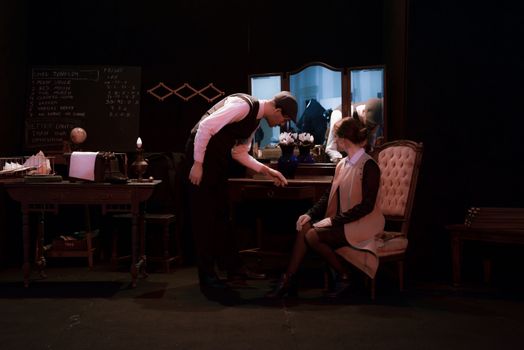
Imagine going to see a play or a concert. The Stage Designer is the clever person who dreams up what the stage looks like! They draw pictures and make models to show how the sets, props, and even sometimes the lights will look. They make sure the stage looks just right for the story being told, whether it is a scary castle, a sunny garden, or a busy street. They work with the director, which is the person in charge of the play, to bring their ideas to life. It is like building a whole new world for the actors to perform in. Being a Stage Designer means you get to be super creative and use your imagination every day. You might start by reading the story of the play and thinking about how to make it special. Then you draw your ideas, perhaps on paper or using a computer. You might even build little miniature versions of the stage set, like a dollhouse for the play! Once everyone agrees on the design, you work with lots of other people, like builders and painters, to make your design real on the big stage. It is a very exciting job where you get to see your drawings become amazing places for everyone to enjoy.

Stage Designer

Flag Media

Please select a reason for flagging this content.

📊 Statistics

Starting Salary

For someone just starting out as a Stage Designer, they might earn around 18,000 to 22,000 pounds a year. This can go up as they get more experience.

Experienced Salary

With more experience, a Stage Designer could earn between 25,000 and 40,000 pounds a year, especially if they work on bigger shows or have their own company.

Number of Jobs

It is a creative field, so there aren't thousands and thousands of jobs like some other careers. Many designers work freelance, which means they work on different projects for different companies, rather than having one full-time job.

🚀 Careers in this path

Flag Media

Please select a reason for flagging this content.

Costume Designer for Plays

Imagine designing all the clothes and outfits the actors wear in a play or show. You'd pick the colours and fabrics to help tell the story.

Flag Media

Please select a reason for flagging this content.

Prop Maker for TV Shows

This job is all about making the interesting things the actors use and hold during a TV show, like a wizard's wand or a special map.

Flag Media

Please select a reason for flagging this content.

Theme Park Ride Designer

You'd get to think up exciting new rides and experiences for a theme park, deciding how they look and feel, and what fun things happen along the way.

Discover Your Inner Artist

Draw and Doodle

Start by drawing and doodling all sorts of things! Try sketching rooms, gardens, or even made-up places. This helps you practise your drawing skills and think about how things look.

Grab a sketchbook and some pencils, crayons, or paints. Try to draw what you see around you, like your bedroom or your favourite park. Then, try to imagine a new world and draw that! Don't worry if it's not perfect, the important thing is to have fun and be creative. You could even try drawing different ways a room could look for a party.

Play with Building Blocks

Use LEGO, cardboard boxes, or other building toys to create tiny worlds. This is a great way to think about how spaces are built and designed in 3D.

When you build with blocks, try to think about how a real stage might look. Can you build a house, a castle, or a spaceship? Think about where the doors and windows would be, and how people might move around inside your creation. This helps you understand how different parts of a set fit together.

Watch Plays and Films

Pay close attention to the backgrounds in your favourite films and theatre shows. Notice how the colours, furniture, and objects help tell the story.

When you watch a show, try to look beyond the characters and notice the set. How does it make you feel? Does it look old or new, happy or spooky? Think about why the designer chose those particular colours or items. You can even talk to a grown-up about what you notice!

Learn and Explore

Join a Drama Club

If your school has a drama club, join it! You might get to help paint scenery or move props, which shows you how stage sets are used in real life.

Being part of a drama club isn't just about acting. Often, there are lots of jobs behind the scenes, like helping to create the set or find props. This is a brilliant way to see how all the different parts of a play come together and how important the stage design is to the story.

Visit a Theatre

Go to a theatre and see a show! Look closely at the stage before the play starts. Imagine how it was made and what ideas the designer had.

When you visit a theatre, try to look at the stage from different angles. Notice how big or small it feels. Sometimes, theatres offer special tours where you can go backstage and see how sets are stored and changed – ask a grown-up if they can find one near you!

Read Books About Art

Find books about famous artists, different art styles, or even how stages are designed. This can give you lots of new ideas and inspiration.

Your local library will have lots of books about art, design, and theatre. You might find books that show how different artists use colour, shape, and light. Some books even have pictures of amazing stage sets from famous plays, which can inspire your own drawings and building ideas.

Future Steps

Keep Practising

Keep drawing, building, and thinking creatively. The more you practise, the better you'll become at designing fantastic worlds.

Art and design are skills that get better with practice, just like playing a sport or an instrument. Try to dedicate a little bit of time each week to drawing, painting, or building. You could even challenge yourself to design a new stage for your favourite story or cartoon.

Learn About Tools

As you get older, you might learn about tools that help designers, like special computer programmes for drawing or making models. For now, keep using your hands and imagination!

When you are a bit older, there are amazing computer programs that stage designers use to draw their ideas and even create 3D models of their sets before they are built. Understanding how to use these tools will be really helpful, but for now, focus on your hands-on creative skills.

Think About Stories

Every stage design tells a story. Think about what kind of stories you love and how you could create a world that helps tell that story.

A stage designer's job is to help the audience understand the story of a play or show just by looking at the set. If the story is scary, the set might be dark and shadowy. If it's a happy party, it might be bright and colourful. Always think about what feelings and ideas your designs create.

🎬 Useful Videos

🎯 View Apprenticeships

Explore relevant apprenticeships that can help you kickstart your career in Stage Designer. Apprenticeships offer hands-on experience and training while earning a wage.

Career Progressions

This page showcases various career options and the pathways to reach them. Each career listed here shares transferable skills and knowledge, making it easier for individuals to transition between them.

Your current career is highlighted to help you see how it fits into the broader landscape of potential career choices. By clicking on any career, you can learn more about it, including the training and education required to pursue it.

Remember, progressing in your career often involves further learning and training. This page provides insights into future career options as well as those that can lead up to your current one.

These career progression decisions are informed by comparing the skills and knowledge needed for different occupations, along with data on how people move between them. Explore the possibilities and discover the exciting journey ahead in your career!

Sample Qualifications

While 'Stage Designer' isn't explicitly listed, the closest match is 'Exhibition designer' as both roles involve designing immersive physical spaces for public viewing, focusing on aesthetics, audience flow, and presenting a narrative or experience within a defined environment. The core skills in spatial design, visual communication, and project coordination are highly transferable.

How to become

You can get into this job through:

  • a university course
  • an apprenticeship
  • working towards this role

University

You could study for a foundation degree, higher national diploma or degree in a subject like:

  • spatial design (exhibitions)
  • interior design
  • three-dimensional (3D) design
  • interior architecture
  • theatre design

You may also find exhibition design options as part of some events management, and museums and galleries courses.

Entry requirements

You'll usually need:

  • a foundation diploma in art and design
  • 1 or 2 A levels, or equivalent, for a foundation degree or higher national diploma
  • 2 to 3 A levels, or equivalent, for a degree

More Information

Apprenticeship

You could apply to do a Scenic Construction Technician Level 3 Advanced Apprenticeship with an events design or scenery building company.

You could also apply to do a Collections Technician Level 3 Advanced Apprenticeship, if working on specialist exhibitions in museums or galleries.

Entry requirements

You'll usually need:

  • 5 GCSEs at grades 9 to 4 (A* to C), or equivalent, including English and maths, for an advanced apprenticeship

More Information

Work

You may be able to get into this type of work as a junior design assistant. To do this, you are likely to need a qualification in art and design, like a diploma or an A level.

Experience in using computer-aided design (CAD) software packages would also be helpful.

Volunteering

You could volunteer to help set up exhibitions, for example with local arts festivals, galleries or libraries.

This would help you get practical skills, as well as an insight into the project management that goes on behind the scenes.

More Information

Career tips

You'll need to put together a portfolio of your work to highlight your design skills to show at interview. Some work experience would also give you an advantage when applying for training and jobs.

Professional and industry bodies

You could join the Chartered Society of Designers, for professional development, training opportunities and to make industry contacts.

Further information

You can find out more about working in exhibition design from Discover Creative Careers.

Interested in More Career Paths?

Explore other careers or use our AI to discover personalised paths based on your interests.

Stay connected

Join our newsletter to stay up to date on features and releases

Address
Developing Experts Limited
Exchange Street Buildings
35-37 Exchange Street
Norwich
NR2 1DP
UK

Phone
01603 273515

Email
[email protected]

Copyright 2026 Developing Experts, All rights reserved.
