



Creating Career Path...

Finding Further Careers...

Earth Scientist

View this career for different education levels:

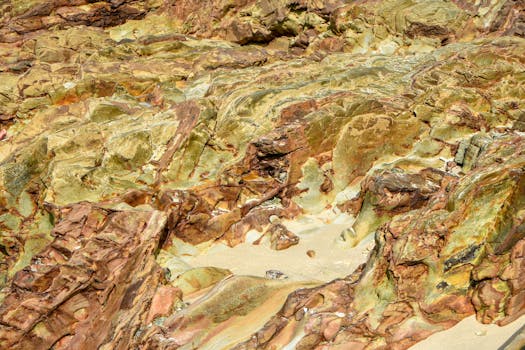
An Earth Scientist is a broad term encompassing professionals who study the Earth's physical structure and processes. This can involve investigating the composition of the Earth's crust, oceans, atmosphere, and even extraterrestrial bodies, using principles from geology, physics, chemistry, biology, and mathematics. In the UK, Earth Scientists often work on critical issues such as understanding climate change, managing natural resources like water and minerals, assessing geological hazards like landslides and earthquakes, and ensuring sustainable development. The day-to-day work can be incredibly varied, blending fieldwork with laboratory analysis and office-based tasks. Fieldwork might involve collecting rock samples, mapping geological features, or deploying sensors to monitor environmental changes. In the lab, you might analyse samples using advanced techniques or develop computer models to simulate Earth processes. This career requires strong analytical skills, problem-solving abilities, and often a passion for the outdoors and environmental stewardship.

Earth Scientist

Flag Media

Please select a reason for flagging this content.

📊 Statistics

Average Starting Salary (UK)

For entry-level Earth Scientists in the UK, starting salaries typically range from 20,000 to 25,000 GBP per annum. This can vary based on sector (e.g., academia, industry, public sector) and location.

Experienced Professional Salary (UK)

With several years of experience, Earth Scientists can expect to earn between 30,000 and 50,000 GBP annually. Senior or specialist roles, particularly in areas like oil and gas or consultancy, can command salaries upwards of 60,000 GBP, and sometimes considerably more for highly experienced professionals.

Job Outlook and Opportunities (UK)

The demand for Earth Scientists in the UK is stable, with particular growth in environmental consultancy, renewable energy, and natural hazard management. While exact figures for new positions fluctuate, geology and environmental science graduates typically find employment in diverse sectors, including government agencies, engineering firms, and research institutions.

🚀 Careers in this path

Flag Media

Please select a reason for flagging this content.

Environmental Consultant

An Environmental Consultant advises businesses and governments on environmental policies and projects. This involves assessing environmental impacts, managing sustainability initiatives, and ensuring compliance with UK environmental regulations. It's a great path for someone interested in applying Earth science knowledge to real-world environmental challenges.

Flag Media

Please select a reason for flagging this content.

Geologist

A Geologist studies the Earth's physical structure and processes, often specialising in areas like petroleum geology, engineering geology, or hydrogeology. This could involve fieldwork, laboratory analysis, and mapping, contributing to sectors such as mineral exploration, civil engineering projects, or water resource management across the UK.

Flag Media

Please select a reason for flagging this content.

Hydrographic Surveyor

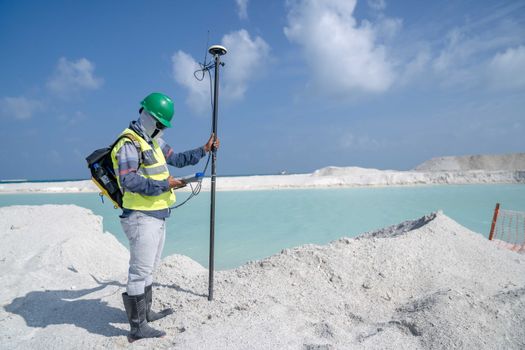
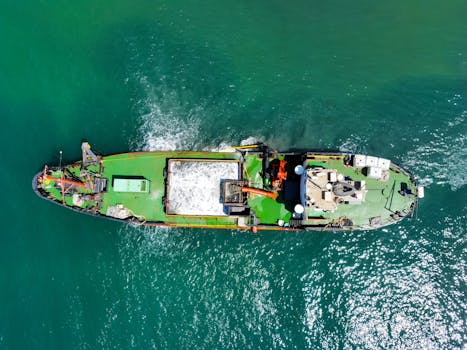
A Hydrographic Surveyor measures and maps the seabed and coastal areas for nautical charting, offshore construction, and environmental monitoring. Using specialist equipment, they collect data vital for navigation, port development, and renewable energy projects in the UK's marine sector, offering a blend of fieldwork and technical analysis.

Build Your Foundational Knowledge

Attain a Relevant Undergraduate Degree

Pursue a Bachelor's degree in a subject like Geology, Geophysics, Environmental Science, Earth Sciences, or Oceanography from a UK university.

Many universities across the UK offer excellent programmes in these fields. Look for courses accredited by professional bodies where possible, as this can be beneficial for future career progression. Modules often include fieldwork, laboratory practicals, and data analysis, which are crucial for developing practical skills. Consider degrees that offer a 'sandwich year' or integrated master's (MSci) for additional experience or a deeper dive into the subject.

Develop Core Scientific and Analytical Skills

Focus on developing strong skills in mathematics, physics, chemistry, data analysis, and scientific report writing throughout your degree.

Earth science is highly interdisciplinary, requiring a solid grasp of fundamental sciences. Pay particular attention to quantitative methods, statistical software (e.g., R, Python), and Geographical Information Systems (GIS), as these are widely used tools in the field. Effective communication, both written and verbal, is also vital for presenting research and findings to diverse audiences.

Gain Practical Fieldwork Experience

Actively participate in university fieldwork programmes and seek out opportunities for additional practical experience.

Fieldwork is an essential component of most Earth Science degrees and provides invaluable hands-on experience in data collection, mapping, and observation in real-world environments. Supplement this by volunteering for conservation projects, archaeological digs with geological components, or joining university societies that organise field trips. This practical exposure will solidify your theoretical knowledge and make you more attractive to employers.

Specialise and Gain Experience

Consider Postgraduate Study

For many specialist roles, a Master's (MSc) or PhD in a specific Earth Science discipline is highly recommended.

An MSc allows you to specialise in an area like Quaternary Science, Petroleum Geology, Hydrogeology, Volcanology, or Environmental Monitoring. A PhD is typically required for research-intensive positions in academia or certain R&D roles within industry. Research the specific requirements for your desired specialisation and ensure your chosen programme aligns with your career aspirations. Look into funding opportunities like NERC DTPs (Doctoral Training Partnerships).

Undertake Internships or Work Experience

Seek out internships or short-term work placements with relevant organisations during your studies or immediately after graduation.

Organisations such as the British Geological Survey (BGS), environmental consultancies, oil and gas companies, mining firms, or governmental agencies (e.g., Environment Agency) often offer structured internship programmes. These provide invaluable exposure to professional practice, networking opportunities, and a chance to apply your academic knowledge in a real-world setting. Even unpaid internships can be crucial for building your CV and understanding industry demands.

Network and Join Professional Bodies

Actively network with professionals in the field and join relevant professional organisations.

Attend conferences, workshops, and seminars hosted by institutions like the Geological Society of London, the Royal Geographical Society, or the Challenger Society for Marine Science. Joining these bodies provides access to publications, events, and a network of professionals. Becoming a student member is often affordable and can open doors to mentorship and career advice, helping you stay informed about industry trends and job opportunities.

Launch Your Career

Apply for Entry-Level Positions

Start applying for graduate schemes or entry-level roles in your chosen Earth Science specialisation.

Look for roles such as Graduate Geologist, Environmental Consultant, Hydrogeologist, Geophysicist, or Oceanographer. Be prepared to tailor your CV and cover letter to each specific job, highlighting relevant modules, projects, and skills. Many large companies run structured graduate programmes which offer excellent training and career development. Smaller consultancies might offer more immediate hands-on experience.

Pursue Professional Accreditation

Work towards achieving chartered status, such as Chartered Geologist (CGeol) or Chartered Scientist (CSci), as your career progresses.

Professional accreditation through bodies like the Geological Society of London demonstrates a high level of competence and commitment to professional standards. It typically requires several years of structured professional experience and a portfolio demonstrating your capabilities. This status is highly valued by employers and often leads to greater responsibilities, higher earning potential, and enhanced career prospects.

Engage in Continuous Professional Development (CPD)

Commit to lifelong learning and continuous professional development to stay current with advancements in the field.

The field of Earth Science is constantly evolving with new technologies, research, and environmental challenges. Attend specialist courses, workshops, webinars, and conferences to update your skills and knowledge. Read scientific journals and industry publications. This commitment to CPD not only keeps your skills sharp but also demonstrates your dedication to your profession, which is crucial for career progression and specialisation in emerging areas.

🎬 Useful Videos

🎯 View Apprenticeships

Explore relevant apprenticeships that can help you kickstart your career in Earth Scientist. Apprenticeships offer hands-on experience and training while earning a wage.

Career Progressions

This page showcases various career options and the pathways to reach them. Each career listed here shares transferable skills and knowledge, making it easier for individuals to transition between them.

Your current career is highlighted to help you see how it fits into the broader landscape of potential career choices. By clicking on any career, you can learn more about it, including the training and education required to pursue it.

Remember, progressing in your career often involves further learning and training. This page provides insights into future career options as well as those that can lead up to your current one.

These career progression decisions are informed by comparing the skills and knowledge needed for different occupations, along with data on how people move between them. Explore the possibilities and discover the exciting journey ahead in your career!

Sample Qualifications

An Earth Scientist specialises in the study of Earth's physical structure, processes, and phenomena, which significantly overlaps with the duties of a Climate Scientist who specifically investigates Earth's climate systems and changes.

How to become

You can get into this job through a university course.

University

You could do a degree or postgraduate qualification in a relevant subject like:

  • environmental science or ecology
  • geography, earth sciences or geology
  • physics
  • maths and statistics
  • oceanography or marine science
  • meteorology and climate science
  • computer science

Work experience

You can get work experience through internships, placements or a year in industry during your course. This may help you to identify your area of interest for research.

For example, the Met Office early careers section has details of online and in-person work placements, as well as industrial placements and graduate schemes.

Entry requirements

You'll usually need:

  • 2 or 3 A levels, or equivalent, including maths and a science for a degree
  • a degree in a relevant subject for postgraduate study

More Information

More Information

Career tips

You can find information about global climate conditions through:

Further information

Discover more about working in climate science from:

Interested in More Career Paths?

Explore other careers or use our AI to discover personalised paths based on your interests.

Stay connected

Join our newsletter to stay up to date on features and releases

Address
Developing Experts Limited
Exchange Street Buildings
35-37 Exchange Street
Norwich
NR2 1DP
UK

Phone
01603 273515

Email
[email protected]

Copyright 2026 Developing Experts, All rights reserved.
