Creating Career Path...

Finding Further Careers...

Earth Scientist

View this career for different education levels:

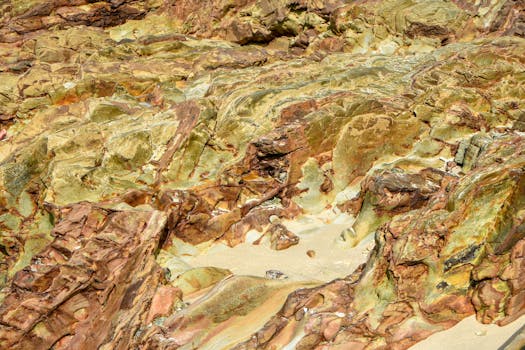
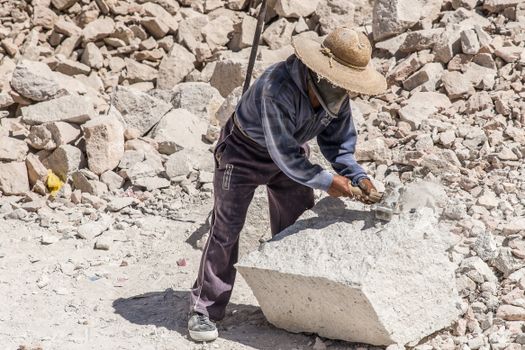
Imagine being a detective for our planet! An Earth Scientist, sometimes called a Geoscientist, is someone who studies the Earth and how it works. They learn about rocks, mountains, rivers, oceans, and even volcanoes and earthquakes. They want to understand why our planet looks the way it does and how it changes over time. They might dig in the ground to find out what's underneath, or use special tools to look at what's happening deep inside the Earth or high up in the atmosphere. They help us understand things like where to find clean water, how to build safe buildings, or what might happen with the weather and climate in the future. It is a very important job that helps protect our planet and everyone on it. Earth Scientists often spend time outdoors, exploring different places like coasts, deserts, or even deep caves. They might collect samples of rocks or soil to study them more closely in a lab. They also use computers to create maps and models of the Earth. Some Earth Scientists look for valuable minerals or oil, while others help protect the environment and understand how we can live more kindly with our planet. They share their discoveries with others to help make good decisions about our Earth. It is a job for people who love nature and asking lots of questions about the world around them.

Earth Scientist

Flag Media

Please select a reason for flagging this content.

📊 Statistics

Average Salary

In the UK, an Earth Scientist starting out might earn around 25,000 to 30,000 pounds a year. With more experience, this could go up to 40,000 to 50,000 pounds, or even more for very senior roles.

Job Openings

There are usually hundreds of jobs for Earth Scientists advertised in the UK each year. These can be in different areas like looking for minerals, helping with building projects, or studying climate change.

Working Hours

Most Earth Scientists in the UK work about 37 to 40 hours a week, which is like a normal school week for grown-ups. Sometimes they might need to go on trips to study places, which can mean staying away from home for a bit.

🚀 Careers in this path

Flag Media

Please select a reason for flagging this content.

Volcanologist

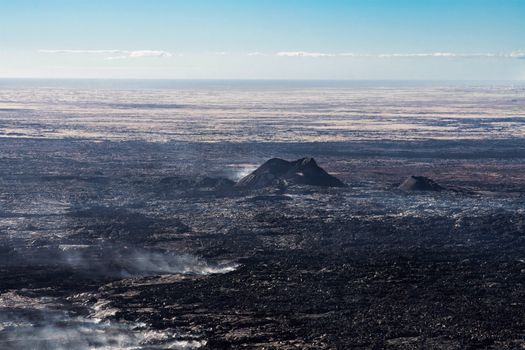
Imagine studying big, fiery mountains called volcanoes and how they erupt! You'd learn about the hot, melted rock that comes out of them and how they shape our Earth.

Flag Media

Please select a reason for flagging this content.

Palaeontologist

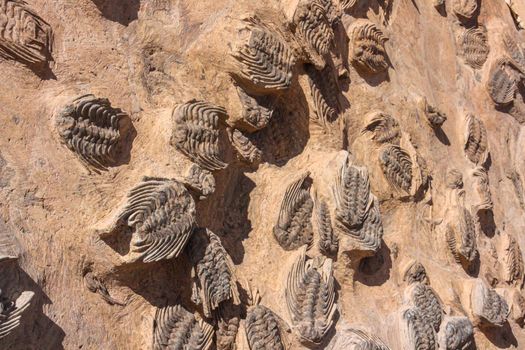
Do you love dinosaurs and ancient creatures? A palaeontologist is like a detective who digs up fossils, which are the remains of animals and plants from millions of years ago, to learn about life long, long ago.

Flag Media

Please select a reason for flagging this content.

Geologist

A geologist is someone who explores the Earth to understand all about rocks, minerals, and how our planet changes over time. They might look for precious stones or study how mountains are formed.

Being a Young Explorer

Look at Rocks and Soil

Collect different kinds of rocks, pebbles, and soil you find outside. Look closely at their colours, shapes, and how they feel.

When you're out walking in your garden, a park, or even on a beach, keep an eye out for interesting rocks! You can gently clean them and put them in a special 'rock collection' box. Try to describe them: is it smooth or bumpy? Is it shiny or dull? Does it have speckles or stripes? You can even draw pictures of them in a notebook, just like a real scientist.

Watch the Weather

Pay attention to the weather every day. Is it sunny, rainy, windy, or cloudy? How does it change?

You can make your own weather chart! Each day, draw a picture or use a symbol for the weather (like a sun for sunny, a cloud for cloudy). You could also try to guess if it will rain or be sunny tomorrow. Earth scientists, especially meteorologists, study weather patterns to help us know what to expect and why it changes.

Learn About Our Planet

Read books or watch programmes about volcanoes, earthquakes, oceans, and dinosaurs. Ask lots of questions!

The Earth is full of amazing things! There are so many cool books in libraries and fun documentaries online that show us how volcanoes erupt, how oceans have different creatures, and what the Earth was like millions of years ago when dinosaurs roamed. Don't be shy about asking grown-ups questions about anything that puzzles you about our planet.

School Adventures

Be Good at Science

In school, try your best in science lessons. This is where you learn how the world works, just like an Earth scientist!

Science lessons at school are super important. You'll learn about different materials, plants, animals, and even how forces work. These are all little pieces of the puzzle that an Earth scientist puts together. Enjoy doing experiments and asking 'why?' and 'how?' questions.

Explore Geography

Geography lessons teach you about mountains, rivers, maps, and different countries. This is very useful for Earth scientists.

Geography isn't just about naming capital cities; it's about understanding the land itself. You'll learn about different landforms like valleys and hills, how rivers flow, and how to read maps. All these skills help Earth scientists find their way around and understand the landscape they are studying.

Visit Museums and Parks

Go to natural history museums to see dinosaur bones and huge rock collections. Explore national parks and beaches to see nature up close.

Museums are treasure troves for aspiring Earth scientists! You can see real fossils, incredible displays of different rocks and minerals, and learn about the history of our planet. When you visit parks or beaches, look for clues about how the land has changed over time, like eroded rocks or different layers of soil. These trips help bring what you learn in books to life.

Becoming an Earth Scientist

Study Hard in Secondary School

When you're older, choose subjects like Geology, Geography, Physics, Chemistry, and Maths in secondary school and for your A-levels.

At secondary school, it's a good idea to focus on subjects that are related to Earth science. Geology will teach you directly about rocks and the Earth's history. Geography continues to explore landscapes and environments. Physics helps understand forces, chemistry helps understand what things are made of, and maths is useful for analysing data. These subjects will give you a strong foundation for university.

Go to University

After secondary school, you'll need to go to university to get a degree in a subject like Geology, Geophysics, or Earth Sciences.

Most Earth scientists have a university degree. You can study for a Bachelor's degree (like a BSc) in subjects such as Geology, Environmental Geoscience, Oceanography, or Physical Geography. This usually takes three years. At university, you'll learn lots of detailed scientific information and even go on field trips to study real-world examples.

Start Your Career

Once you have your degree, you can look for jobs as a geologist, oceanographer, seismologist, or environmental consultant.

With your university degree, many exciting paths open up. You could work for companies looking for important resources like water or minerals, help protect the environment, or even work in universities doing research or teaching. Some Earth scientists work outdoors a lot, exploring remote places, while others might work in labs or offices using computers to model the Earth.

🎬 Useful Videos

🎯 View Apprenticeships

Explore relevant apprenticeships that can help you kickstart your career in Earth Scientist. Apprenticeships offer hands-on experience and training while earning a wage.

Career Progressions

This page showcases various career options and the pathways to reach them. Each career listed here shares transferable skills and knowledge, making it easier for individuals to transition between them.

Your current career is highlighted to help you see how it fits into the broader landscape of potential career choices. By clicking on any career, you can learn more about it, including the training and education required to pursue it.

Remember, progressing in your career often involves further learning and training. This page provides insights into future career options as well as those that can lead up to your current one.

These career progression decisions are informed by comparing the skills and knowledge needed for different occupations, along with data on how people move between them. Explore the possibilities and discover the exciting journey ahead in your career!

Sample Qualifications

An Earth Scientist often specialises in studying the Earth's climate systems, including past, present, and future climate changes, which aligns directly with the role of a Climate Scientist.

How to become

You can get into this job through a university course.

University

You could do a degree or postgraduate qualification in a relevant subject like:

  • environmental science or ecology
  • geography, earth sciences or geology
  • physics
  • maths and statistics
  • oceanography or marine science
  • meteorology and climate science
  • computer science

Work experience

You can get work experience through internships, placements or a year in industry during your course. This may help you to identify your area of interest for research.

For example, the Met Office early careers section has details of online and in-person work placements, as well as industrial placements and graduate schemes.

Entry requirements

You'll usually need:

  • 2 or 3 A levels, or equivalent, including maths and a science for a degree
  • a degree in a relevant subject for postgraduate study

More Information

More Information

Career tips

You can find information about global climate conditions through:

Further information

Discover more about working in climate science from:

Interested in More Career Paths?

Explore other careers or use our AI to discover personalised paths based on your interests.

Stay connected

Join our newsletter to stay up to date on features and releases

Address
Developing Experts Limited
Exchange Street Buildings
35-37 Exchange Street
Norwich
NR2 1DP
UK

Phone
01603 273515

Email
[email protected]

Copyright 2026 Developing Experts, All rights reserved.
