




Creating Career Path...

Finding Further Careers...

Surgeon

View this career for different education levels:

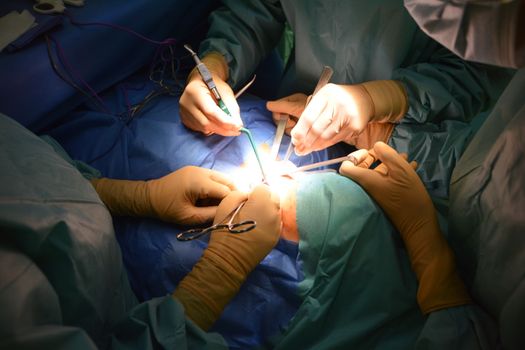
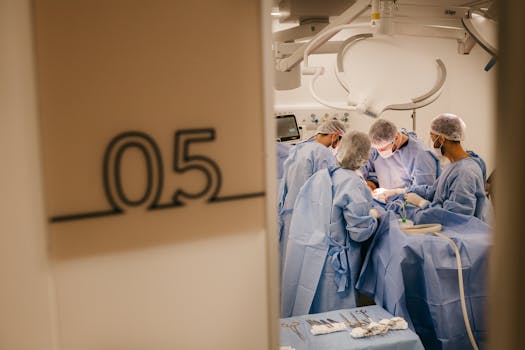
Becoming a surgeon in the UK is a challenging yet highly rewarding path. It involves many years of rigorous training following medical school, focusing on the diagnosis and treatment of conditions through surgical intervention. Surgeons perform a wide range of operations, from intricate brain surgery to complex heart procedures or routine appendectomies, all aimed at repairing injuries, correcting deformities, preventing diseases, or improving patients' functional abilities. This career demands exceptional precision, strong problem-solving skills, and the ability to work effectively under pressure. A significant part of a surgeon's role also involves pre-operative assessment, post-operative care, and communicating clearly with patients and their families. Working within the National Health Service (NHS) or private healthcare, surgeons are integral members of multidisciplinary teams. They collaborate closely with anaesthetists, nurses, and other medical specialists to ensure the best possible outcomes for patients. The journey to becoming a consultant surgeon typically involves completing a medical degree (MBBS), two years in the Foundation Programme, and then several years of specialist surgical training, culminating in a CCT (Certificate of Completion of Training). Continuous professional development and adherence to ethical guidelines are paramount throughout a surgeon's career.

Surgeon

Flag Media

Please select a reason for flagging this content.

📊 Statistics

Starting Salary

For a junior doctor (Foundation Year 1 or 2) in the UK, the basic starting salary is typically around 32,398 GBP per annum, increasing with experience and specialist training.

Consultant Surgeon Salary

Once qualified as a consultant surgeon in the NHS, salaries typically range from 93,666 GBP to 126,281 GBP per annum, depending on experience and additional responsibilities such as clinical excellence awards.

Working Hours

Surgeons often work long and demanding hours, including evenings, weekends, and on-call shifts. A typical working week can exceed 48 hours, especially during training.

🚀 Careers in this path

Flag Media

Please select a reason for flagging this content.

Registrar (Surgery)

A Registrar is a doctor undertaking a specialist training programme in a particular surgical field (e.g., General Surgery, Orthopaedics, Neurosurgery). At 21, you would be looking at the early stages of this long training pathway, typically after completing foundation years. It involves increasing responsibility in patient care, operating theatre duties, and teaching junior doctors, all under consultant supervision.

Flag Media

Please select a reason for flagging this content.

Surgical Care Practitioner (SCP)

An SCP is an experienced registered healthcare professional (often a nurse or operating department practitioner) who has undertaken further training to perform surgical intervention procedures under the supervision of a consultant surgeon. This role has a significant hands-on surgical component but without the full consultant responsibility, offering a different career progression path.

Flag Media

Please select a reason for flagging this content.

Medical Device Specialist

While not directly performing surgery, a Medical Device Specialist works closely with surgeons in the operating theatre, providing expertise and support for the use of complex surgical equipment and implants (e.g., in orthopaedics, cardiology, or neurosurgery). This role combines technical knowledge with clinical engagement, often requiring a strong understanding of anatomy and surgical procedures.

Foundation Years & Medical Degree

Achieve Strong A-Levels

Obtain high grades in relevant science subjects at A-Level to meet university entry requirements for medicine.

Most UK medical schools require A-Levels in Chemistry, and usually Biology or Physics/Maths. Strong grades, typically AAA or AAB, are essential. Consider subjects like Further Maths or another science to boost your application. Additionally, some universities might prefer or require specific GCSEs, so check individual university entry requirements carefully.

Complete a Medical Degree (MBBS/MBChB)

Undertake a 5-6 year Bachelor of Medicine, Bachelor of Surgery (MBBS or MBChB) degree at a UK university.

This intensive degree provides a comprehensive understanding of medical science, clinical skills, and professional attitudes. It involves a mix of lectures, practicals, clinical placements in hospitals and GP surgeries, and examinations. Many universities also require applicants to sit admissions tests like UCAT or BMAT, alongside having relevant work experience and a strong personal statement.

Complete Foundation Programme (F1 & F2)

Work as a junior doctor for two years in the Foundation Programme, gaining broad clinical experience across different medical and surgical specialities.

After graduating from medical school, you'll enter the two-year Foundation Programme (F1 and F2). F1 is provisional registration with the GMC, requiring direct supervision. F2 grants full registration and allows more independent practice. You'll rotate through various specialities, gaining hands-on experience in patient care, diagnosis, treatment, and communication, which is crucial for developing a broad clinical base before specialising.

Core Surgical Training & Specialisation

Undertake Core Surgical Training (CST)

Complete a two-year Core Surgical Training programme to develop foundational surgical skills and knowledge.

Following the Foundation Programme, you apply for Core Surgical Training (CST), which is highly competitive. This typically involves rotations through several surgical specialities, developing key surgical skills, knowledge, and non-technical skills such as leadership and communication. During this period, you will also be working towards passing the Membership of the Royal College of Surgeons (MRCS) examination.

Pass the MRCS Examination

Achieve the Membership of the Royal College of Surgeons (MRCS) qualification.

The MRCS examination, typically taken during CST, is a rigorous two-part assessment demonstrating your understanding of surgical science, applied knowledge, and clinical skills. Passing this is a mandatory requirement for progression to higher specialist surgical training in the UK. It is a significant milestone that validates your foundational surgical competence.

Apply for Higher Specialty Training

Apply for a specific surgical speciality training programme (ST3+ level) after completing CST and passing MRCS.

Competition for higher speciality training posts (e.g., General Surgery, Orthopaedics, Neurosurgery) is intense. Your application will be assessed based on your clinical experience, surgical skills, academic achievements, research, publications, presentations, and commitment to the chosen speciality. This is a crucial step towards becoming an independent surgeon in your chosen field.

Advanced Surgical Practice

Complete Higher Specialty Training

Undergo several years of intensive, structured training in your chosen surgical speciality, progressing to senior registrar level.

This stage typically lasts 6-8 years (depending on the speciality) and involves extensive practical experience, advanced surgical procedures, leadership roles, teaching, and often research. You will gain increasing autonomy under supervision, becoming highly proficient in complex surgical techniques relevant to your field. This period culminates in demonstrating full competence for independent surgical practice.

Attain CCT and Fellowship

Achieve the Certificate of Completion of Training (CCT) and often a Fellowship of a Royal College.

Upon successful completion of your higher speciality training, you will be awarded your CCT by the General Medical Council (GMC), which formally recognises your eligibility to practice as an independent specialist. Many surgeons also attain a Fellowship (e.g., FRCS for Fellow of the Royal College of Surgeons) in their specific speciality, which signifies a high level of expertise and professional standing.

Secure a Consultant Surgeon Post

Apply for and secure a Consultant Surgeon position within the NHS or private healthcare sector.

With your CCT and Fellowship, you are now qualified to apply for Consultant posts. These positions involve leading surgical teams, performing complex operations, supervising junior doctors, teaching, and contributing to service development and clinical governance. Continuous professional development, including staying updated with new techniques and research, is a lifelong commitment for a Consultant Surgeon.

🎬 Useful Videos

🎯 View Apprenticeships

Explore relevant apprenticeships that can help you kickstart your career in Surgeon. Apprenticeships offer hands-on experience and training while earning a wage.

Career Progressions

This page showcases various career options and the pathways to reach them. Each career listed here shares transferable skills and knowledge, making it easier for individuals to transition between them.

Your current career is highlighted to help you see how it fits into the broader landscape of potential career choices. By clicking on any career, you can learn more about it, including the training and education required to pursue it.

Remember, progressing in your career often involves further learning and training. This page provides insights into future career options as well as those that can lead up to your current one.

These career progression decisions are informed by comparing the skills and knowledge needed for different occupations, along with data on how people move between them. Explore the possibilities and discover the exciting journey ahead in your career!

Sample Qualifications

How to become

You can get into this job through a university course or an apprenticeship.

University

To become a surgeon you'll need to complete:

  • a degree in medicine recognised by the General Medical Council
  • a 2-year foundation programme of general training
  • core surgical training in a hospital which takes 2 years
  • specialist training which can take up to 6 years

A medical degree normally takes 5 years to complete. Some courses have the option to include an extra year if you want to study a subject further. This is called an intercalated year.

You might be able to study a foundation year before starting a medical degree. This will depend on your circumstances or if you have not studied enough sciences. Check with the admissions department where you want to study.

If you already have a degree, you could take a 4-year graduate entry route into medicine. There’s lots of competition and entry requirements vary, so check with the admissions department where you want to study.

Entry tests

When you apply for a course in medicine, you may be asked to take the University Clinical Aptitude Test (UCAT).

It tests the skills you'll need on the course, like critical thinking, problem solving, data analysis, communication and scientific knowledge.

Work experience

Medical schools will also expect you to have some relevant paid or voluntary work experience. The British Medical Association provides information on how to find a placement.

Entry requirements

You'll usually need:

  • at least 5 GCSEs grades 9 to 7 (A* or A), including English maths and sciences
  • 3 A levels, or equivalent, including biology and chemistry

More Information

Apprenticeship

You might be able to do a doctor degree apprenticeship which will take around 5 years to complete.

The apprenticeship is recognised by the General Medical Council.

You could then progress to the foundation course of general training before completing the specialist training.

Entry requirements

Employers will set their own entry requirements.

More Information

More Information

Registration

Career tips

The General Medical Council has a guide on what it means to be a good doctor. You might find this useful when preparing for medical school interviews.

You can use online resources to find out more about the types of interviews you can expect to get into for medical school.

Professional and industry bodies

You could join the British Medical Association for professional development and training opportunities.

Further information

You can find out more about becoming a surgeon from the Royal College of Surgeons and Health Careers.

Interested in More Career Paths?

Explore other careers or use our AI to discover personalised paths based on your interests.

Stay connected

Join our newsletter to stay up to date on features and releases

Address
Developing Experts Limited
Exchange Street Buildings
35-37 Exchange Street
Norwich
NR2 1DP
UK

Phone
01603 273515

Email
[email protected]

Copyright 2026 Developing Experts, All rights reserved.
