

Creating Career Path...

Finding Further Careers...

Surgeon

View this career for different education levels:

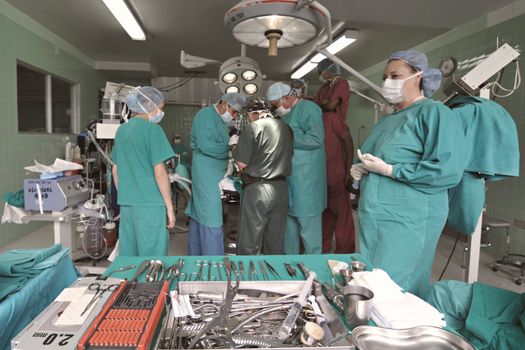
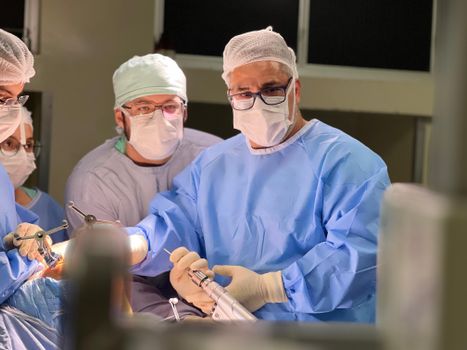
Imagine you have a teddy bear that needs a stitch because its arm is wobbly. A surgeon is like a very special kind of doctor who helps people when their bodies need fixing inside. They use special tools to carefully mend bones, remove things that should not be there, or help organs work better. They often work in hospitals and help people feel much better after they have been poorly or had an accident. It is a very important job that helps save lives and make people healthy again. To become a surgeon, you need to be very clever at school, especially in science, and then go to university for many years to learn all about the human body. After that, you spend even more years training in a hospital, learning from other surgeons. It is a long journey, but it means you become an expert at helping people with their health problems. Surgeons need to be very calm, precise, and good at making quick decisions to help their patients.

Surgeon

Flag Media

Please select a reason for flagging this content.

📊 Statistics

Starting Salary

A junior doctor, just starting their training to become a surgeon, might earn around 32,398 pounds per year.

Experienced Salary

Very experienced surgeons, who have been working for a long time, can earn much more, sometimes over 100,000 pounds per year.

Working Hours

Surgeons often work long hours, sometimes over 40 hours a week, and might need to be on call for emergencies.

🚀 Careers in this path

Flag Media

Please select a reason for flagging this content.

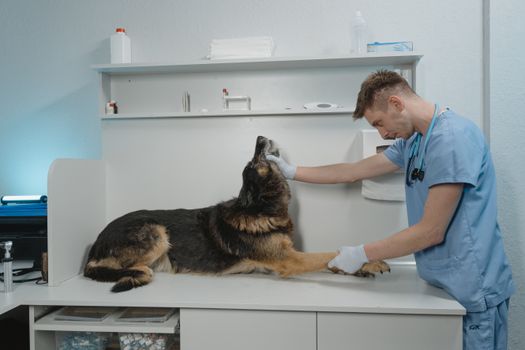
Veterinary Surgeon

A doctor for animals, helping to make poorly pets like cats, dogs, and hamsters feel better. You get to give them medicine and make sure they are healthy.

Flag Media

Please select a reason for flagging this content.

Paediatric Surgeon

A very special doctor who helps children who are poorly. They are extra gentle and good at making sure young patients get well soon and feel brave.

Flag Media

Please select a reason for flagging this content.

Orthopaedic Surgeon

A doctor who is brilliant at fixing bones, like when someone has an accident and breaks their arm or leg. They help people move properly again.

Learning at School

Study Hard in All Subjects

Pay close attention in all your lessons, especially science like biology and chemistry, and maths. These subjects are really important for understanding how the body works.

When you're at primary school and then secondary school, try your best in all your lessons. Science helps you learn about the human body, and maths helps you understand measurements and problem-solving, which surgeons do all the time! Reading lots of books will also help you learn new words and understand complex ideas.

Join Science Clubs

If your school has science clubs or activities, join them! You can do fun experiments and learn more about how things work.

Science clubs are fantastic places to get hands-on experience and see science in action. You might build models, conduct simple experiments, or learn about the different parts of the body in a fun way. This helps spark your curiosity and makes learning about science exciting, which is key for a future surgeon.

Be a Good Listener

Learning to listen carefully to your teachers and others is a very important skill for a doctor. Surgeons need to listen to their patients and their team.

Listening carefully helps you understand instructions and learn new things more effectively. When you're a surgeon, you'll need to listen to what patients tell you about how they feel, and also listen to other doctors and nurses to work as a team. Being a good listener means you won't miss important details, which can be very important in a hospital.

Becoming a Doctor

Go to University to Study Medicine

After secondary school, you need to go to university to study medicine. This is where you learn all about how the human body works and how to help poorly people.

To get into medical school at university, you'll usually need good grades in science subjects like biology and chemistry from your A-levels or equivalent. Medical school is a long course, usually five or six years, where you learn everything from anatomy (how the body is put together) to pharmacology (how medicines work). You'll also spend time in hospitals learning from real doctors.

Work as a Junior Doctor

After university, you'll start working in a hospital as a junior doctor. You'll learn from experienced doctors and help look after patients.

Once you've finished medical school, you'll complete a foundation programme, which is usually two years long. During this time, you'll rotate through different areas of the hospital, like accident and emergency, general medicine, and surgery. This experience helps you decide what kind of doctor you want to be and gives you lots of practical skills and knowledge.

Learn About Different Body Parts

As a junior doctor, you'll see many different parts of the body and learn what specialists do for each one. This helps you decide what kind of surgeon you want to be.

There are many types of surgeons, like heart surgeons, brain surgeons, or bone surgeons. As you gain more experience and learn about different specialities, you'll start to figure out which area excites you the most. This is a big decision, as it will guide your future training and career path. You'll observe surgeons at work and learn from their expertise.

Becoming a Surgeon

Specialise in Surgery

Once you've decided what kind of surgeon you want to be, you'll do special training just for that area. It's like learning to be a super expert!

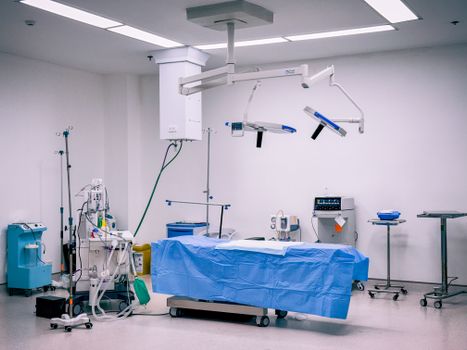
After your foundation years, you'll apply for specialist surgical training. This training is very long and competitive, often lasting many years (around 6-8 years or more, depending on the speciality). You'll learn advanced surgical techniques, spend a lot of time in operating theatres, and take difficult exams. This is where you become really skilled in your chosen surgical area, whether it's orthopaedics (bones), neurosurgery (brain), or another field.

Practice Makes Perfect

Surgeons practice a lot to get really good at their job. They learn how to use their hands very carefully and precisely.

Becoming a surgeon requires incredible precision and steady hands. You'll spend countless hours in the operating theatre, first assisting senior surgeons, then performing procedures under supervision, and eventually operating independently. Practice also includes using simulators and models to hone your skills before working on real patients. It's a continuous learning process to stay updated with new techniques and technologies.

Always Keep Learning

Even after becoming a surgeon, doctors always keep learning new things to be the very best they can be and help people even better.

The world of medicine is always changing, with new discoveries and technologies happening all the time. Surgeons attend conferences, read scientific papers, and participate in ongoing training to ensure they are using the latest and safest methods. This commitment to lifelong learning means they can offer the best possible care to their patients throughout their career, making sure they are always at the top of their game.

🎬 Useful Videos

🎯 View Apprenticeships

Explore relevant apprenticeships that can help you kickstart your career in Surgeon. Apprenticeships offer hands-on experience and training while earning a wage.

Career Progressions

This page showcases various career options and the pathways to reach them. Each career listed here shares transferable skills and knowledge, making it easier for individuals to transition between them.

Your current career is highlighted to help you see how it fits into the broader landscape of potential career choices. By clicking on any career, you can learn more about it, including the training and education required to pursue it.

Remember, progressing in your career often involves further learning and training. This page provides insights into future career options as well as those that can lead up to your current one.

These career progression decisions are informed by comparing the skills and knowledge needed for different occupations, along with data on how people move between them. Explore the possibilities and discover the exciting journey ahead in your career!

Sample Qualifications

How to become

You can get into this job through a university course or an apprenticeship.

University

To become a surgeon you'll need to complete:

  • a degree in medicine recognised by the General Medical Council
  • a 2-year foundation programme of general training
  • core surgical training in a hospital which takes 2 years
  • specialist training which can take up to 6 years

A medical degree normally takes 5 years to complete. Some courses have the option to include an extra year if you want to study a subject further. This is called an intercalated year.

You might be able to study a foundation year before starting a medical degree. This will depend on your circumstances or if you have not studied enough sciences. Check with the admissions department where you want to study.

If you already have a degree, you could take a 4-year graduate entry route into medicine. There’s lots of competition and entry requirements vary, so check with the admissions department where you want to study.

Entry tests

When you apply for a course in medicine, you may be asked to take the University Clinical Aptitude Test (UCAT).

It tests the skills you'll need on the course, like critical thinking, problem solving, data analysis, communication and scientific knowledge.

Work experience

Medical schools will also expect you to have some relevant paid or voluntary work experience. The British Medical Association provides information on how to find a placement.

Entry requirements

You'll usually need:

  • at least 5 GCSEs grades 9 to 7 (A* or A), including English maths and sciences
  • 3 A levels, or equivalent, including biology and chemistry

More Information

Apprenticeship

You might be able to do a doctor degree apprenticeship which will take around 5 years to complete.

The apprenticeship is recognised by the General Medical Council.

You could then progress to the foundation course of general training before completing the specialist training.

Entry requirements

Employers will set their own entry requirements.

More Information

More Information

Registration

Career tips

The General Medical Council has a guide on what it means to be a good doctor. You might find this useful when preparing for medical school interviews.

You can use online resources to find out more about the types of interviews you can expect to get into for medical school.

Professional and industry bodies

You could join the British Medical Association for professional development and training opportunities.

Further information

You can find out more about becoming a surgeon from the Royal College of Surgeons and Health Careers.

Interested in More Career Paths?

Explore other careers or use our AI to discover personalised paths based on your interests.

Stay connected

Join our newsletter to stay up to date on features and releases

Address
Developing Experts Limited
Exchange Street Buildings
35-37 Exchange Street
Norwich
NR2 1DP
UK

Phone
01603 273515

Email
[email protected]

Copyright 2026 Developing Experts, All rights reserved.
