
Creating Career Path...

Finding Further Careers...

Surgeon

View this career for different education levels:

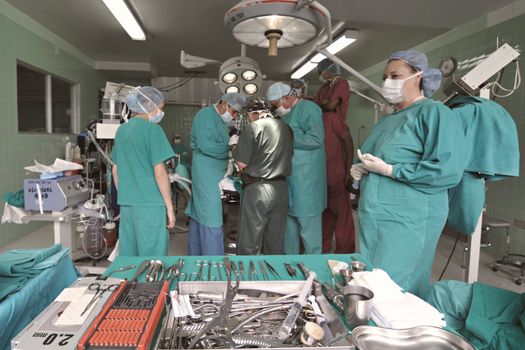
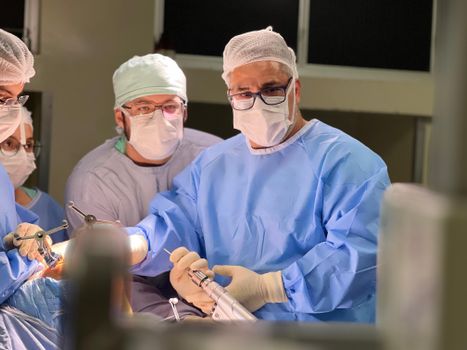
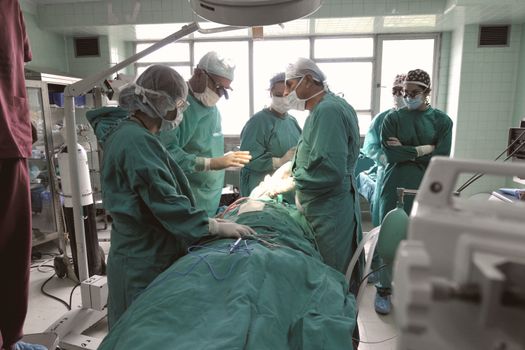
A surgeon is a highly trained doctor who performs operations to treat diseases, injuries, and deformities. They work in hospitals, usually in an operating theatre, using special tools to carefully mend or remove parts of the body that are causing problems. This might involve anything from removing an appendix to repairing a broken bone or even performing complex heart surgery. Being a surgeon requires incredible precision, knowledge of the human body, and a calm approach, especially when dealing with emergencies. They dont just operate though; they also diagnose conditions, prepare patients for surgery, and look after them afterwards to make sure they recover well. It is a very responsible and rewarding job where you can make a real difference to peoples lives. To become a surgeon in the UK, you first need to complete a medical degree at university, which usually takes five to six years. After that, you go through a structured training programme that involves working as a junior doctor in hospitals, gaining experience in different medical areas. This includes foundation training, core surgical training, and then specialist surgical training, which can take many more years, often 8 to 10 years after your initial medical degree. It is a long journey of learning and hard work, but it leads to a career where you help people get better every day.

Surgeon

Flag Media

Please select a reason for flagging this content.

📊 Statistics

Average Salary

Newly qualified surgeons in the NHS (National Health Service) typically start on a basic salary of around 32,398 to 37,303 pounds per year as a foundation doctor. As they progress through training and become a specialty registrar, this can increase to 55,329 to 63,152 pounds. Once qualified as a consultant surgeon, salaries can range from 93,666 to 126,281 pounds per year, and even higher for very experienced consultants.

Working Hours

Surgeons in the UK often work long and irregular hours. A typical working week can be over 40 hours, including evenings, weekends, and on-call duties, which means being available to come into the hospital at short notice for emergencies. This can involve working over 12-hour shifts.

Job Outlook

The demand for surgeons in the UK is generally stable and high due to the ongoing need for medical care and an ageing population. There are always opportunities within the NHS and private healthcare sectors for skilled surgeons across various specialities.

🚀 Careers in this path

Flag Media

Please select a reason for flagging this content.

Orthopaedic Surgeon

An orthopaedic surgeon fixes broken bones and helps people with problems in their joints, like knees and hips. They use special tools and their hands to repair or replace parts of the body.

Flag Media

Please select a reason for flagging this content.

Cardiac Surgeon

A cardiac surgeon is a doctor who operates on the heart. They might fix problems with heart valves or blood vessels to help people's hearts work better and keep them healthy.

Flag Media

Please select a reason for flagging this content.

Neurosurgeon

A neurosurgeon operates on the brain and the spinal cord. They are experts in these delicate parts of the body and can help people with conditions that affect how they move, think, and feel.

Early Foundations

Excel in Science and Maths

Focus on getting really good grades in Science subjects like Biology, Chemistry, and Physics, as well as Maths.

These subjects are super important because they teach you how the human body works (Biology), how medicines and chemical reactions happen (Chemistry), and how to think logically and solve problems (Physics and Maths). Aim for top marks in your GCSEs to show you have a strong understanding before moving to A-Levels.

Explore Medical Fields

Try to learn more about what doctors do. You could read books, watch documentaries, or attend school career events.

Understanding different areas of medicine helps you see if it's truly what you want to do. Look for opportunities to visit hospitals if your school arranges it, or speak to doctors you know. This early exploration helps spark your interest and shows universities you're serious.

Develop Key Skills

Start working on skills like problem-solving, teamwork, communication, and manual dexterity.

Surgeons need to be great at solving puzzles quickly (problem-solving), working well with nurses and other doctors (teamwork), explaining things clearly to patients (communication), and having very steady, precise hands (manual dexterity). You can develop these through school projects, hobbies like model making, or playing musical instruments.

Higher Education & Medical School

Achieve Strong A-Levels

Study hard for your A-Levels, particularly in Chemistry and Biology, often with a third science or Maths subject.

Most UK medical schools require excellent grades, typically A*AA or AAA, in specific science subjects. Chemistry and Biology are almost always essential, and some universities prefer Physics or Maths as your third A-Level. Good grades here are your ticket to applying for medical school.

Prepare for Medical Admissions Tests

Practice for entrance exams like UCAT or BMAT, which many medical schools require.

The UCAT (University Clinical Aptitude Test) and BMAT (BioMedical Admissions Test) are designed to assess your problem-solving, critical thinking, and scientific knowledge. These tests are challenging and require preparation, so start looking at past papers and practice questions well in advance of applying to university.

Gain Work Experience

Seek out work experience or volunteering in healthcare settings, like hospitals or care homes.

Work experience is crucial for showing your commitment and understanding of the healthcare environment. Even if you can't get direct experience shadowing a surgeon, volunteering in a care home, hospice, or even a charity shop related to healthcare, shows you understand patient care, empathy, and the realities of working with people.

Complete a Medical Degree

Undertake a five or six-year medical degree at university to become a doctor.

This is the core training to become a doctor. You'll study anatomy, physiology, diseases, and treatments, alongside lots of practical placements in hospitals and GP surgeries. You'll learn how to diagnose illnesses, communicate with patients, and work as part of a medical team. Upon graduation, you'll earn a Bachelor of Medicine, Bachelor of Surgery (MBBS or MBChB) degree.

Specialised Surgical Training

Complete Foundation Training

After university, you'll complete a two-year Foundation Programme as a junior doctor in hospitals.

This is your first paid job as a doctor! You'll rotate through different medical and surgical specialities, gaining hands-on experience and deciding which area of medicine you might want to specialise in. It's a busy but incredibly rewarding time where you put all your university learning into practice and get supervised experience.

Core Surgical Training

Apply for and complete a two-year Core Surgical Training programme after your Foundation years.

If you're still set on surgery, this programme gives you a broad experience across various surgical specialities like orthopaedics, general surgery, and emergency surgery. You'll gain more advanced surgical skills, assist in operations, and start performing some under supervision, preparing you for more advanced training.

Specialty Surgical Training

Undergo extensive specialist training in your chosen surgical field, which can last 6-8 years.

This is where you choose your specific surgical area, such as neurosurgery (brain), cardiothoracic surgery (heart and lungs), or plastic surgery. This long training period involves advanced surgical procedures, research, and exams to become an expert in your field. You'll work your way up to performing complex operations independently under the guidance of senior surgeons.

Become a Consultant Surgeon

After completing all training and exams, you can apply for a consultant surgeon position.

Once you've finished all your specialty training and passed your final exams (often including the Fellowship of the Royal College of Surgeons, FRCS), you become a fully qualified consultant surgeon. This is a senior leadership role where you're responsible for your own patients, lead surgical teams, and often teach junior doctors. It's the culmination of many years of hard work and dedication.

🎬 Useful Videos

🎯 View Apprenticeships

Explore relevant apprenticeships that can help you kickstart your career in Surgeon. Apprenticeships offer hands-on experience and training while earning a wage.

Career Progressions

This page showcases various career options and the pathways to reach them. Each career listed here shares transferable skills and knowledge, making it easier for individuals to transition between them.

Your current career is highlighted to help you see how it fits into the broader landscape of potential career choices. By clicking on any career, you can learn more about it, including the training and education required to pursue it.

Remember, progressing in your career often involves further learning and training. This page provides insights into future career options as well as those that can lead up to your current one.

These career progression decisions are informed by comparing the skills and knowledge needed for different occupations, along with data on how people move between them. Explore the possibilities and discover the exciting journey ahead in your career!

Sample Qualifications

How to become

You can get into this job through a university course or an apprenticeship.

University

To become a surgeon you'll need to complete:

  • a degree in medicine recognised by the General Medical Council
  • a 2-year foundation programme of general training
  • core surgical training in a hospital which takes 2 years
  • specialist training which can take up to 6 years

A medical degree normally takes 5 years to complete. Some courses have the option to include an extra year if you want to study a subject further. This is called an intercalated year.

You might be able to study a foundation year before starting a medical degree. This will depend on your circumstances or if you have not studied enough sciences. Check with the admissions department where you want to study.

If you already have a degree, you could take a 4-year graduate entry route into medicine. There’s lots of competition and entry requirements vary, so check with the admissions department where you want to study.

Entry tests

When you apply for a course in medicine, you may be asked to take the University Clinical Aptitude Test (UCAT).

It tests the skills you'll need on the course, like critical thinking, problem solving, data analysis, communication and scientific knowledge.

Work experience

Medical schools will also expect you to have some relevant paid or voluntary work experience. The British Medical Association provides information on how to find a placement.

Entry requirements

You'll usually need:

  • at least 5 GCSEs grades 9 to 7 (A* or A), including English maths and sciences
  • 3 A levels, or equivalent, including biology and chemistry

More Information

Apprenticeship

You might be able to do a doctor degree apprenticeship which will take around 5 years to complete.

The apprenticeship is recognised by the General Medical Council.

You could then progress to the foundation course of general training before completing the specialist training.

Entry requirements

Employers will set their own entry requirements.

More Information

More Information

Registration

Career tips

The General Medical Council has a guide on what it means to be a good doctor. You might find this useful when preparing for medical school interviews.

You can use online resources to find out more about the types of interviews you can expect to get into for medical school.

Professional and industry bodies

You could join the British Medical Association for professional development and training opportunities.

Further information

You can find out more about becoming a surgeon from the Royal College of Surgeons and Health Careers.

Interested in More Career Paths?

Explore other careers or use our AI to discover personalised paths based on your interests.

Stay connected

Join our newsletter to stay up to date on features and releases

Address
Developing Experts Limited
Exchange Street Buildings
35-37 Exchange Street
Norwich
NR2 1DP
UK

Phone
01603 273515

Email
[email protected]

Copyright 2026 Developing Experts, All rights reserved.
