
Creating Career Path...

Finding Further Careers...

Agricultural Engineer

View this career for different education levels:

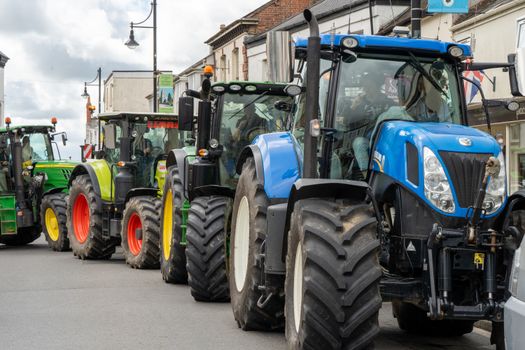
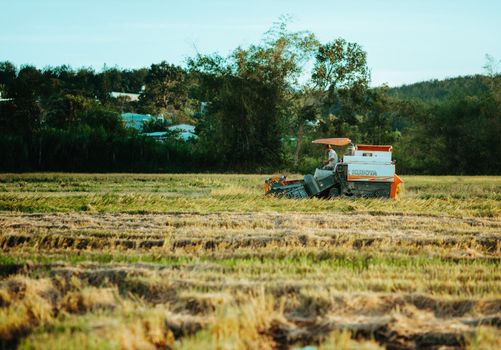
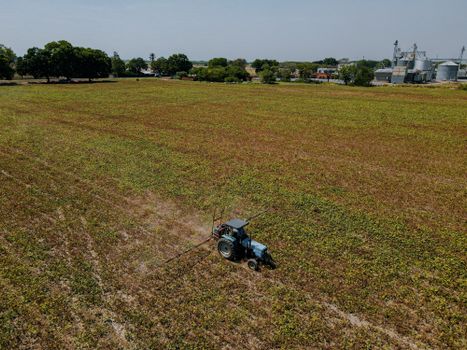
Imagine a farmer wanting to plant lots of seeds really quickly, or a farmer needing to milk hundreds of cows every day without doing it by hand. That's where an Agricultural Engineer comes in! These clever people are like inventors and problem-solvers for farms. They design, build, and fix all the amazing machines that farmers use, from giant tractors that plough fields to robotic systems that feed animals or pick fruit. They make sure farms can work well and grow food for everyone. An Agricultural Engineer might spend their day doing lots of different things. One day they might be drawing plans for a new type of automatic watering system for crops, and the next they could be out on a farm fixing a combine harvester that's stopped working. They use their knowledge of science, maths, and how things work to make farming easier, more efficient, and even more environmentally friendly. It's a job that helps feed the country and uses lots of exciting technology!

Agricultural Engineer

Flag Media

Please select a reason for flagging this content.

📊 Statistics

Salary Range

An Agricultural Engineer in the UK can expect to earn a starting salary of around 20,000 to 25,000 pounds a year. With more experience, this can go up to 35,000 to 50,000 pounds or even more for very senior roles.

Number of Jobs

There are hundreds of jobs for Agricultural Engineers across the UK, helping farms big and small. It's a specialist job, so there might not be as many roles as a teacher, but they are very important.

Future Demand

The demand for skilled Agricultural Engineers is expected to stay strong, as farming needs to become even smarter and more efficient to feed everyone in the future. New technologies like robots and drones mean new jobs too!

🚀 Careers in this path

Flag Media

Please select a reason for flagging this content.

Tractor Driver Helper

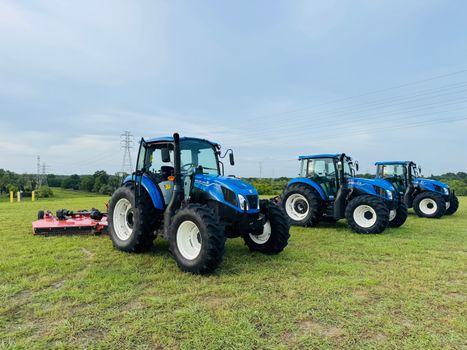
Imagine helping a farmer drive a big tractor! You'd learn how it works and what jobs it does in the fields, like ploughing or planting seeds. It's like being a co-pilot for a giant farm machine!

Flag Media

Please select a reason for flagging this content.

Farm Machine Designer

Have you ever thought about inventing a new machine for a farm? You could draw pictures and come up with ideas for tractors that can fly or robots that pick apples really fast. You'd be an inventor for the farm!

Flag Media

Please select a reason for flagging this content.

Irrigation Helper

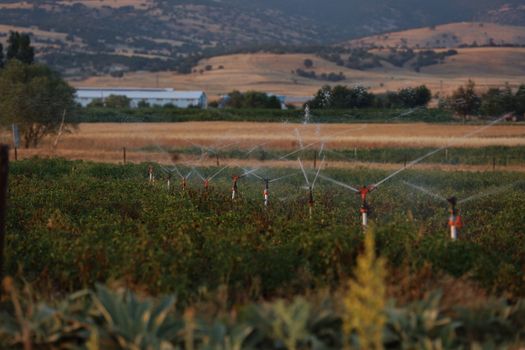
Farms need water to help plants grow. As an Irrigation Helper, you'd help set up the sprinklers and pipes that give water to all the crops. You'd make sure the plants get just the right amount to grow big and strong.

Learning About Farms and Machines

Visit a Farm

Go to a local farm or a farm show with your family to see how they work. You can learn about different crops and animals.

Visiting a farm is a brilliant way to see agricultural engineering in action! You might spot giant tractors planting seeds, or clever machines harvesting crops. Ask the farmers questions about their daily work and the tools they use. Many farms have open days or educational tours, especially during the summer holidays, which can be a fun family outing. You could also look out for agricultural shows, like the Royal Norfolk Show, where you can see all sorts of farm machinery up close and meet people who work with them.

Build With LEGO or Blocks

Try building your own toy farms, tractors, or irrigation systems using LEGO, building blocks, or even cardboard boxes.

Building things with LEGO or other construction toys is a fantastic way to develop your engineering skills. Try to design a small farm with fields for crops and pens for animals. Can you build a mini-tractor with wheels that really turn? Or maybe a simple system to move water from one place to another using tubes or ramps, just like irrigation systems on a real farm. This helps you think about how things fit together and how they move, which is exactly what engineers do!

Read Books About Farming

Find exciting books about farms, tractors, and how food grows to learn more about agriculture.

There are lots of amazing books for children all about farms, from colourful picture books about different farm animals to stories about how a farmer plants seeds and harvests crops. You can also find non-fiction books that show you the inside of a tractor or explain how different farm machines work. Look for books at your local library or bookshop, and ask a grown-up to help you find some that sound interesting. Reading these books will give you lots of fun facts and ideas about what an agricultural engineer does.

Growing Your Skills

Do Well in Maths and Science

Pay attention in your maths and science lessons at school, as these subjects are super important for engineers.

Maths helps engineers measure things, understand shapes, and work out how strong structures need to be. Science helps them understand how plants grow, how machines use energy, and how to solve problems using logical thinking. Try your best in these subjects, ask your teacher questions if you get stuck, and maybe even do some fun science experiments at home. Understanding these subjects well now will make learning more complex engineering ideas much easier when you're older.

Join a Science Club

If your school has a science or technology club, join it! You can do cool experiments and build things.

Science clubs are a fantastic place to get hands-on experience with different scientific concepts and engineering challenges. You might get to build simple robots, design bridges, or conduct experiments that teach you about forces and motion. These activities are not only fun but also help you develop problem-solving skills and a curiosity about how things work, which are key qualities for any engineer. It's a great way to meet other children who enjoy science too!

Learn About How Things Work

Be curious! Ask how things work, like bicycles, toasters, or even how water comes out of the tap.

An agricultural engineer needs to understand how all sorts of machines and systems work, so starting early by being curious about everyday objects is brilliant. When you see something new, don't just use it – wonder about it! How does a bicycle move when you pedal? What makes the toaster pop up? Where does the water in your tap come from? Asking 'how?' and 'why?' will help you think like an engineer and start to figure out solutions to problems. You could even try taking apart old, broken toys (with a grown-up's help) to see their inner workings.

Exploring Engineering Paths

Look for Engineering Workshops

Some museums or science centres have special workshops where you can try out simple engineering challenges.

Many science museums, like the Science Museum in London or local discovery centres, offer workshops or interactive exhibits for children that focus on engineering. These might involve designing and testing paper aeroplanes, building sturdy structures, or learning about simple machines like levers and pulleys. These workshops are a fun way to get practical experience with engineering principles in a playful environment and can help you see if agricultural engineering is something you'd really enjoy when you're older.

Watch Videos About Farms

Watch videos online (with a grown-up) showing cool farm machines and how they help grow food.

There are lots of amazing videos on websites like YouTube that show modern farms in action. You can see massive combine harvesters picking crops, impressive drones flying over fields to check on plants, and robotic milkers helping cows. Watching these videos can give you a visual idea of the exciting technology agricultural engineers create and use. Always make sure a grown-up is with you to help you find safe and appropriate videos to watch.

Think About Helping the Planet

Agricultural engineers often help farms be kinder to the environment. Think about ways to help nature.

A really important part of being an agricultural engineer is thinking about sustainability – helping farms grow food without harming the Earth. This could mean designing machines that use less fuel, systems that save water, or ways to make sure the soil stays healthy. Start thinking about how you can help the environment in your daily life, like recycling, saving water, or caring for plants. This will help you understand the bigger picture of how agricultural engineers make a positive difference in the world.

🎬 Useful Videos

🎯 View Apprenticeships

Explore relevant apprenticeships that can help you kickstart your career in Agricultural Engineer. Apprenticeships offer hands-on experience and training while earning a wage.

Career Progressions

This page showcases various career options and the pathways to reach them. Each career listed here shares transferable skills and knowledge, making it easier for individuals to transition between them.

Your current career is highlighted to help you see how it fits into the broader landscape of potential career choices. By clicking on any career, you can learn more about it, including the training and education required to pursue it.

Remember, progressing in your career often involves further learning and training. This page provides insights into future career options as well as those that can lead up to your current one.

These career progression decisions are informed by comparing the skills and knowledge needed for different occupations, along with data on how people move between them. Explore the possibilities and discover the exciting journey ahead in your career!

Sample Qualifications

The input career 'Agricultural Engineer' is an exact match for the official job title 'Agricultural engineer' in the provided list. Both terms refer to professionals who design and oversee the development of agricultural machinery, structures, and systems.

How to become

You can get into this job through:

  • a university course
  • a college course
  • an apprenticeship
  • working towards this role

University

You can do a foundation degree, higher national diploma or degree in:

  • agricultural engineering
  • agricultural technology
  • mechanical, electrical or electronic engineering

These courses are offered by land-based engineering institutions.

Entry requirements

You'll usually need:

  • at least 1 A level, or equivalent, for a foundation degree
  • between 1 and 3 A levels, or equivalent, for a higher national diploma or degree

More Information

College

You could do a college course to learn some of the skills and knowledge you'll need to find a trainee engineer role. 

Courses include:

  • agricultural engineering
  • land-based technology
  • T Level in Agriculture, Land Management and Production

Entry requirements

Entry requirements for these courses vary.

  • 4 or 5 GCSEs at grades 9 to 4 (A* to C), or equivalent, including English and maths for a T Level

More Information

Apprenticeship

You may be able to apply for a place on a Land-Based Service Engineering Technician Level 3 Advanced Apprenticeship.

This takes around 2 years to complete and combines on-the-job training and time spent with a learning provider.

Once working, you would go on to further training to become an engineer.

Entry requirements

You'll usually need:

  • 5 GCSEs at grades 9 to 4 (A* to C), or equivalent, including English and maths, for an advanced apprenticeship

More Information

Work

You could work as an agricultural engineering technician and train on the job to become a qualified engineer.

More Information

Career tips

As well as traditional engineering and design skills, agricultural engineers often use newer technologies to improve farming sustainability like:

  • development of robotic systems and machinery
  • GPS data and satellite imaging
  • artificial intelligence tools

Further information

You can get more advice about careers in agricultural engineering from:

Interested in More Career Paths?

Explore other careers or use our AI to discover personalised paths based on your interests.

Stay connected

Join our newsletter to stay up to date on features and releases

Address
Developing Experts Limited
Exchange Street Buildings
35-37 Exchange Street
Norwich
NR2 1DP
UK

Phone
01603 273515

Email
[email protected]

Copyright 2026 Developing Experts, All rights reserved.
