



Creating Career Path...

Finding Further Careers...

Agricultural Engineer

View this career for different education levels:

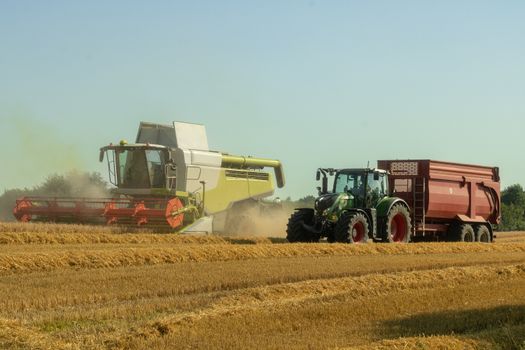
As an Agricultural Engineer in the UK, you'd be at the forefront of applying engineering principles to the production and processing of food, fibre, and fuel. This is a diverse and vital role, encompassing everything from designing and developing new farming machinery like robotic harvesters and autonomous tractors, to creating sustainable irrigation systems, and even planning the layout and construction of farm buildings. You might also focus on optimising agricultural processes to improve efficiency, reduce environmental impact, and enhance crop yields, utilising advanced technologies such as GPS, sensors, and data analytics. Your day-to-day could involve working in an office developing CAD designs, spending time on a test field evaluating new prototypes, or visiting farms to troubleshoot equipment and advise on infrastructure improvements. It requires a strong understanding of both mechanical and electrical engineering, as well as an appreciation for biological systems and environmental science. Given the increasing focus on sustainable farming and food security, agricultural engineers play a crucial role in ensuring the UK's agricultural sector remains productive, efficient, and environmentally responsible.

Agricultural Engineer

Flag Media

Please select a reason for flagging this content.

📊 Statistics

Average Salary Range

Starting salaries for Agricultural Engineers in the UK typically range from 20,000 to 28,000 annually. Experienced engineers can expect to earn between 30,000 and 45,000, with senior roles potentially exceeding 50,000 depending on specialisation and company size.

Job Market and Demand

The agricultural engineering sector in the UK maintains a steady demand, particularly for skilled professionals who can integrate new technologies. While precise 'number of positions' data fluctuates, the industry is constantly evolving, driven by innovation in automation, sustainable practices, and food production efficiency. Opportunities exist in machinery manufacturers, agricultural consultancies, research institutions, and large farming enterprises.

Employment Sector Breakdown

Roughly 40% of agricultural engineers in the UK work directly for machinery manufacturers or distributors, designing, developing, and maintaining equipment. Another significant portion (around 30%) are employed in agricultural consultancies, advising on land management, irrigation, and environmental impact. The remainder work in research, education, or directly within large-scale farming operations.

🚀 Careers in this path

Flag Media

Please select a reason for flagging this content.

Precision Agriculture Technologist

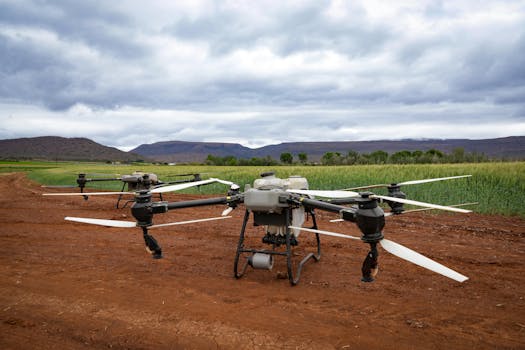
Focuses on optimising farm management using technology like GPS, drones, and sensors to monitor crops, soil, and livestock. Involves data analysis, system integration, and advising farmers on smart farming solutions to improve efficiency and sustainability.

Flag Media

Please select a reason for flagging this content.

Renewable Energy Specialist for Agriculture

Designs, implements, and maintains renewable energy systems, such as solar panels, wind turbines, or anaerobic digesters, specifically for agricultural settings. Aims to reduce the carbon footprint of farms and lower energy costs, requiring knowledge of both engineering and sustainable practices.

Flag Media

Please select a reason for flagging this content.

Agricultural Robotics Engineer

Develops and programs autonomous robots and automation systems for various farming tasks, including planting, harvesting, weeding, and animal husbandry. Requires expertise in robotics, AI, machine vision, and mechanical engineering tailored to the unique challenges of agricultural environments.

Build Your Foundation

A-Levels or Equivalent

Focus on strong STEM subjects to prepare for a university degree in engineering.

To lay a solid academic foundation, aim for A-Levels (or equivalent qualifications such as a BTEC Level 3 Extended Diploma) in subjects like Maths, Physics, and often Chemistry or a relevant BTEC in Engineering. These subjects are crucial as they provide the fundamental knowledge required for an engineering degree. Strong grades in these subjects will be essential for university admissions. If you're considering a BTEC, ensure it has a strong engineering focus.

Undergraduate Degree

Pursue a Bachelor's degree in Agricultural Engineering or a related field.

Enrolling in a BEng (Hons) or MEng (Hons) degree in Agricultural Engineering is the most direct route. Alternatively, degrees in Mechanical Engineering, Civil Engineering, or Biosystems Engineering with a strong agricultural focus can also provide a solid foundation. Look for courses accredited by the Institution of Agricultural Engineers (IAgrE) or the Engineering Council, as this can streamline your path to chartered status. Universities like Harper Adams University and Cranfield University are well-known for their agricultural engineering programmes in the UK.

Gain Practical Experience

Seek out internships or placements within the agricultural sector during your studies.

Many engineering degrees offer integrated placement years, which are invaluable. Aim to secure internships with agricultural machinery manufacturers, farm management companies, agri-tech startups, or even large commercial farms. This hands-on experience allows you to apply theoretical knowledge, understand industry challenges, and build professional networks. It also makes you a more attractive candidate for graduate roles upon completion of your degree. Don't underestimate the value of summer jobs or volunteering on farms to gain a basic understanding of agricultural operations.

Develop Your Expertise

Graduate Schemes or Entry-Level Roles

Apply for graduate programmes or entry-level positions in relevant companies.

Many larger companies in the agricultural engineering sector, such as machinery manufacturers (e.g., John Deere, CNH Industrial), processing plant designers, or consultancies, offer structured graduate schemes. These programmes typically provide rotations through different departments, offering broad exposure to various aspects of the business and accelerated professional development. If a graduate scheme isn't an option, look for junior engineer roles that offer mentorship and opportunities to work on diverse projects. Focus on roles that align with your interests, whether that's machinery design, water management, precision agriculture, or renewable energy.

Professional Development & Chartership

Work towards becoming a Chartered Engineer (CEng) through a professional institution.

Membership in a professional body like the Institution of Agricultural Engineers (IAgrE) is highly recommended. They provide resources, networking opportunities, and a clear pathway to achieving Chartered Engineer (CEng) status. This typically involves several years of supervised professional experience after your degree, followed by demonstrating competence against specific criteria and undergoing a professional review. CEng status is a globally recognised mark of engineering excellence, enhancing your credibility and career prospects significantly. Many employers will support you through this process.

Specialise in an Area

Choose a specific niche within agricultural engineering to deepen your knowledge.

The field of agricultural engineering is broad, offering various specialisms. Consider focusing on areas like precision agriculture (using data and technology to optimise farming), renewable energy in agriculture, irrigation and water management, sustainable land use, farm machinery design, food processing technology, or controlled environment agriculture (e.g., vertical farming). Specialising through further training, certifications, or by seeking out specific projects will make you an expert in your chosen domain, opening up more advanced and niche opportunities. Attending industry conferences and workshops is a great way to explore these specialisms.

Advance Your Career

Continuous Learning & Innovation

Stay updated with the latest technologies, research, and sustainable practices in agriculture.

The agricultural sector is rapidly evolving with new technologies like AI, robotics, IoT, and biotechnologies. Actively engage in continuous professional development (CPD) through courses, workshops, seminars, and industry publications. Attend trade shows and conferences like LAMMA Show or Agri-Tech East events to network and learn about innovations. Being at the forefront of technological advancements and sustainable methodologies will make you invaluable, particularly as the industry increasingly focuses on environmental impact and efficiency.

Leadership & Project Management

Take on more responsibility and lead complex agricultural engineering projects.

As you gain experience, seek opportunities to manage projects, lead teams, and mentor junior engineers. This involves developing skills in project planning, budgeting, stakeholder management, and team leadership. Successfully delivering complex projects, whether it's designing a new irrigation system, overseeing the implementation of a smart farming solution, or developing a new piece of machinery, demonstrates your capability for senior roles. Consider taking project management courses or certifications (e.g., PRINCE2) to formalise these skills.

Consultancy or Entrepreneurship

Consider moving into consultancy or starting your own agricultural engineering venture.

With significant experience and a strong network, you might explore opportunities as an independent consultant, advising farms, agri-businesses, or government bodies on engineering solutions. Alternatively, if you have an innovative idea or a unique skill set, starting your own company in agri-tech or a related field could be a fulfilling path. This requires a strong understanding of business, marketing, and often securing investment. Networking within incubators and accelerators focused on agri-food tech can provide support for entrepreneurial ambitions.

🎬 Useful Videos

🎯 View Apprenticeships

Explore relevant apprenticeships that can help you kickstart your career in Agricultural Engineer. Apprenticeships offer hands-on experience and training while earning a wage.

Career Progressions

This page showcases various career options and the pathways to reach them. Each career listed here shares transferable skills and knowledge, making it easier for individuals to transition between them.

Your current career is highlighted to help you see how it fits into the broader landscape of potential career choices. By clicking on any career, you can learn more about it, including the training and education required to pursue it.

Remember, progressing in your career often involves further learning and training. This page provides insights into future career options as well as those that can lead up to your current one.

These career progression decisions are informed by comparing the skills and knowledge needed for different occupations, along with data on how people move between them. Explore the possibilities and discover the exciting journey ahead in your career!

Sample Qualifications

The user's input 'Agricultural Engineer' is an exact match for one of the provided official job titles. Both terms refer to professionals who apply engineering principles to agricultural problems.

How to become

You can get into this job through:

  • a university course
  • a college course
  • an apprenticeship
  • working towards this role

University

You can do a foundation degree, higher national diploma or degree in:

  • agricultural engineering
  • agricultural technology
  • mechanical, electrical or electronic engineering

These courses are offered by land-based engineering institutions.

Entry requirements

You'll usually need:

  • at least 1 A level, or equivalent, for a foundation degree
  • between 1 and 3 A levels, or equivalent, for a higher national diploma or degree

More Information

College

You could do a college course to learn some of the skills and knowledge you'll need to find a trainee engineer role. 

Courses include:

  • agricultural engineering
  • land-based technology
  • T Level in Agriculture, Land Management and Production

Entry requirements

Entry requirements for these courses vary.

  • 4 or 5 GCSEs at grades 9 to 4 (A* to C), or equivalent, including English and maths for a T Level

More Information

Apprenticeship

You may be able to apply for a place on a Land-Based Service Engineering Technician Level 3 Advanced Apprenticeship.

This takes around 2 years to complete and combines on-the-job training and time spent with a learning provider.

Once working, you would go on to further training to become an engineer.

Entry requirements

You'll usually need:

  • 5 GCSEs at grades 9 to 4 (A* to C), or equivalent, including English and maths, for an advanced apprenticeship

More Information

Work

You could work as an agricultural engineering technician and train on the job to become a qualified engineer.

More Information

Career tips

As well as traditional engineering and design skills, agricultural engineers often use newer technologies to improve farming sustainability like:

  • development of robotic systems and machinery
  • GPS data and satellite imaging
  • artificial intelligence tools

Further information

You can get more advice about careers in agricultural engineering from:

Interested in More Career Paths?

Explore other careers or use our AI to discover personalised paths based on your interests.

Stay connected

Join our newsletter to stay up to date on features and releases

Address
Developing Experts Limited
Exchange Street Buildings
35-37 Exchange Street
Norwich
NR2 1DP
UK

Phone
01603 273515

Email
[email protected]

Copyright 2026 Developing Experts, All rights reserved.
