



Creating Career Path...

Finding Further Careers...

Agricultural Engineer

View this career for different education levels:

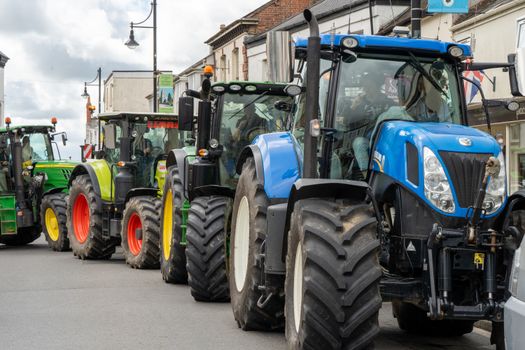
An Agricultural Engineer helps make farming more efficient and sustainable using science and engineering. Imagine all the amazing machines that farmers use, from giant tractors to clever robots that milk cows or pick fruit; an Agricultural Engineer is involved in designing, building, and maintaining these. They also work on things like irrigation systems to make sure crops get enough water, or designing farm buildings and systems to manage waste. This job involves a mix of hands-on work and problem-solving. You might be out in the field testing new equipment, or in an office using computer software to design a new piece of machinery. You need to understand how machines work, but also how plants grow and what farmers need to do their job well. It is a really important job because it helps produce the food we all eat, making sure it is done in the best way possible for the environment and for future generations.

Agricultural Engineer

Flag Media

Please select a reason for flagging this content.

📊 Statistics

Average Starting Salary

For a new graduate Agricultural Engineer in the UK, you could expect to start with a salary around 25,000 to 30,000 pounds per year.

Experienced Salary Range

With a few years of experience, Agricultural Engineers in the UK can earn between 35,000 and 55,000 pounds annually. Very experienced engineers in senior roles or specialist areas might earn more.

Job Openings

While not as numerous as some other engineering fields, there is a steady demand for skilled Agricultural Engineers across the UK, especially as farms become more high tech. Many roles are advertised through specialist recruitment agencies or directly by agricultural machinery companies and large farms.

🚀 Careers in this path

Flag Media

Please select a reason for flagging this content.

Farm Machinery Technician

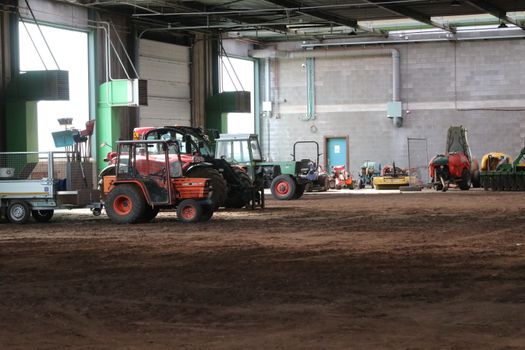
Imagine being a super mechanic for all the big tractors and other cool machines on a farm. You would fix them when they break and make sure they are always ready to work, helping farmers grow food for everyone.

Flag Media

Please select a reason for flagging this content.

Precision Agriculture Specialist

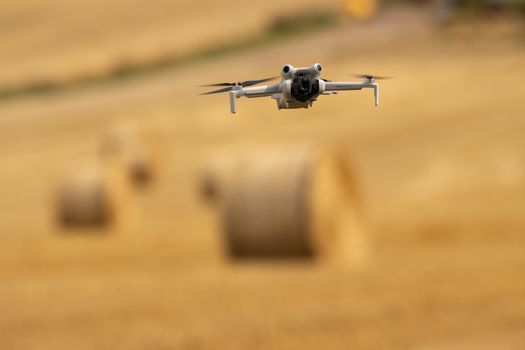
This is like being a tech wizard for farming. You would use computers, GPS, and drones to help farmers plant crops and water them perfectly, making sure nothing is wasted and everything grows really well.

Flag Media

Please select a reason for flagging this content.

Agricultural Software Developer

If you love computers and farming, this could be perfect! You would create amazing apps and software that farmers can use on their phones or computers to manage their fields, track their crops, and make smart decisions.

Build Your Foundations

Excel in STEM Subjects

Focus on subjects like Maths, Physics, Chemistry, and Design & Technology at school. These are super important for understanding how things work in engineering.

At secondary school, try to take GCSEs in Maths, Physics, Chemistry, and potentially Biology if your school offers it, or a Design & Technology subject. These subjects will give you the core knowledge needed to understand the science behind engineering and how to solve problems logically. Strong grades here will make it easier to pursue relevant A-Levels.

Explore Practical Skills

Get hands-on! Try to join clubs or do projects that involve building, fixing, or understanding how machines and systems operate.

Look for opportunities to get practical experience. This could involve joining a school STEM club, building model kits, helping with repairs around the house, or even looking into local workshops or community projects. Understanding how to use tools safely and seeing how components fit together is a valuable skill for any engineer.

Learn About Farming

Start learning about farming and food production. Understanding how farms work will help you see where engineering can make a difference.

Read books, watch documentaries, or visit local farms (if possible) to learn about different types of farming, what crops are grown, how animals are cared for, and the challenges farmers face. The more you understand about the agricultural industry, the better you'll be able to identify problems that an agricultural engineer can solve.

Gain Deeper Knowledge

Choose Relevant A-Levels

Pick A-Levels that will help you get into a university course for engineering. Maths and Physics are usually essential.

For most university engineering degrees, A-Levels in Maths and Physics are highly recommended or often required. Further Maths, Chemistry, and Design & Technology are also excellent choices. Some universities might also consider a BTEC National Diploma in Engineering if you prefer a more vocational route. Aim for good grades to give yourself the best chance of getting into your preferred university.

Pursue a University Degree

Study an engineering degree at university, ideally one that specialises in agricultural or mechanical engineering.

Look for a Bachelor's degree (BEng or MEng) in Agricultural Engineering, Biosystems Engineering, Mechanical Engineering with an agricultural focus, or similar. An MEng (Master of Engineering) usually involves an extra year and can lead to Chartered Engineer status more quickly. Research different university courses to find one that aligns with your interests and career goals in agriculture.

Seek Work Experience

Try to get some work experience on a farm, with an agricultural machinery company, or an engineering firm during your holidays.

Work experience is incredibly valuable. It helps you understand what the job is really like and can make your university applications stronger. Contact local farms, agricultural machinery dealers, or even engineering companies that work with agricultural clients. Even a short placement can give you insight into the practical side of agricultural engineering and help you build connections.

Start Your Career

Apply for Graduate Schemes

After university, look for graduate programmes with big agricultural companies or engineering firms. These schemes offer great training.

Many larger companies in the agricultural machinery, food processing, or general engineering sectors offer structured graduate schemes. These programmes usually last 1-3 years and provide rotations through different departments, formal training, and mentorship. They are an excellent way to gain broad experience and kick-start your career as an agricultural engineer.

Join Professional Organisations

Become a member of professional engineering bodies in the UK to help with your development and networking.

Consider joining organisations like the Institution of Agricultural Engineers (IAgrE) or the Institution of Mechanical Engineers (IMechE). These bodies offer resources for professional development, networking opportunities, and guidance towards achieving professional registration like Incorporated Engineer (IEng) or Chartered Engineer (CEng) status, which shows you meet high professional standards.

Continuous Learning

Keep learning about new technologies and farming methods throughout your career to stay up-to-date.

The world of agricultural engineering is constantly evolving with new technologies like robotics, AI, and sustainable practices. Attend workshops, seminars, and industry events. Read journals and online resources to keep your knowledge current. This commitment to lifelong learning will ensure you remain a valuable and innovative agricultural engineer.

🎯 View Apprenticeships

Explore relevant apprenticeships that can help you kickstart your career in Agricultural Engineer. Apprenticeships offer hands-on experience and training while earning a wage.

Career Progressions

This page showcases various career options and the pathways to reach them. Each career listed here shares transferable skills and knowledge, making it easier for individuals to transition between them.

Your current career is highlighted to help you see how it fits into the broader landscape of potential career choices. By clicking on any career, you can learn more about it, including the training and education required to pursue it.

Remember, progressing in your career often involves further learning and training. This page provides insights into future career options as well as those that can lead up to your current one.

These career progression decisions are informed by comparing the skills and knowledge needed for different occupations, along with data on how people move between them. Explore the possibilities and discover the exciting journey ahead in your career!

Sample Qualifications

The user's input 'Agricultural Engineer' is an exact match for one of the provided official job titles, indicating a direct correlation in both specialisation and professional level.

How to become

You can get into this job through:

  • a university course
  • a college course
  • an apprenticeship
  • working towards this role

University

You can do a foundation degree, higher national diploma or degree in:

  • agricultural engineering
  • agricultural technology
  • mechanical, electrical or electronic engineering

These courses are offered by land-based engineering institutions.

Entry requirements

You'll usually need:

  • at least 1 A level, or equivalent, for a foundation degree
  • between 1 and 3 A levels, or equivalent, for a higher national diploma or degree

More Information

College

You could do a college course to learn some of the skills and knowledge you'll need to find a trainee engineer role. 

Courses include:

  • agricultural engineering
  • land-based technology
  • T Level in Agriculture, Land Management and Production

Entry requirements

Entry requirements for these courses vary.

  • 4 or 5 GCSEs at grades 9 to 4 (A* to C), or equivalent, including English and maths for a T Level

More Information

Apprenticeship

You may be able to apply for a place on a Land-Based Service Engineering Technician Level 3 Advanced Apprenticeship.

This takes around 2 years to complete and combines on-the-job training and time spent with a learning provider.

Once working, you would go on to further training to become an engineer.

Entry requirements

You'll usually need:

  • 5 GCSEs at grades 9 to 4 (A* to C), or equivalent, including English and maths, for an advanced apprenticeship

More Information

Work

You could work as an agricultural engineering technician and train on the job to become a qualified engineer.

More Information

Career tips

As well as traditional engineering and design skills, agricultural engineers often use newer technologies to improve farming sustainability like:

  • development of robotic systems and machinery
  • GPS data and satellite imaging
  • artificial intelligence tools

Further information

You can get more advice about careers in agricultural engineering from:

Interested in More Career Paths?

Explore other careers or use our AI to discover personalised paths based on your interests.

Stay connected

Join our newsletter to stay up to date on features and releases

Address
Developing Experts Limited
Exchange Street Buildings
35-37 Exchange Street
Norwich
NR2 1DP
UK

Phone
01603 273515

Email
[email protected]

Copyright 2026 Developing Experts, All rights reserved.
