



Creating Career Path...

Finding Further Careers...

Lab Technician

View this career for different education levels:

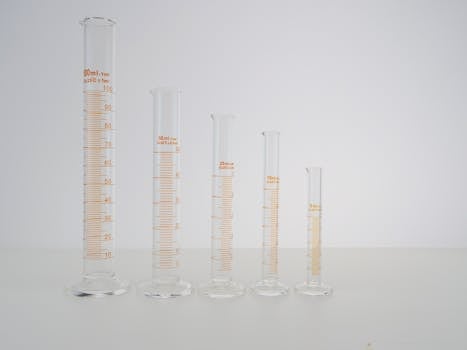
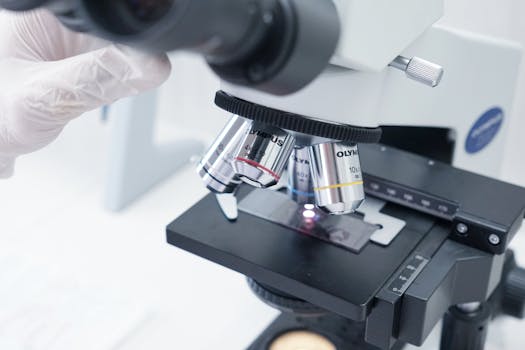
Imagine a Lab Technician as a science helper who works in a special room called a laboratory! They help scientists by setting up experiments, making sure all the equipment is clean and working properly, and carefully looking at things under microscopes. They might mix chemicals, grow tiny cells, or test samples to see what they are made of. It's a very important job because they make sure everything is safe and accurate, which helps scientists discover new medicines, understand diseases, or even invent new materials. They need to be very organised, pay close attention to details, and follow instructions carefully to make sure their work is perfect.

Lab Technician

Flag Media

Please select a reason for flagging this content.

📊 Statistics

Average Starting Salary

A new Lab Technician in the UK might expect to earn around 18000 to 22000 pounds a year. This can go up as you get more experience.

Experienced Salary

With a few years of experience, a Lab Technician could earn between 25000 and 35000 pounds a year. Some senior roles can be even higher.

Job Openings

There are many Lab Technician jobs across the UK, with hundreds of new positions advertised each month. You can find them in hospitals, universities, and science companies.

🚀 Careers in this path

Flag Media

Please select a reason for flagging this content.

Science Experiment Helper

Imagine you are a helper in a big science lab! You would get to mix colourful liquids, look at tiny things under a microscope, and help grown-up scientists set up their cool experiments. You'd make sure all the bits and pieces are ready for amazing discoveries.

Flag Media

Please select a reason for flagging this content.

Food Scientist for a Biscuit Factory

Do you love biscuits? As a Food Scientist for a biscuit factory, you would help make sure the biscuits taste delicious and are safe to eat! You might test new flavours, check the texture, and make sure every biscuit is perfect before it goes into the packet.

Flag Media

Please select a reason for flagging this content.

Animal Care Lab Assistant

If you love animals, you could be an Animal Care Lab Assistant! You would help look after animals that are helping scientists learn new things. This could mean making sure they have fresh food and water, keeping their homes clean, and making sure they are happy and healthy.

Learning About Science

Be Curious at School

Pay attention in your science lessons at primary school. Ask lots of questions about how things work and why things happen.

When you are at primary school, your teachers will teach you about plants, animals, the weather, and how things move. These are all part of science! Try to do well in your science subjects, and if your school has a science club, that would be a brilliant place to start. You could also read science books or watch educational science shows to spark your interest even more.

Explore Science Hobbies

Do fun science activities at home, like making slime, growing crystals, or building a volcano. These help you understand how experiments work.

There are lots of easy science experiments you can do with your parents or guardians at home. You can find ideas in books or online. Maybe you can explore how different colours mix, or how baking soda and vinegar can make a fizzing reaction. These hands-on activities are a great way to learn about scientific principles in a fun way.

Visit Science Museums

Go to science museums or discovery centres with your family. They have cool interactive exhibits that show science in action.

Science museums are amazing places where you can see real scientific equipment and try out experiments safely. You can often learn about different types of science, like biology, chemistry, and physics. It's a fantastic way to see what scientists and lab technicians do every day and get excited about a future in science.

Growing Your Science Skills

Choose Science Subjects

When you go to secondary school, try to pick science subjects like Biology, Chemistry, and Physics. These are super important for a lab technician.

In secondary school, you will learn science in more detail. Biology is about living things, Chemistry is about mixing materials, and Physics is about forces and energy. Getting good grades in these subjects will show that you are serious about working in a lab and will help you understand more complex scientific ideas later on.

Join School Science Clubs

If your school has a science club, join it! You'll get to do extra experiments and learn with friends who also love science.

Science clubs are a fantastic way to get more hands-on experience outside of your regular lessons. You might get to work on projects, solve puzzles, or even prepare for science competitions. It's a great opportunity to meet other students and teachers who are passionate about science and to learn new skills.

Read and Learn More

Read science books, magazines, and websites. Watch documentaries about science and new discoveries. The more you know, the better!

There are so many amazing resources out there to learn about science. Look for books about famous scientists, or magazines that explain new inventions. Watching documentaries can show you how science helps us understand the world and solve problems, which is exactly what a Lab Technician does. The more you read and watch, the more you'll understand the different areas of science.

Becoming a Lab Technician

Study at College

After secondary school, you can go to college to study a science course, like an Applied Science BTEC or A-levels in Chemistry and Biology.

To become a Lab Technician, you'll need to gain some specific qualifications. A BTEC National Diploma in Applied Science is a vocational course that gives you lots of practical lab experience. Alternatively, A-levels in science subjects like Chemistry and Biology are also excellent choices. These courses will teach you the proper techniques for working in a lab and give you a good scientific foundation.

Get Practical Experience

Look for chances to work in a lab, maybe through an apprenticeship or by volunteering. This helps you learn how a real lab works.

Practical experience is very important. An apprenticeship is a great way to learn on the job, where you work for a company and study at the same time. You could also look for work experience placements or volunteering opportunities in a science department at a hospital, university, or even a local business that has a lab. This hands-on experience will teach you valuable skills and show employers you're ready for the job.

Find a Lab Technician Job

Once you have your qualifications and some experience, you can apply for jobs as a Lab Technician in places like hospitals, universities, or factories.

When you have completed your studies and gained some practical experience, you will be ready to start applying for jobs. You can look for job openings online, through college career services, or by asking people you know who work in science. Make sure your CV (which is like a science story about you!) highlights all your qualifications and experiences to show employers you're the best person for the job!

🎬 Useful Videos

🎯 View Apprenticeships

Explore relevant apprenticeships that can help you kickstart your career in Lab Technician. Apprenticeships offer hands-on experience and training while earning a wage.

Career Progressions

This page showcases various career options and the pathways to reach them. Each career listed here shares transferable skills and knowledge, making it easier for individuals to transition between them.

Your current career is highlighted to help you see how it fits into the broader landscape of potential career choices. By clicking on any career, you can learn more about it, including the training and education required to pursue it.

Remember, progressing in your career often involves further learning and training. This page provides insights into future career options as well as those that can lead up to your current one.

These career progression decisions are informed by comparing the skills and knowledge needed for different occupations, along with data on how people move between them. Explore the possibilities and discover the exciting journey ahead in your career!

Sample Qualifications

A Lab Technician's primary role is to perform tests, analyses, and experiments in a laboratory setting, which directly aligns with the duties and qualifications of a 'Laboratory technician'.

How to become

You can get into this job through:

  • a university course
  • a college course
  • an apprenticeship
  • applying directly

University

You can do a foundation degree, higher national diploma or degree in a scientific subject to work as a laboratory technician. 

Subjects include:

  • biomedical science
  • environmental science
  • forensic science
  • materials science
  • pharmacy
  • biology, chemistry or physics

Entry requirements

You'll usually need:

  • 5 GCSEs at grades 9 to 4 (A* to C), or equivalent, including English, maths and science
  • 3 A levels or equivalent

More Information

College

You could take a college course to help improve your chances of finding a trainee lab assistant position.

You could do a course such as:

  • applied science
  • environmental science
  • chemistry, physics or biology
  • T Level in Science

Entry requirements

Entry requirements for these courses vary.

  • 4 or 5 GCSEs at grades 9 to 4 (A* to C), or equivalent, including English and maths for a T Level

More Information

Apprenticeship

You could apply for a Laboratory Technician Level 3 Advanced Apprenticeship or a Technician Scientist Level 5 Higher Apprenticeship.

These apprenticeships can take between 2 and 3 years to complete.

Entry requirements

You'll usually need:

  • 5 GCSEs at grades 9 to 4 (A* to C), or equivalent, including English and maths, for an advanced apprenticeship
  • 4 or 5 GCSEs at grades 9 to 4 (A* to C) and A levels, or equivalent, for a higher or degree apprenticeship

More Information

Direct Application

You can apply for work as a lab technician if you have experience in a:

  • university research lab
  • clinical laboratory in a hospital
  • manufacturing or industrial research facility
  • school or college science department

More Information

Professional and industry bodies

You can register with a professional body linked to your area of work for career development and training opportunities.

Further information

You can find out more about becoming a laboratory technician from the Science Council and Health Careers.

Interested in More Career Paths?

Explore other careers or use our AI to discover personalised paths based on your interests.

Stay connected

Join our newsletter to stay up to date on features and releases

Address
Developing Experts Limited
Exchange Street Buildings
35-37 Exchange Street
Norwich
NR2 1DP
UK

Phone
01603 273515

Email
[email protected]

Copyright 2026 Developing Experts, All rights reserved.
