


Creating Career Path...

Finding Further Careers...

Lab Technician

View this career for different education levels:

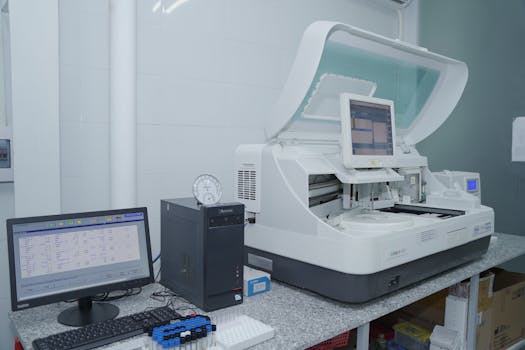
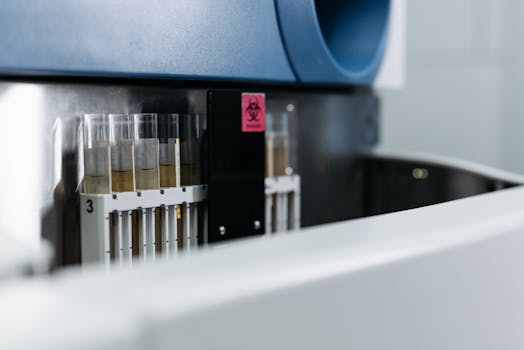
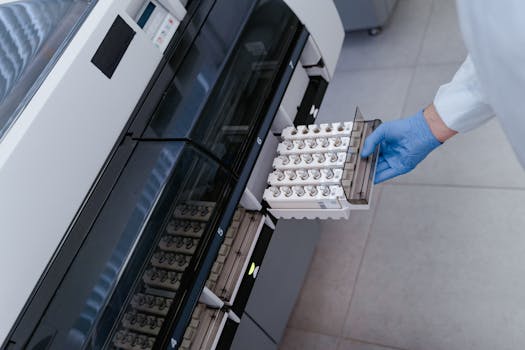
As a Lab Technician, you play a crucial supporting role in scientific research, development, and quality control across a multitude of industries in the UK. Your day-to-day work is highly practical and hands-on, involving the preparation of samples, conducting experiments, and accurately recording and analysing data. You'll be responsible for maintaining laboratory equipment, ensuring it's calibrated and functioning correctly, and adhering to strict health and safety protocols, as well as quality standards like ISO. This career path offers specialisation in various fields, from clinical pathology in hospitals to analytical chemistry in pharmaceutical companies, or materials testing in manufacturing. Your tasks will vary depending on the specific lab you work in, but commonly include preparing chemical solutions, culturing cells, running diagnostic tests, setting up complex analytical instruments, and troubleshooting equipment issues. Precision, attention to detail, and a methodical approach are paramount, as the accuracy of your work directly impacts the reliability of research findings or product quality. It's a fantastic career if you enjoy practical science, problem-solving, and contributing to advancements in technology, medicine, or product development.

Lab Technician

Flag Media

Please select a reason for flagging this content.

📊 Statistics

Average Salary Range

The typical starting salary for a Lab Technician in the UK can range from 18,000 to 24,000 pounds annually. With experience, this can increase to 25,000 to 35,000 pounds, and senior roles can command up to 40,000 pounds or more, depending on the sector and specialisation.

Number of Positions

The UK job market consistently has a good number of opportunities for Lab Technicians. According to recent data, there are often over 5,000 active job postings at any given time across various sectors like healthcare, pharmaceuticals, manufacturing, and education, indicating steady demand.

Entry Level Education

While a science-related degree (BSc) is often preferred, many entry-level Lab Technician roles are accessible with A-levels in science subjects (e.g., Biology, Chemistry, Physics) or a relevant BTEC qualification. Apprenticeships are also becoming a popular pathway into the profession.

🚀 Careers in this path

Flag Media

Please select a reason for flagging this content.

Biomedical Scientist

Works in hospital laboratories to analyse patient samples and diagnose diseases, often specialising in areas like microbiology, haematology, or transfusion science. Requires a BSc in Biomedical Science and HCPC registration.

Flag Media

Please select a reason for flagging this content.

Analytical Chemist

Applies scientific methods and instruments to identify and quantify the chemical components of substances. Roles exist in various industries including pharmaceuticals, food and drink, forensics, and environmental monitoring.

Flag Media

Please select a reason for flagging this content.

Research and Development Technician

Supports scientific research and development projects, often in industrial or academic settings. Involves setting up experiments, collecting data, maintaining equipment, and contributing to new product development or scientific discoveries.

Build Your Foundational Knowledge

Achieve Relevant GCSEs and A-Levels

Focus on science subjects to lay a strong academic foundation for a career in laboratory work. These qualifications are typically prerequisites for further education or entry-level roles.

To become a Lab Technician, you'll typically need GCSEs (grades 9-4 or A*-C) in English, Maths, and at least two science subjects (Biology, Chemistry, Physics). For A-Levels, subjects like Biology, Chemistry, Applied Science, or sometimes Maths are highly beneficial and often required for degree courses or higher apprenticeships. These subjects will provide you with the fundamental scientific principles and practical skills needed.

Consider a Relevant College Course or Apprenticeship

Explore Level 3 or 4 college courses, such as a BTEC National Diploma in Applied Science, or look into laboratory technician apprenticeships to gain practical skills alongside theoretical knowledge.

Many aspiring Lab Technicians pursue a Level 3 BTEC National Diploma in Applied Science, which provides a vocational pathway with a strong focus on practical laboratory techniques and scientific theory. Alternatively, a Level 3 Laboratory Technician Apprenticeship allows you to learn on the job, gaining valuable workplace experience and a recognised qualification while earning a salary. These routes are excellent for hands-on learners.

Explore Higher Education Options

While not always essential, a higher education qualification like a university degree can open up more advanced roles and specialisations within laboratory science.

A Foundation Degree, Higher National Diploma (HND), or a Bachelor's Degree (BSc) in subjects like Biomedical Science, Applied Biology, Chemistry, or Forensic Science can significantly enhance your career prospects. These programmes offer in-depth scientific knowledge, advanced practical skills, and critical thinking abilities, often leading to more senior or specialised Lab Technician roles, or even pathways into scientific research.

Gain Practical Experience & Skills

Seek Work Experience or Volunteering Opportunities

Practical experience in a laboratory setting is invaluable. Look for opportunities in university labs, hospitals, research institutes, or even industrial settings.

Gaining hands-on experience, even if unpaid, demonstrates your commitment and familiarises you with daily lab operations, equipment, and safety protocols. Contact local universities, hospitals (NHS trusts), pharmaceutical companies, or environmental agencies to inquire about work placements, internships, or volunteer roles. This experience will make your CV stand out and help you build a professional network.

Develop Core Laboratory Skills

Master essential lab techniques such as sample preparation, accurate measurement, data recording, and the safe operation and maintenance of lab equipment.

Key skills include aseptic technique, microscopy, spectrophotometry, chromatography, pipetting, calibration, and understanding COSHH regulations. You'll also need excellent attention to detail for accurate record-keeping, problem-solving abilities for troubleshooting equipment, and strong organisational skills to manage samples and reagents effectively. Many of these skills are honed through practical work during your studies or work experience.

Prioritise Health & Safety Training

Understand and adhere to stringent health and safety regulations, which are paramount in any laboratory environment. Formal training is often provided by employers.

Lab work involves handling hazardous chemicals, biological samples, and delicate equipment, making safety knowledge critical. You'll need to be familiar with COSHH (Control of Substances Hazardous to Health) regulations, risk assessments, correct use of Personal Protective Equipment (PPE), and emergency procedures. Many employers provide specific health and safety training upon employment, but demonstrating an existing awareness is a significant advantage.

Secure Your First Role & Progress

Craft a Strong CV and Cover Letter

Highlight your scientific qualifications, practical skills, and any relevant work experience. Tailor each application to the specific job description.

Your CV should clearly list your qualifications, relevant modules, practical skills acquired (e.g., PCR, cell culture, microscopy), and any lab-based projects or work experience. The cover letter is your opportunity to express your enthusiasm for the role and demonstrate how your skills and experience align with the employer's requirements. Quantify achievements where possible and always proofread carefully.

Search for Entry-Level Lab Technician Positions

Look for job openings in various sectors such as healthcare (NHS), pharmaceuticals, biotechnology, environmental agencies, food production, and university research labs.

Use job boards like NHS Jobs, Indeed, Reed, New Scientist Jobs, and university career pages. Many roles will be advertised as 'Junior Lab Technician', 'Trainee Lab Technician', or 'Scientific Support Officer'. Consider applying for roles that offer opportunities for professional development and further training, as this will be key to your long-term growth.

Pursue Continuous Professional Development (CPD)

Stay updated with new techniques, technologies, and scientific advancements through training courses, workshops, and professional body memberships.

The scientific field is constantly evolving, so continuous learning is essential. Consider joining professional bodies like the Institute of Science and Technology (IST) or the Royal Society of Chemistry (RSC), which offer resources, networking opportunities, and structured CPD programmes. Your employer may also offer internal training or support for external courses, helping you to specialise or advance into senior technician or management roles.

🎬 Useful Videos

🎯 View Apprenticeships

Explore relevant apprenticeships that can help you kickstart your career in Lab Technician. Apprenticeships offer hands-on experience and training while earning a wage.

Career Progressions

This page showcases various career options and the pathways to reach them. Each career listed here shares transferable skills and knowledge, making it easier for individuals to transition between them.

Your current career is highlighted to help you see how it fits into the broader landscape of potential career choices. By clicking on any career, you can learn more about it, including the training and education required to pursue it.

Remember, progressing in your career often involves further learning and training. This page provides insights into future career options as well as those that can lead up to your current one.

These career progression decisions are informed by comparing the skills and knowledge needed for different occupations, along with data on how people move between them. Explore the possibilities and discover the exciting journey ahead in your career!

Sample Qualifications

A Lab Technician, often referred to in British English as a Laboratory technician, is responsible for conducting tests, experiments, and analyses in a laboratory setting, which directly aligns with the duties implied by the user's input.

How to become

You can get into this job through:

  • a university course
  • a college course
  • an apprenticeship
  • applying directly

University

You can do a foundation degree, higher national diploma or degree in a scientific subject to work as a laboratory technician. 

Subjects include:

  • biomedical science
  • environmental science
  • forensic science
  • materials science
  • pharmacy
  • biology, chemistry or physics

Entry requirements

You'll usually need:

  • 5 GCSEs at grades 9 to 4 (A* to C), or equivalent, including English, maths and science
  • 3 A levels or equivalent

More Information

College

You could take a college course to help improve your chances of finding a trainee lab assistant position.

You could do a course such as:

  • applied science
  • environmental science
  • chemistry, physics or biology
  • T Level in Science

Entry requirements

Entry requirements for these courses vary.

  • 4 or 5 GCSEs at grades 9 to 4 (A* to C), or equivalent, including English and maths for a T Level

More Information

Apprenticeship

You could apply for a Laboratory Technician Level 3 Advanced Apprenticeship or a Technician Scientist Level 5 Higher Apprenticeship.

These apprenticeships can take between 2 and 3 years to complete.

Entry requirements

You'll usually need:

  • 5 GCSEs at grades 9 to 4 (A* to C), or equivalent, including English and maths, for an advanced apprenticeship
  • 4 or 5 GCSEs at grades 9 to 4 (A* to C) and A levels, or equivalent, for a higher or degree apprenticeship

More Information

Direct Application

You can apply for work as a lab technician if you have experience in a:

  • university research lab
  • clinical laboratory in a hospital
  • manufacturing or industrial research facility
  • school or college science department

More Information

Professional and industry bodies

You can register with a professional body linked to your area of work for career development and training opportunities.

Further information

You can find out more about becoming a laboratory technician from the Science Council and Health Careers.

Interested in More Career Paths?

Explore other careers or use our AI to discover personalised paths based on your interests.

Stay connected

Join our newsletter to stay up to date on features and releases

Address
Developing Experts Limited
Exchange Street Buildings
35-37 Exchange Street
Norwich
NR2 1DP
UK

Phone
01603 273515

Email
[email protected]

Copyright 2026 Developing Experts, All rights reserved.
