


Creating Career Path...

Finding Further Careers...

Park Ranger

View this career for different education levels:

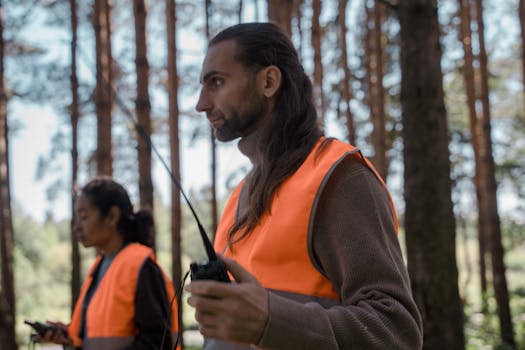
Park rangers in the UK are responsible for protecting and managing national parks, nature reserves, and countryside areas. Their work includes maintaining footpaths and habitats, monitoring wildlife, leading educational activities, and ensuring visitor safety. Park rangers also work with local communities and volunteers to promote conservation efforts and may be involved in enforcing park regulations. The role is ideal for those who enjoy working outdoors and have a passion for the environment and wildlife conservation.

Park Ranger

Flag Media

Please select a reason for flagging this content.

📊 Statistics

Average Salary

Park rangers in the UK typically earn between £18,000 and £28,000 per year, with experienced senior rangers earning up to £35,000.

Number of Positions

There are over 2,000 park ranger and related conservation roles across the UK, with jobs available in national parks, local councils, and private estates.

Typical Working Hours

Park rangers usually work 37 to 40 hours per week, with some weekend and evening work required, especially during busy tourist seasons.

🚀 Careers in this path

Flag Media

Please select a reason for flagging this content.

Wildlife Conservation Officer

Works to protect and manage animal habitats, monitor wildlife populations, and enforce conservation laws in national parks and nature reserves.

Flag Media

Please select a reason for flagging this content.

Education Ranger

Focuses on leading educational programmes and guided tours for school groups and visitors, teaching them about local wildlife and conservation.

Visitor Services Ranger

Specialises in helping park visitors by providing information, leading activities, and ensuring the safety and enjoyment of everyone in the park.

Develop a Strong Foundation in Science and Outdoor Skills

Study Science Subjects at School

Focus on subjects such as biology, geography, and environmental science to build your knowledge of the natural world.

Having a good understanding of science will help you learn about ecosystems, wildlife, and conservation. Attending outdoor clubs, volunteering for environmental projects, or participating in groups like Scouts or Duke of Edinburgh can also build valuable practical skills.

Get Involved in Outdoor Activities

Take part in outdoor activities such as hiking, camping, or wildlife watching to gain practical experience in nature.

Spending time in natural environments will help you become comfortable in the outdoors, which is essential for a Park Ranger. You can also volunteer with local conservation groups or nature reserves to gain hands-on experience.

Gain Relevant Qualifications and Experience

Complete Further Education or Training

Consider studying for qualifications in countryside management, environmental conservation, or a related field.

You could take a college course such as a Level 3 Diploma in Countryside Management or Environmental Conservation. Alternatively, you could pursue a degree in environmental science, ecology, or wildlife management. Apprenticeships in countryside management are also available.

Volunteer or Work in Conservation

Gain practical experience by volunteering or working with organisations such as the National Trust, RSPB, or local councils.

Many employers value hands-on experience, so volunteering for conservation projects or working as a seasonal assistant in parks can help you build your skills and network. Look for opportunities to assist with habitat management, guided walks, or educational programmes.

Apply for Park Ranger Positions

Search and Apply for Park Ranger Jobs

Look for entry-level Park Ranger or countryside warden positions with organisations such as Natural England, National Parks, or local authorities.

Job vacancies can be found on government websites, local authority job boards, and conservation organisation websites. Tailor your CV to highlight your relevant education, experience, and passion for conservation. Prepare for interviews by researching the organisation and demonstrating your commitment to protecting the natural environment.

Continue Professional Development

Once employed, seek opportunities for further training and development in areas such as first aid, wildlife management, and public engagement.

Many Park Rangers go on to specialise in areas like education, habitat management, or enforcement. Continuing your professional development will help you progress in your career and take on more responsibility.

🎯 View Apprenticeships

Explore relevant apprenticeships that can help you kickstart your career in Park Ranger. Apprenticeships offer hands-on experience and training while earning a wage.

Career Progressions

This page showcases various career options and the pathways to reach them. Each career listed here shares transferable skills and knowledge, making it easier for individuals to transition between them.

Your current career is highlighted to help you see how it fits into the broader landscape of potential career choices. By clicking on any career, you can learn more about it, including the training and education required to pursue it.

Remember, progressing in your career often involves further learning and training. This page provides insights into future career options as well as those that can lead up to your current one.

These career progression decisions are informed by comparing the skills and knowledge needed for different occupations, along with data on how people move between them. Explore the possibilities and discover the exciting journey ahead in your career!

Sample Qualifications

A Park Ranger and a Countryside officer both work to manage and protect natural areas and resources, often engaging in conservation efforts, enforcing regulations, and providing information to the public. Their roles are closely aligned in terms of environmental stewardship and outdoor management within rural or protected landscapes.

How to become

You can get into this job through:

  • a university course
  • a college course
  • an apprenticeship
  • working towards this role

University

You could do a foundation degree, higher national diploma or degree before applying for work as a countryside officer.

Relevant courses include:

  • countryside or environmental management
  • ecology and geography
  • environmental studies
  • plant biology
  • conservation

Entry requirements

You'll usually need:

  • 1 or 2 A levels, or equivalent, for a foundation degree or higher national diploma
  • 2 to 3 A levels, or equivalent, for a degree

More Information

College

You may be able to start as a trainee countryside officer after completing a course at an agricultural college, such as:

  • countryside studies
  • countryside management
  • T Level in Agriculture, Land Management and Production

Entry requirements

Entry requirements for these courses vary.

  • 4 or 5 GCSEs at grades 9 to 4 (A* to C), or equivalent, including English and maths for a T Level

More Information

Apprenticeship

You could apply to do a Countryside Ranger Level 4 Higher Apprenticeship.

This can take around two and half years to complete.

Entry requirements

You'll usually need:

  • 4 or 5 GCSEs at grades 9 to 4 (A* to C) and A levels, or equivalent, for a higher or degree apprenticeship

More Information

Work

You may be able to join an organisation as a countryside ranger, or assistant officer, and work your way up through on-the-job training and promotion.

Volunteering

Volunteering is a good way to get practical experience, meet new people and develop your network of contacts.

You can find opportunities with:

More Information

Professional and industry bodies

You could join the Countryside Management Association for professional development training.

Further information

You can get more details about working in the countryside from:

Interested in More Career Paths?

Explore other careers or use our AI to discover personalised paths based on your interests.

Stay connected

Join our newsletter to stay up to date on features and releases

Address
Developing Experts Limited
Exchange Street Buildings
35-37 Exchange Street
Norwich
NR2 1DP
UK

Phone
01603 273515

Email
[email protected]

Copyright 2025 Developing Experts, All rights reserved.
