

Creating Career Path...

Finding Further Careers...

Park Ranger

View this career for different education levels:

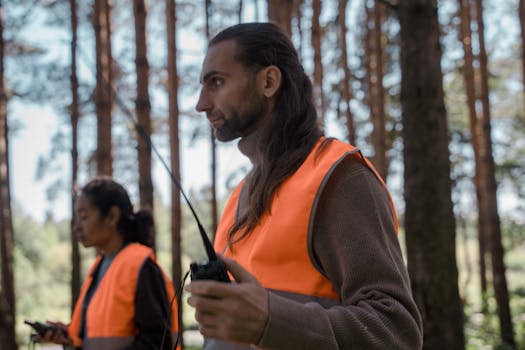
Park rangers in the UK play a vital role in managing and protecting national parks, nature reserves, and other public green spaces. Their main duties include conserving wildlife and habitats, maintaining trails and facilities, educating visitors about the natural environment, and enforcing park rules to ensure public safety. Park rangers may also be involved in organising community events, running guided walks, and working with volunteers or local schools. The job can be physically demanding and often requires working outdoors in all weather conditions. A passion for nature, good communication skills, and the ability to handle emergencies are important qualities for this role.

Park Ranger

Flag Media

Please select a reason for flagging this content.

📊 Statistics

Average Salary

Park rangers in the UK typically earn between £18,000 and £29,000 per year, depending on experience and location.

Employment Opportunities

There are around 5,000 to 7,000 park ranger and related roles across the UK, primarily within national parks, nature reserves, and local councils.

Typical Working Hours

Park rangers usually work 37 to 40 hours per week, often including weekends and public holidays.

🚀 Careers in this path

Flag Media

Please select a reason for flagging this content.

National Park Education Ranger

Works in national parks to deliver educational programmes and guided walks for school groups and visitors, focusing on the local environment and conservation.

Flag Media

Please select a reason for flagging this content.

Wildlife Conservation Officer

Protects and manages habitats for wildlife, carries out surveys, and works on projects to conserve rare species within parks and nature reserves.

Heritage Site Warden

Looks after historical or archaeological sites within park areas, providing information to visitors and ensuring the protection of cultural heritage.

Develop Knowledge of Nature and Conservation

Study Science Subjects

Focus on subjects like Biology, Geography, and Environmental Science at GCSE and A-level.

Having a strong background in science subjects will help you understand ecosystems, wildlife, and conservation practices. These subjects are often valued by employers and will provide a good foundation for further study or training.

Volunteer in Outdoor or Conservation Projects

Gain experience by helping with local wildlife groups, nature reserves, or community clean-ups.

Volunteering allows you to develop practical skills, such as habitat management and public engagement, and demonstrates your commitment to conservation. Many organisations like The Wildlife Trusts or National Trust offer volunteer opportunities for young people.

Pursue Relevant Qualifications

Complete Further Education

Consider studying for a degree or diploma in Countryside Management, Environmental Science, or a related subject.

While not always essential, a degree or diploma can improve your chances of finding work as a Park Ranger. Relevant courses are offered by universities and colleges across the UK. Some roles may accept equivalent experience or vocational qualifications.

Obtain First Aid and Outdoor Skills Certificates

Take courses in outdoor first aid, map reading, and other practical skills.

First aid knowledge is often required for Park Rangers. Additional skills such as navigation, risk assessment, and even chainsaw use (with proper certification) can make you more employable.

Apply for Park Ranger Roles

Look for Entry-Level Ranger or Assistant Positions

Search for jobs with local councils, national parks, or charitable organisations.

Entry-level roles may include titles like Assistant Ranger, Conservation Worker, or Visitor Services Assistant. These positions provide on-the-job training and the chance to develop your skills further.

Prepare for Interviews and Assessments

Show your passion for nature and your ability to work outdoors and with the public.

Employers look for enthusiasm, knowledge of local wildlife, and strong people skills. Be ready to talk about your experiences, both paid and voluntary, and how you handle responsibility and teamwork.

🎯 View Apprenticeships

Explore relevant apprenticeships that can help you kickstart your career in Park Ranger. Apprenticeships offer hands-on experience and training while earning a wage.

Career Progressions

No career progressions found for Park Ranger

Sample Qualifications

A Park Ranger and a Countryside officer both work to protect and manage natural areas, ensuring the preservation of wildlife and public safety. They often perform similar duties such as environmental monitoring, engaging with visitors, and maintaining the natural landscape.

How to become

You can get into this job through:

  • a university course
  • a college course
  • an apprenticeship
  • working towards this role

University

You could do a foundation degree, higher national diploma or degree before applying for work as a countryside officer.

Relevant courses include:

  • countryside or environmental management
  • ecology and geography
  • environmental studies
  • plant biology
  • conservation

Entry requirements

You'll usually need:

  • 1 or 2 A levels, or equivalent, for a foundation degree or higher national diploma
  • 2 to 3 A levels, or equivalent, for a degree

More Information

College

You may be able to start as a trainee countryside officer after completing a course at an agricultural college, such as:

  • countryside studies
  • countryside management
  • T Level in Agriculture, Land Management and Production

Entry requirements

Entry requirements for these courses vary.

  • 4 or 5 GCSEs at grades 9 to 4 (A* to C), or equivalent, including English and maths for a T Level

More Information

Apprenticeship

You could apply to do a Countryside Ranger Level 4 Higher Apprenticeship.

This can take around two and half years to complete.

Entry requirements

You'll usually need:

  • 4 or 5 GCSEs at grades 9 to 4 (A* to C) and A levels, or equivalent, for a higher or degree apprenticeship

More Information

Work

You may be able to join an organisation as a countryside ranger, or assistant officer, and work your way up through on-the-job training and promotion.

Volunteering

Volunteering is a good way to get practical experience, meet new people and develop your network of contacts.

You can find opportunities with:

More Information

Professional and industry bodies

You could join the Countryside Management Association for professional development training.

Further information

You can get more details about working in the countryside from:

Interested in More Career Paths?

Explore other careers or use our AI to discover personalised paths based on your interests.

Stay connected

Join our newsletter to stay up to date on features and releases

Address
Developing Experts Limited
Exchange Street Buildings
35-37 Exchange Street
Norwich
NR2 1DP
UK

Phone
01603 273515

Email
[email protected]

Copyright 2025 Developing Experts, All rights reserved.
