





Creating Career Path...

Finding Further Careers...

Food Scientist

View this career for different education levels:

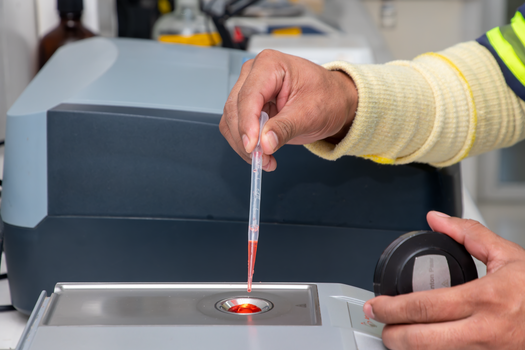
A Food Scientist in the UK is at the forefront of ensuring the food we eat is safe, nutritious, and appealing. Their work is incredibly diverse, spanning from researching new ingredients and developing innovative food products to improving existing ones. This could involve experimenting with different formulations to enhance flavour, texture, or shelf life, all while considering nutritional value and production costs. You might find yourself working in a lab conducting analytical tests on food samples, or in a pilot plant scaling up a new recipe for mass production. Keeping abreast of food safety regulations and quality control standards is also a critical part of the job, ensuring products meet legal requirements and consumer expectations. This career demands a strong understanding of chemistry, biology, microbiology, and engineering principles, often applied within a highly practical setting. Food Scientists play a vital role in various sectors including manufacturing, research and development, quality assurance, and regulatory affairs within the food and drink industry. They are key to addressing global challenges such as sustainable food production, reducing food waste, and developing healthier eating options. If you've got a scientific mind and a passion for food, this career offers a fantastic opportunity to make a tangible impact on what ends up on our plates.

Food Scientist

Flag Media

Please select a reason for flagging this content.

📊 Statistics

Average UK Salary (Experienced)

For experienced Food Scientists in the UK, the average salary typically ranges from £30,000 to £45,000 per year, though senior roles can exceed £55,000.

Entry-Level UK Salary

Graduates or those new to the profession can expect an entry-level salary in the UK to be around £20,000 to £25,000 per year.

Job Growth Outlook

The food and drink industry is a significant employer in the UK, and the demand for Food Scientists remains steady due to ongoing innovation, food safety regulations, and consumer trends. Hundreds of positions are advertised annually across the UK.

🚀 Careers in this path

Flag Media

Please select a reason for flagging this content.

Food Technologist

As a Food Technologist, you would be involved in developing new food and drink products, improving existing ones, and ensuring food safety and quality standards are met throughout the production process. This includes researching ingredients, designing processing methods, and conducting sensory evaluation.

Flag Media

Please select a reason for flagging this content.

New Product Development Technologist

Specialising in New Product Development (NPD), you would focus specifically on bringing new food concepts from idea to market. This involves market research, recipe formulation, scaling up production, packaging design, and collaborating with marketing and sales teams.

Flag Media

Please select a reason for flagging this content.

Quality Assurance Technologist

In a Quality Assurance (QA) role, your primary focus would be on ensuring that food products consistently meet safety, quality, and legal standards. This involves implementing and monitoring quality management systems, conducting audits, analysing data, and addressing any non-conformances.

Foundation & Education

Gain Relevant Qualifications

Secure a strong academic foundation, typically starting with A-levels in science subjects.

To pursue a career in food science, a strong scientific background is essential. At A-level, focus on subjects like Chemistry, Biology, Physics, and Mathematics. These subjects provide the fundamental knowledge needed for university-level study in food science or related disciplines. Aim for good grades as they will be crucial for university admissions.

Pursue a Degree in Food Science

Enrol in an undergraduate degree programme specifically in Food Science or a closely related field.

A Bachelor's degree (BSc) in Food Science, Food Technology, Food Nutrition, or a related scientific field (e.g., Chemistry, Biochemistry, Microbiology) is usually the minimum entry requirement for a Food Scientist role. Look for programmes accredited by relevant bodies where possible, as they often include practical lab work, industry placements, and a curriculum designed to meet industry needs. Research different university programmes to find one that aligns with your specific interests within food science.

Consider Postgraduate Study

For specialist roles or research-focused careers, a Master's or PhD degree is highly beneficial.

While an undergraduate degree can get you started, a Master's (MSc) or PhD can open doors to more advanced research and development roles, academic positions, or leadership roles. Postgraduate study allows for deeper specialisation in areas like food safety, product development, sensory science, or food microbiology. It also demonstrates a higher level of commitment and expertise to potential employers.

Practical Experience & Networking

Undertake Internships or Placements

Gain hands-on experience in the food industry through internships, year-long placements, or work experience schemes.

Practical experience is invaluable. Many university courses offer a 'sandwich year' placement, which allows you to work in the industry for a year. Alternatively, seek out summer internships or short-term work experience with food manufacturers, research institutions, or regulatory bodies. This not only gives you practical skills and industry insight but also helps you build a professional network and makes your CV stand out.

Join Professional Organisations

Become a member of professional bodies to access resources, networking events, and career development opportunities.

Joining organisations like the Institute of Food Science & Technology (IFST) in the UK can provide significant benefits. These bodies offer access to industry news, journals, webinars, conferences, and mentorship programmes. They are excellent platforms for networking with professionals, staying updated on industry trends, and potentially finding job opportunities. Many offer student memberships at a reduced rate.

Develop Key Skills

Focus on developing analytical, problem-solving, and communication skills, alongside technical proficiency.

Beyond scientific knowledge, employers value a range of soft skills. Analytical skills are crucial for interpreting data and conducting experiments. Problem-solving abilities are essential for troubleshooting issues in food production or product development. Good communication, both written and verbal, is vital for collaborating with teams, presenting findings, and writing reports. Proficiency in laboratory techniques, data analysis software, and project management tools will also be highly beneficial.

Career Progression & Specialisation

Secure an Entry-Level Role

Apply for junior positions in food science, such as a Junior Food Technologist, Product Development Assistant, or Lab Assistant.

Your first role is about getting your foot in the door. Look for positions with food manufacturers, retailers with their own brand development teams, food research institutes, or government agencies. These roles will allow you to apply your academic knowledge in a practical setting, learn industry-specific processes, and gain experience under supervision. Be prepared to start with foundational tasks and demonstrate your enthusiasm to learn and grow.

Pursue Continuous Professional Development (CPD)

Actively engage in ongoing learning, training courses, and workshops to keep your skills and knowledge current.

The food industry is constantly evolving with new technologies, regulations, and consumer trends. CPD is vital to stay competitive. This could involve attending specialist workshops on areas like novel food ingredients, food safety regulations (e.g., HACCP), or advanced analytical techniques. Many professional bodies offer CPD frameworks and resources to help members plan their learning journey and maintain their professional competence.

Specialise in a Niche Area

As your career progresses, consider specialising in a specific area of food science that aligns with your interests and market demand.

Food science is a broad field. After gaining some experience, you might find a particular area you're passionate about, such as sensory science, food microbiology, new product development, food safety and quality assurance, food engineering, or sustainable food systems. Specialising can lead to more senior and impactful roles, and position you as an expert in your chosen field, potentially opening doors to leadership or consultancy opportunities.

🎬 Useful Videos

🎯 View Apprenticeships

Explore relevant apprenticeships that can help you kickstart your career in Food Scientist. Apprenticeships offer hands-on experience and training while earning a wage.

Career Progressions

This page showcases various career options and the pathways to reach them. Each career listed here shares transferable skills and knowledge, making it easier for individuals to transition between them.

Your current career is highlighted to help you see how it fits into the broader landscape of potential career choices. By clicking on any career, you can learn more about it, including the training and education required to pursue it.

Remember, progressing in your career often involves further learning and training. This page provides insights into future career options as well as those that can lead up to your current one.

These career progression decisions are informed by comparing the skills and knowledge needed for different occupations, along with data on how people move between them. Explore the possibilities and discover the exciting journey ahead in your career!

Sample Qualifications

The user's input career 'Food Scientist' is an exact match for one of the official job titles provided in the list. This role directly aligns with the scientific study of food.

How to become

You can get into this job through:

  • a university course
  • an apprenticeship
  • working towards this role

University

You'll usually need a foundation degree, higher national diploma or degree in a subject like:

  • food science and technology
  • food and nutritional science
  • food technology and product development

You may be able to study for a postgraduate qualification in food science if you have a related first degree, such as:

  • biochemistry
  • microbiology
  • agricultural science

You can search for degree and postgraduate courses accredited by the Institute of Food Science and Technology.

Experience of working in a food science or food development environment, for example through an industrial placement during your course, may improve your career prospects.

Entry requirements

You'll usually need:

  • 4 or 5 GCSEs at grades 9 to 4 (A* to C), or equivalent, including English, maths and science
  • 2 or 3 A levels, or equivalent, including a science, for a degree
  • a degree in a relevant subject for postgraduate study

More Information

Apprenticeship

You could apply to do an apprenticeship, for example:

  • Food Technologist Level 3 Advanced Apprenticeship
  • Food Industry Technical Professional Level 6 Degree Apprenticeship

These take between 2 and 4 years to complete, and are a mix of on-the-job training and classroom study.

Entry requirements

You'll usually need:

  • 5 GCSEs at grades 9 to 4 (A* to C), or equivalent, including English and maths, for an advanced apprenticeship
  • 4 or 5 GCSEs at grades 9 to 4 (A* to C) and A levels, or equivalent, for a degree apprenticeship

More Information

Work

You could start as a food technologist, development assistant or lab technician with a food manufacturer. You would then study for relevant qualifications while you work.

More Information

Professional and industry bodies

You can join the Institute of Food Science and Technology for professional development opportunities, industry news and access to career resources.

Further information

You can find out more about how to become a food scientist from the Institute of Food Science and Technology.

Interested in More Career Paths?

Explore other careers or use our AI to discover personalised paths based on your interests.

Stay connected

Join our newsletter to stay up to date on features and releases

Address
Developing Experts Limited
Exchange Street Buildings
35-37 Exchange Street
Norwich
NR2 1DP
UK

Phone
01603 273515

Email
[email protected]

Copyright 2026 Developing Experts, All rights reserved.
