

Creating Career Path...

Finding Further Careers...

Optician

View this career for different education levels:

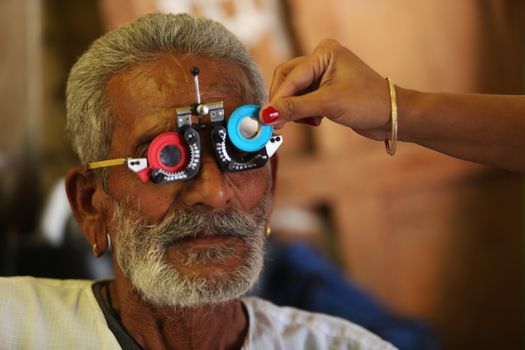
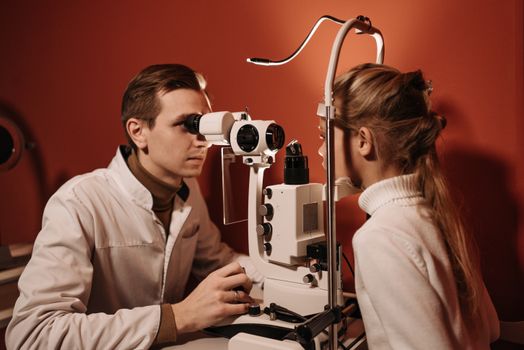
As an Optician in the UK, you'll be at the forefront of primary eye care, helping people maintain and improve their vision. Your main responsibilities will involve conducting eye examinations to detect vision problems, eye diseases, and other health conditions. This includes prescribing and fitting appropriate corrective lenses, such as glasses and contact lenses, and providing advice on their care and usage. You'll also play a crucial role in patient education, explaining different types of lenses, frames, and treatment options. Many Opticians work in high street optical practices, but opportunities also exist in hospitals, private clinics, and even within the armed forces. It's a role that combines clinical skill with excellent communication and customer service, ensuring patients receive the best possible eye care and leave feeling confident with their vision solutions.

Optician

Flag Media

Please select a reason for flagging this content.

📊 Statistics

Average Starting Salary

For a newly qualified Optician in the UK, you could expect to earn a starting salary ranging from GBP20,000 to GBP28,000 per year.

Experienced Salary Range

With a few years of experience, Opticians in the UK can typically earn between GBP30,000 and GBP45,000 annually. Those in senior roles or managing their own practice could earn more.

Job Outlook

The demand for Opticians in the UK remains steady. With an ageing population and increased awareness of eye health, there is a consistent need for qualified professionals across the country, both in high street practices and hospital settings.

🚀 Careers in this path

Flag Media

Please select a reason for flagging this content.

Dispensing Optician

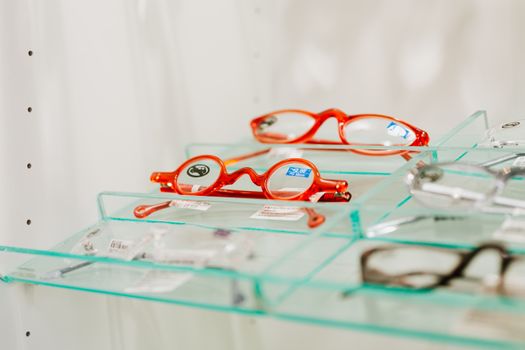
A Dispensing Optician helps patients choose and fit spectacles and other optical aids, taking into account their prescription, lifestyle, and appearance. They also provide advice on lens types, frames, and contact lenses, working closely with Optometrists.

Flag Media

Please select a reason for flagging this content.

Contact Lens Optician

A Contact Lens Optician specialises in fitting and supplying contact lenses to patients, ensuring comfort and suitability. They provide comprehensive advice on contact lens care, usage, and hygiene, and can handle complex prescriptions or fitting challenges.

Flag Media

Please select a reason for flagging this content.

Ophthalmic Assistant

An Ophthalmic Assistant supports Optometrists and Ophthalmologists in a clinic setting by performing preliminary tests, preparing patients for examinations, and assisting with administrative tasks. They might conduct visual field tests, take patient histories, and educate patients on eye care.

Foundation & Education

Achieve Relevant GCSEs & A-Levels

Ensure you have the necessary academic qualifications to pursue higher education in optics.

To get started, you'll typically need at least five GCSEs (grades 9-4 or A*-C), including English, Maths, and Science. For A-levels, subjects like Biology, Physics, Chemistry, and Maths are highly advantageous and often required for entry into a dispensing optician course. Aim for strong grades to enhance your university application.

Complete a Dispensing Optician Qualification

Undertake a General Optical Council (GOC) approved qualification to become a registered Dispensing Optician.

In the UK, you'll need to complete a qualification approved by the General Optical Council (GOC). This is usually a three-year DipOp (Diploma in Ophthalmic Dispensing) or a BSc (Hons) in Ophthalmic Dispensing. These courses combine academic study with practical experience, often requiring you to work in an optical practice as a student dispensing optician during your studies. Institutions like ABDO College, Bradford College, and Anglia Ruskin University offer such programmes.

Undertake Pre-Registration Training

Gain practical experience under supervision to meet the GOC's registration requirements.

After completing your academic qualification, you'll typically need to undertake a period of pre-registration training in a supervised optical practice. This hands-on experience allows you to apply your theoretical knowledge in a real-world setting, developing your practical skills in dispensing, frame adjustments, and patient communication. This training is a mandatory part of becoming fully qualified and registered with the GOC.

Registration & Professional Practice

Register with the General Optical Council (GOC)

Once qualified, register with the GOC to legally practice as a Dispensing Optician in the UK.

Upon successful completion of your GOC-approved qualification and pre-registration period, you must apply to register with the General Optical Council. The GOC is the UK's regulatory body for the optical professions, and registration is legally required to work as a Dispensing Optician. This ensures you meet professional standards and can practice safely and competently.

Secure Your First Dispensing Optician Role

Apply for positions in high-street optical practices, hospitals, or independent opticians.

With your GOC registration in hand, you're ready to start your career. Look for entry-level Dispensing Optician positions. Many graduates begin their careers in large optical chains, which often offer structured training and career progression opportunities. Independent practices or hospital eye departments are also options, each offering a slightly different work environment and patient demographic. Networking and using online job boards are key.

Engage in Continuing Professional Development (CPD)

Regularly update your knowledge and skills throughout your career to maintain GOC registration.

The GOC mandates that all registered optical professionals undertake regular Continuing Professional Development (CPD) to ensure their skills and knowledge remain current. This involves attending courses, workshops, seminars, and engaging in self-study. CPD points must be recorded and submitted to the GOC periodically, demonstrating your commitment to lifelong learning and high standards of patient care. This is crucial for revalidation.

Career Progression & Specialisation

Specialise in Specific Areas

Consider further qualifications to specialise in contact lenses, low vision, or management.

As your career progresses, you might choose to specialise. For example, you could pursue further qualifications to become a Contact Lens Optician, allowing you to fit and supply contact lenses independently. Other specialisms include low vision aids, paediatric dispensing, or even practice management. These additional qualifications can open up new opportunities and enhance your earning potential within the field.

Undertake Advanced Qualifications

Pursue higher-level diplomas or degrees to broaden your expertise and responsibilities.

Beyond initial specialisations, you might consider advanced diplomas or even a Master's degree in Ophthalmic Dispensing or related fields. These qualifications can lead to roles with greater responsibility, such as becoming a practice manager, clinical lead, or even moving into teaching or research within optics. This demonstrates a deep commitment to the profession and leadership potential.

Consider Practice Ownership or Management

Explore opportunities to manage an optical practice or eventually own your own business.

With significant experience and potentially further qualifications in business or management, you could progress into a management role, overseeing the operations of an optical practice. For those with an entrepreneurial spirit, opening your own independent practice is a viable long-term goal. This path requires not only clinical expertise but also strong business acumen, leadership skills, and a comprehensive understanding of the optical market.

🎯 View Apprenticeships

Explore relevant apprenticeships that can help you kickstart your career in Optician. Apprenticeships offer hands-on experience and training while earning a wage.

Career Progressions

This page showcases various career options and the pathways to reach them. Each career listed here shares transferable skills and knowledge, making it easier for individuals to transition between them.

Your current career is highlighted to help you see how it fits into the broader landscape of potential career choices. By clicking on any career, you can learn more about it, including the training and education required to pursue it.

Remember, progressing in your career often involves further learning and training. This page provides insights into future career options as well as those that can lead up to your current one.

These career progression decisions are informed by comparing the skills and knowledge needed for different occupations, along with data on how people move between them. Explore the possibilities and discover the exciting journey ahead in your career!

Sample Qualifications

An Optician typically refers to a Dispensing Optician, who is qualified to dispense and fit spectacles and other optical aids based on prescriptions from an Optometrist or Ophthalmologist.

How to become

You can get into this job through:

  • a university course
  • an apprenticeship
  • working towards this role

University

To qualify as a dispensing optician, you must complete a degree course approved by the General Optical Council.

You'll also need to pass the professional qualifying exams by the Association of British Dispensing Opticians (ABDO).

Entry requirements

You'll usually need:

  • 5 GCSEs at grades 9 to 4 (A* to C), or equivalent, including English, maths and science
  • 1 or 2 A levels, or equivalent, including a science

More Information

Apprenticeship

You may be able to apply for a place on a Dispensing Optician Level 6 Degree Apprenticeship, with a commercial optician.

This can take 3 years to complete. It's equivalent to degree level and leads to a professional qualification.

Entry requirements

To do this apprenticeship, you'll need:

  • 4 or 5 GCSEs at grades 9 to 4 (A* to C) and A levels, or equivalent, for a degree apprenticeship

More Information

Work

If you're working in an optician practice, as an assistant or optical technician, you may be able to do training on the job through an apprenticeship or part-time degree course. You'll need the support of your employer to do this.

More Information

Registration

Career tips

You might find it helpful to get some experience in an optician before you apply to study. You can see how to find work experience from the Association of British Dispensing Opticians (ABDO).

Professional and industry bodies

You could join the Association of British Dispensing Opticians (ABDO) for professional development and training opportunities.

Further information

You can learn more about a career as a dispensing optician from the Association of British Dispensing Opticians (ABDO) and the General Optical Council.

Interested in More Career Paths?

Explore other careers or use our AI to discover personalised paths based on your interests.

Stay connected

Join our newsletter to stay up to date on features and releases

Address
Developing Experts Limited
Exchange Street Buildings
35-37 Exchange Street
Norwich
NR2 1DP
UK

Phone
01603 273515

Email
[email protected]

Copyright 2026 Developing Experts, All rights reserved.
