
Creating Career Path...

Finding Further Careers...

Paediatric Nurse

View this career for different education levels:

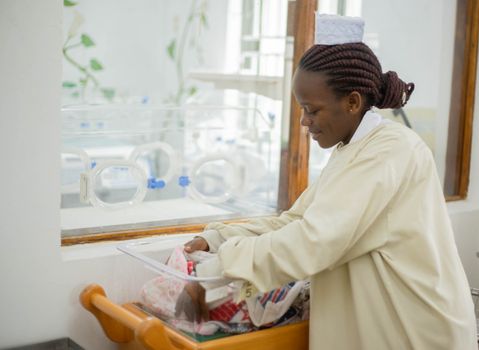
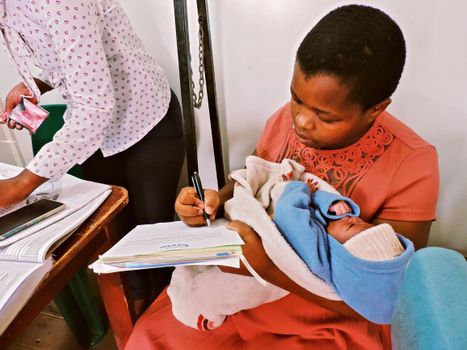
A Paediatric Nurse is a very special kind of nurse who looks after babies, children, and young people. They work with patients from birth up to around 18 years old. Their job involves a lot more than just giving medicine; they also need to be good at playing, reassuring, and explaining things in a way that children can understand. They might work in a hospital on a children's ward, in a children's intensive care unit, or even out in the community visiting families at home. It's a challenging but very rewarding job because you get to help young people feel better and get back to being themselves. Paediatric Nurses do many important things every day. They check vital signs like temperature and heart rate, give vaccinations, help doctors with examinations, and support children and their families through difficult times. They also teach parents how to look after their child's illness or injury at home. Being a Paediatric Nurse means you need to be kind, patient, understanding, and have excellent communication skills, especially when talking to worried children or their parents. It's a job where you can make a real difference to a child's life and their family's experience with healthcare.

Paediatric Nurse

Flag Media

Please select a reason for flagging this content.

📊 Statistics

Starting Salary

A newly qualified Paediatric Nurse in the NHS (National Health Service) typically starts on Band 5, which is around 28,407 to 34,581 pounds per year.

Experienced Salary

With more experience and specialisation, a Paediatric Nurse could earn between 35,392 and 50,952 pounds per year, for example as a Ward Sister or Advanced Paediatric Nurse Practitioner.

Job Outlook

Nursing is a high-demand profession in the UK, including paediatric nursing. There are always many opportunities for qualified paediatric nurses across hospitals, community services, and other healthcare settings.

🚀 Careers in this path

Flag Media

Please select a reason for flagging this content.

Childrens Cancer Nurse

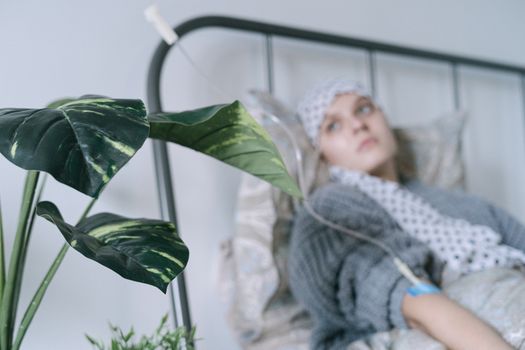
Helping children who are poorly with cancer to feel better and stay brave, often working in special hospitals.

Flag Media

Please select a reason for flagging this content.

Neonatal Nurse

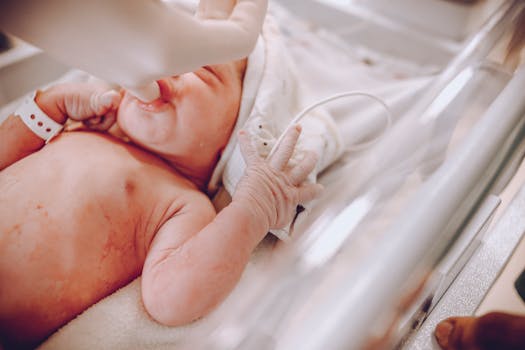
Looking after tiny new babies, sometimes born early or needing extra help, in a special baby unit at the hospital.

Flag Media

Please select a reason for flagging this content.

School Nurse

Working in schools to help children with their health, give advice, and make sure everyone stays happy and well at school.

Early Exploration & Learning

Explore Healthcare

Start learning about what nurses do and how they help people, especially children. This is a great time to see if you like the idea of working in healthcare.

Look for programmes or clubs at your school that focus on health, science, or helping others. You could also read books or watch documentaries about healthcare professionals to get a better understanding of their daily lives and challenges. Websites like the NHS Careers site have lots of information about different roles in healthcare.

Volunteer or Help Out

Gain experience helping others, even if it's not directly in a hospital. This shows you care about people and are willing to lend a hand.

Think about volunteering at local community centres, care homes, or even helping out with younger siblings or neighbours. Any experience where you are responsible for someone else's wellbeing or comfort, especially children, will be valuable. This helps develop important skills like empathy, patience, and communication.

Focus on Key Subjects

In school, pay attention to subjects like Science (especially Biology), Maths, and English as they are important for nursing.

Science subjects like Biology will teach you about the human body, which is essential for understanding health and illness. Maths is important for calculating medication doses, and English helps you communicate clearly and write good notes. Aim for good grades in these subjects as they will be required for further education.

Secondary Education & Work Experience

Choose GCSEs Wisely

Make sure you choose GCSE subjects that will support your ambition to become a nurse, especially Science.

It's highly recommended to take GCSEs in Science (either Combined Science or separate Biology, Chemistry, and Physics), English Language, and Maths. Good grades (typically grades 4-9) in these subjects are usually a requirement for college courses that lead to university nursing degrees. Consider taking Health and Social Care if your school offers it, as it provides a good introduction to the field.

A-Levels or Equivalent

After GCSEs, you'll need to study further, often at A-Level or through a BTEC course, to get into university.

For university nursing degrees, typical A-Level requirements often include a science subject like Biology or Human Biology. Other useful subjects could be Psychology, Sociology, or Health and Social Care. If you prefer a more vocational route, a BTEC National Diploma in Health and Social Care is also an excellent option and is widely accepted by universities. Aim for good grades in these qualifications.

Gain Relevant Work Experience

Try to get some work experience in a healthcare setting to see what it's really like and show your commitment.

This could be formal work experience in a hospital, care home, or nursery, or even volunteering with St John Ambulance. Any experience where you interact with children or vulnerable people in a caring capacity will be beneficial. It shows universities you understand the realities of the job and are committed to helping others.

University & Professional Training

Apply for a Nursing Degree

The main way to become a Paediatric Nurse is to complete a university degree in Children's Nursing.

You'll apply to universities through UCAS for a BSc (Hons) in Children's Nursing (or Paediatric Nursing). The degree usually takes three years full-time and involves a mix of academic study at university and practical placements in hospitals and community settings. You'll learn specific skills for caring for children of all ages, from babies to teenagers.

Complete Placements

During your degree, you'll spend a lot of time on placements in real hospitals and clinics, gaining hands-on experience.

These placements are a crucial part of your training. You'll work alongside experienced nurses, learning how to care for children with various health conditions, administer medication, communicate with families, and use medical equipment. You'll gain experience in different areas like children's wards, emergency departments, and community health teams.

Register with the NMC

After successfully completing your degree, you must register with the Nursing and Midwifery Council (NMC) to be able to work as a qualified nurse.

The NMC is the professional body for nurses and midwives in the UK. Registering with them means you meet the required standards of education and competence to practice safely and effectively. Once registered, you are a qualified Children's Nurse and can apply for jobs in hospitals, community health services, and other settings.

🎬 Useful Videos

🎯 View Apprenticeships

Explore relevant apprenticeships that can help you kickstart your career in Paediatric Nurse. Apprenticeships offer hands-on experience and training while earning a wage.

Career Progressions

This page showcases various career options and the pathways to reach them. Each career listed here shares transferable skills and knowledge, making it easier for individuals to transition between them.

Your current career is highlighted to help you see how it fits into the broader landscape of potential career choices. By clicking on any career, you can learn more about it, including the training and education required to pursue it.

Remember, progressing in your career often involves further learning and training. This page provides insights into future career options as well as those that can lead up to your current one.

These career progression decisions are informed by comparing the skills and knowledge needed for different occupations, along with data on how people move between them. Explore the possibilities and discover the exciting journey ahead in your career!

Sample Qualifications

A Paediatric Nurse specialises in the care of children and young people, which directly aligns with the role and qualifications of a Children's Nurse.

How to become

You can get into this job through:

  • a university course
  • an apprenticeship
  • working towards this role
  • a conversion course from another branch of nursing

University

You can do a degree in children's nursing approved by the Nursing and Midwifery Council (NMC).

You might be able to get extra student financial support through the NHS Learning Support Fund.

You may be able to do an extended degree that combines children's nursing with another nursing branch. You'll need to check that this type of course is recognised by the NMC.

You might be able to join the second year of a nursing degree if you already have a degree in:

  • a health-related subject
  • psychology
  • life sciences
  • social work

Full-time courses usually take 3 years.

Entry requirements

You'll usually need:

  • 4 or 5 GCSEs at grades 9 to 4 (A* to C), or equivalent, including English, maths and science
  • 2 or 3 A levels, including a science, or a level 3 diploma or access to higher education in health, science or nursing


More Information

Apprenticeship

You could apply to do a Registered Nurse Level 6 Degree Apprenticeship, if you work in a healthcare setting, like a hospital or clinic.

The degree apprenticeship takes around 4 years and is a mix of academic study and on-the-job training.

You'll need the support of your employer to do a degree apprenticeship.

Entry requirements

You'll usually need:

  • 4 or 5 GCSEs at grades 9 to 4 (A* to C) and A levels, or equivalent, for a degree apprenticeship

More Information

Work

You could work as an assistant practitioner or nursing associate and study for a shortened nursing degree to qualify as a registered children's nurse.

Volunteering

You can volunteer with a charity that works with children and young people to get some experience.

Volunteering in the NHS is also a good way to get work experience in healthcare. This can be helpful when you apply for jobs or training.

You can find further opportunities through The National Council for Voluntary Organisations (NCVO) and Do it.

Other Routes

If you're already a registered nurse, for example in adult nursing, you may be able to complete a conversion course to become a children's nurse. Courses normally take between 1 and 2 years.

More Information

Registration

Career tips

You would be expected to have an understanding of how the NHS values would apply in your work.

Further information

You can find advice about how to become a children's nurse from the Nursing & Midwifery Council and Health Careers.

Interested in More Career Paths?

Explore other careers or use our AI to discover personalised paths based on your interests.

Stay connected

Join our newsletter to stay up to date on features and releases

Address
Developing Experts Limited
Exchange Street Buildings
35-37 Exchange Street
Norwich
NR2 1DP
UK

Phone
01603 273515

Email
[email protected]

Copyright 2026 Developing Experts, All rights reserved.