

Creating Career Path...

Finding Further Careers...

Wildfire Firefighter

View this career for different education levels:

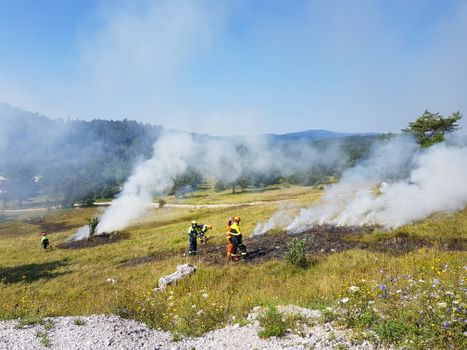
Being a wildfire firefighter means you are on the front line protecting homes, forests, and wildlife from dangerous blazes that can spread very quickly, especially during hot, dry weather. You are part of a team that responds to fires in the countryside, often far from towns, using special equipment like beaters, shovels, and high pressure water hoses. This job is very physically demanding and requires a lot of training to understand how fires behave in different types of land, like moorland, forests, or grasslands. You learn to create fire breaks, which are gaps in the vegetation to stop fires from spreading, and to work safely in very challenging and smoky conditions. It is not just about putting out fires; it is also about preventing them. Wildfire firefighters often help educate the public about fire safety in natural areas and carry out controlled burns to manage vegetation and reduce the risk of future large wildfires. You need to be brave, quick thinking, and able to work really well in a team, as everyone relies on each other to stay safe and get the job done. It is a vital role that helps protect our natural environment and rural communities across the UK.

Wildfire Firefighter

Flag Media

Please select a reason for flagging this content.

📊 Statistics

Starting Salary

A newly qualified firefighter in the UK can expect to earn around 24,000 to 32,000 pounds per year, which increases with experience and specialist roles.

Experienced Salary

Experienced firefighters, especially those in specialist roles like wildfire incident command or management, can earn between 35,000 and 45,000 pounds per year, and sometimes more for senior positions.

Number of Firefighters

While specific numbers for dedicated wildfire firefighters are not available, the UK has around 30,000 whole time and retained firefighters across all services who may be involved in responding to wildfires.

🚀 Careers in this path

Flag Media

Please select a reason for flagging this content.

Forest Ranger

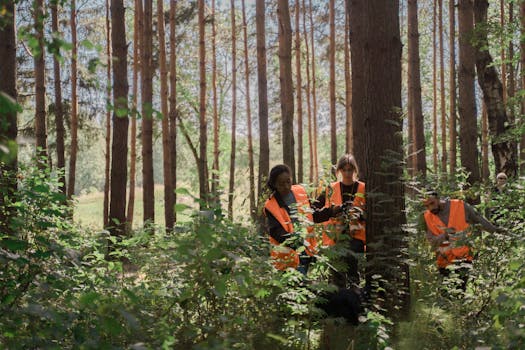
Imagine being a guardian of the woods! Forest rangers help look after forests, making sure trees are healthy, wildlife is safe, and people follow rules when they visit. This includes spotting potential fire risks and helping prevent them.

Flag Media

Please select a reason for flagging this content.

Fire Safety Officer

These heroes work to stop fires before they even start! They visit buildings and places to check that everything is safe and that people know what to do if there is a fire. They might teach people about fire alarms and escape routes.

Flag Media

Please select a reason for flagging this content.

Emergency Services Dispatcher

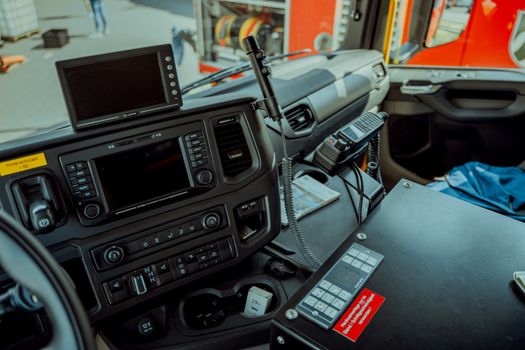
When someone calls 999 because of a fire or other emergency, the dispatcher is the first person they speak to! They quickly gather information and send the right fire engines and firefighters to help. They are calm and organised under pressure.

Build Your Foundations

Stay Active and Healthy

Being a wildfire firefighter is physically demanding, so it's super important to keep fit. Start now by doing activities you enjoy!

Focus on activities that build stamina, strength, and agility. Things like running, cycling, swimming, team sports, and even hiking are great. These will help you develop the physical resilience needed for long shifts and challenging terrains you might encounter as a firefighter.

Learn About Nature and Environment

Wildfire fighters work in nature, so understanding forests, plants, and weather is really helpful.

Take an interest in geography, biology, and environmental science at school. Read books or watch documentaries about forests, ecosystems, and how weather affects them. This knowledge will give you a better understanding of how wildfires start, spread, and the best ways to tackle them.

Develop Teamwork Skills

Wildfire fighting is all about working together as a team. Practice cooperating with others.

Join school clubs, sports teams, or volunteer groups where you have to work closely with others to achieve a common goal. Learning to communicate clearly, listen to others, and support your teammates are crucial skills for working safely and effectively in a high-pressure environment like a wildfire.

Gain Essential Skills & Knowledge

Achieve Good GCSEs

Getting good grades in your GCSEs, especially in English and Maths, will open up more opportunities for further education or training.

Aim for strong passes in your GCSEs. While specific subjects aren't always mandatory for firefighter roles, having a good academic foundation demonstrates your ability to learn and understand complex information, which will be important for future training and qualifications. English and Maths are generally essential.

Consider Further Education

After GCSEs, think about college courses or apprenticeships that could give you useful skills.

Look into BTEC National Diplomas or A-Levels in subjects like Public Services, Environmental Science, or even practical skills like mechanics or construction, which could be useful in wildfire situations. Alternatively, some fire and rescue services offer apprenticeships that provide hands-on experience and qualifications while you earn.

Get First Aid & Emergency Training

Learning first aid is super important as firefighters often help injured people.

Look for local St John Ambulance or British Red Cross courses to get a formal first aid certificate. Many firefighting roles require a basic level of first aid. Understanding emergency procedures and how to act calmly under pressure are invaluable skills that you can start developing now.

Entering the Fire Service

Meet Entry Requirements

Check what qualifications and physical standards you need to apply to a fire and rescue service.

Research the specific requirements for different fire and rescue services in the UK. They often require candidates to be over 18, have good GCSEs (usually including English and Maths), be physically fit, and hold a full UK driving licence. Some services may also require residency within a certain area. Always check the latest requirements on their official websites.

Pass Physical Assessments

You'll need to pass tough fitness tests to show you're ready for the job's physical demands.

Fire services use a series of physical tests to make sure applicants are strong and fit enough for the role. These can include ladder climbs, equipment carries, enclosed space tests, and more. Regular training and maintaining a high level of fitness will be crucial to successfully passing these assessments.

Complete Application & Interview

Fill out the application form carefully and prepare for interviews where you'll show your skills and passion.

The application process usually involves an online application, aptitude tests (testing things like problem-solving and comprehension), and multiple interview stages. Research the fire service values and behavioural competencies. Be ready to talk about your teamwork experience, problem-solving abilities, and your understanding of the challenges and rewards of being a firefighter.

🎬 Useful Videos

🎯 View Apprenticeships

Explore relevant apprenticeships that can help you kickstart your career in Wildfire Firefighter. Apprenticeships offer hands-on experience and training while earning a wage.

Career Progressions

This page showcases various career options and the pathways to reach them. Each career listed here shares transferable skills and knowledge, making it easier for individuals to transition between them.

Your current career is highlighted to help you see how it fits into the broader landscape of potential career choices. By clicking on any career, you can learn more about it, including the training and education required to pursue it.

Remember, progressing in your career often involves further learning and training. This page provides insights into future career options as well as those that can lead up to your current one.

These career progression decisions are informed by comparing the skills and knowledge needed for different occupations, along with data on how people move between them. Explore the possibilities and discover the exciting journey ahead in your career!

Sample Qualifications

A Wildfire Firefighter is a specialised type of firefighter whose primary duties involve combating wildfires, which aligns perfectly with the general 'Firefighter' classification, as their core function is fire suppression.

How to become

You can get into this job through:

  • a college course
  • an apprenticeship
  • applying directly
  • a fire service training course

College

You could take a college course before applying to join the fire service as a trainee, though this is not essential.

Courses include:

  • public services
  • fire and rescue services in the community

Entry requirements

Entry requirements for these courses vary.

More Information

Apprenticeship

You could apply for an Operational Firefighter Level 3 Advanced Apprenticeship with a fire and rescue service.

The apprenticeship takes about 2 years and combines on-the-job training with off-site study.

Entry requirements

You'll usually need:

  • GCSEs grades 9 to 4 (A* to C), or equivalent, in English and maths

More Information

Volunteering

Volunteering or working in a support role, for example emergency call handling or fire safety home visits, will give you an idea of what the job is like, as well as access to internal vacancies. You'll usually need to be 18 or over.

Most fire and rescue services also run a Fire Cadets scheme. They're typically aimed at young people aged between 13 and 17 and offer a few hours' training each week in:

  • basic firefighting drills
  • using equipment
  • first aid
  • fire safety

Contact your local fire service to find out more about volunteering opportunities and fire cadets.

Direct Application

You can apply directly to join the fire service. Each service sets its own entry requirements.

Many ask for GCSEs at grades 9 to 4 (A* to C) in English and maths, or equivalent qualifications.

The selection process can take some time and involves:

  • online aptitude tests
  • attendance at an assessment centre
  • fitness and medical checks
  • interviews

Fire services hold regular outreach events where you can speak to firefighters about the job and register your interest for upcoming vacancies.

Other Routes

You may be able to join the fire service as an on-call firefighter.

You'll be trained to deal with a broad range of incidents in return for a commitment to provide shift cover during days, nights and weekends. This is a paid position and could lead to a full-time role when opportunities arise.

You can also train to be a firefighter in the Royal Air Force (RAF).

More Information

Career tips

Fire services take on new recruits at different times of the year, so check with your local fire service to find out when they are recruiting next.

Further information

You can contact your local fire and rescue service for a firefighter careers information and recruitment pack.

Interested in More Career Paths?

Explore other careers or use our AI to discover personalised paths based on your interests.

Stay connected

Join our newsletter to stay up to date on features and releases

Address
Developing Experts Limited
Exchange Street Buildings
35-37 Exchange Street
Norwich
NR2 1DP
UK

Phone
01603 273515

Email
[email protected]

Copyright 2026 Developing Experts, All rights reserved.
