

Creating Career Path...

Finding Further Careers...

Oceanographer

View this career for different education levels:

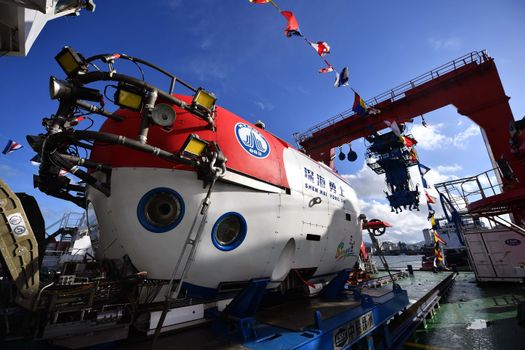
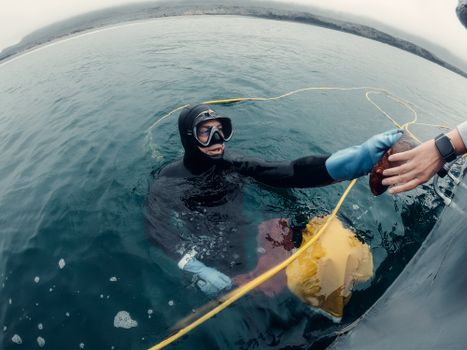
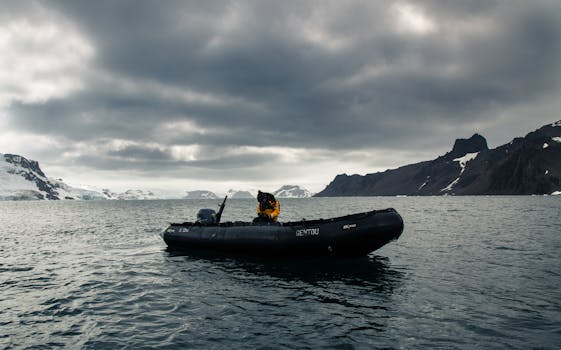
Imagine a detective, but for the ocean! That is a bit like what an Oceanographer does. These brilliant scientists study everything about our oceans, from the tiniest plankton to the biggest waves, and even the deep-sea currents. They look at how the ocean works, how it affects our weather, and how human activities impact it. This might involve going out on research ships to collect samples, using amazing underwater robots, or working in a lab analysing data. They might study marine life (biological oceanography), the chemicals in the water (chemical oceanography), the ocean's physical movements like currents and tides (physical oceanography), or the ocean floor itself (geological oceanography). It is a super important job because understanding our oceans helps us protect marine life, predict climate change, and manage our planet's resources. Being an Oceanographer often means you will spend time both outdoors, sometimes in challenging conditions at sea, and indoors, working with computers and lab equipment. You will need to be good at science, especially biology, chemistry, and physics, and enjoy solving puzzles. You might work for universities, government agencies like the National Oceanography Centre, environmental organisations, or even private companies. It is a career that lets you explore some of the most mysterious and important parts of our world.

Oceanographer

Flag Media

Please select a reason for flagging this content.

📊 Statistics

Average Starting Salary

For a new graduate in oceanography, you might expect to earn around 20,000 to 25,000 pounds per year in the UK.

Experienced Professional Salary

With several years of experience, an Oceanographer in the UK could earn between 30,000 and 45,000 pounds annually. Senior roles or specialised expertise can push this even higher.

Job Growth in Science Sector

While specific numbers for Oceanography jobs can be hard to pin down, the broader scientific research and development sector in the UK has seen consistent growth, suggesting a stable, if competitive, environment for related roles.

🚀 Careers in this path

Flag Media

Please select a reason for flagging this content.

Marine Biologist

Imagine exploring the amazing sea creatures and plants in the ocean! Marine biologists study fish, dolphins, coral reefs, and all sorts of other marine life to understand how they live and how to protect them. You could go diving or use special cameras to observe them.

Flag Media

Please select a reason for flagging this content.

Coastal Scientist

Coastal scientists study the edges where the land meets the sea, like beaches, cliffs, and estuaries. They look at how waves and tides change the coastline, how to protect it from erosion, and how to keep these areas healthy for both people and wildlife. You might study sand dunes or sea defences.

Flag Media

Please select a reason for flagging this content.

Ocean Engineer

Ocean engineers design and build amazing things for the ocean! This could be anything from underwater robots that explore the deep sea, to platforms that generate electricity from waves, or even special sensors that measure ocean temperature and currents. They use science and maths to solve ocean challenges.

Discover Your Passion

Learn About the Ocean

Start by exploring the wonders of the ocean. Read books, watch documentaries, and visit aquariums or coastal areas.

Many museums and science centres have exhibits on marine life and oceanography. Look for books about different types of oceanographers, like marine biologists, chemical oceanographers, or physical oceanographers, to see what interests you most. Websites like the National Oceanography Centre (NOC) or the Marine Biological Association (MBA) in the UK have lots of information for young people.

Excel in Science and Maths

Pay extra attention in your science subjects (Biology, Chemistry, Physics) and Maths at school, as they are crucial for understanding the ocean.

Oceanography is a very scientific field. Strong foundations in these subjects will make future learning much easier. Try to get involved in any extra-curricular science clubs or competitions at school. Asking your teachers for extra resources or challenging problems related to marine science can also be really helpful.

Get Hands-On Experience

Look for opportunities to get close to the marine environment, such as beach clean-ups, volunteering at aquariums, or joining a local nature group.

Even small actions can make a big difference and show your commitment. Organisations like the Marine Conservation Society often have local groups you can join, or events like beach cleans. If you live near the coast, look out for local wildlife trusts that might need volunteers or offer educational programmes. This experience will look great on future applications and help you decide if this path is right for you.

Prepare for University

Choose A-Levels Wisely

When you're choosing your A-levels (or equivalent), focus on science subjects like Biology, Chemistry, Physics, and Maths.

Most university degrees in oceanography, marine biology, or environmental science will require at least two, often three, science or maths A-levels. Biology and Chemistry are frequently recommended, and Maths can be very useful for understanding data and statistics. Research specific university course requirements early to make sure you choose the right subjects.

Gain Work Experience

Try to find work experience, even if it's just for a week, with organisations related to marine science or conservation.

This could be with an environmental consultancy, a local council's environmental department, an aquarium, or a university research department if they offer placements. Even if it's not directly oceanography, any experience in a scientific or research setting will be valuable and help you understand how scientific workplaces operate. It's a fantastic way to network and see the job in action.

Attend University Open Days

Visit universities that offer degrees in oceanography, marine biology, or related environmental sciences.

Attending open days allows you to talk to current students and lecturers, see the facilities, and learn more about the courses. This helps you figure out which university and course would be the best fit for you. Ask about fieldwork opportunities, access to research vessels, and links with industry.

Launch Your Career

Complete a Relevant Degree

Study for an undergraduate degree in Oceanography, Marine Biology, Marine Science, Environmental Science, or a related field.

Many UK universities offer excellent courses in these areas. Look for programmes that include fieldwork, practical lab work, and potentially a year in industry or a research project. A strong degree classification (e.g., a 2:1 or higher) will improve your job prospects significantly. Some roles might even benefit from a Masters degree (MSc) in a specialised area.

Network and Apply

Start looking for entry-level positions or graduate schemes with research institutions, environmental consultancies, or government agencies.

Attend career fairs, join professional organisations like the Challenger Society for Marine Science, and use online job boards. Many oceanographers start in junior research roles or as lab technicians. Networking can often open doors to opportunities that aren't widely advertised. Be persistent and tailor your applications to each specific job.

Consider Further Specialisation

Once you've gained some experience, you might want to specialise further through a PhD or advanced professional development.

Many oceanographers pursue PhDs to become leading experts in a specific area like marine geochemistry, physical oceanography modelling, or deep-sea biology. This usually leads to roles in academia, advanced research, or specialist positions in industry or government. Continuous learning and staying updated with the latest scientific discoveries are key in this field.

🎬 Useful Videos

🎯 View Apprenticeships

Explore relevant apprenticeships that can help you kickstart your career in Oceanographer. Apprenticeships offer hands-on experience and training while earning a wage.

Career Progressions

No career progressions found for Oceanographer

Sample Qualifications

How to become

You can get into this job through a university course.

University

You can study for a degree in oceanography or a related subject, like:

  • ocean science
  • geology
  • physics
  • marine science
  • biology or chemistry
  • environmental science

Employers often look for students with postgraduate qualifications, like a master's degree or PhD. They also value experience of working in marine science, engineering or oceanographic research.

You can get experience by choosing a course that includes work placements or internships with a marine company or research centre.

You can find marine companies and research organisations through the Society for Underwater Technology.

Entry requirements

You'll usually need:

  • 5 GCSEs at grades 9 to 4 (A* to C), or equivalent, including English, maths and science
  • 3 A levels, or equivalent, including at least 1 science
  • a degree in a relevant subject for postgraduate study

More Information

More Information

Career tips

You could contact marine companies to see if you could work with them on a project as part of your university dissertation or postgraduate research. This would allow you to build up contacts in the industry, who may be able to help you find work once you complete your studies.

Further information

You can find out more about becoming an oceanographer from the:

Interested in More Career Paths?

Explore other careers or use our AI to discover personalised paths based on your interests.

Stay connected

Join our newsletter to stay up to date on features and releases

Address
Developing Experts Limited
Exchange Street Buildings
35-37 Exchange Street
Norwich
NR2 1DP
UK

Phone
01603 273515

Email
[email protected]

Copyright 2026 Developing Experts, All rights reserved.