





Creating Career Path...

Finding Further Careers...

Land Surveyor

View this career for different education levels:

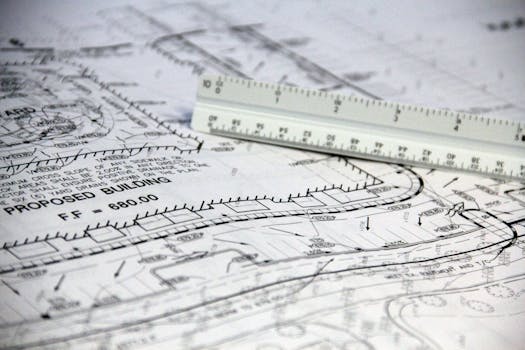
A Land Surveyor is like a detective for the land! Their job is to accurately measure and map the Earth's surface. They use special equipment, like GPS devices and laser scanners, to find out the exact position of boundaries, buildings, and natural features. This information is super important for lots of projects, such as when new roads are built, houses are planned, or even when farmers need to know the size of their fields. They often work outdoors, in all sorts of weather, and then spend time in an office using computer software to turn their measurements into detailed maps and plans. Being a Land Surveyor means you need to be good at maths, enjoy working with technology, and have a keen eye for detail. You'll learn about different types of land, from busy city streets to quiet countryside. It's a vital role because without accurate measurements from surveyors, buildings might not be in the right place, or construction projects could run into big problems. So, if you like solving puzzles, being outdoors, and using cool gadgets, this could be a really interesting career for you!

Land Surveyor

Flag Media

Please select a reason for flagging this content.

📊 Statistics

Average Starting Salary

For a trainee or junior Land Surveyor in the UK, you might expect to start with a salary ranging from 18,000 to 25,000 pounds per year.

Experienced Salary Range

Once you have gained experience, a skilled Land Surveyor in the UK can earn between 28,000 and 45,000 pounds per year, with senior roles potentially reaching 50,000 pounds or more.

Number of Positions

While exact real-time numbers can vary, there are thousands of land surveying professionals in the UK. The industry is always looking for new talent, especially with ongoing building and infrastructure projects across the country.

🚀 Careers in this path

Flag Media

Please select a reason for flagging this content.

Geomatician

Imagine you're a super detective for land and maps! A Geomatician uses amazing technology like satellites and lasers to measure and map the Earth. You could be making accurate maps for new buildings, roads, or even helping understand how land changes over time.

Flag Media

Please select a reason for flagging this content.

Hydrographic Surveyor

If you love the water, this could be perfect! A Hydrographic Surveyor is like a Land Surveyor, but underwater. You'd use special equipment on boats to map the seabed of rivers, lakes, and oceans. This helps make sure ships can travel safely and helps plan for things like wind farms in the sea.

Flag Media

Please select a reason for flagging this content.

GIS Technician

This is all about putting information onto digital maps! A GIS Technician uses computer software to create, manage, and analyse maps that combine all sorts of data. You could be helping to map crime hotspots, plan public transport routes, or show where all the trees are in a park.

Build Your Foundations

Excel in Maths and Science

Focus on your maths and science subjects at school. These are super important for understanding measurements, calculations, and how the world around us works, all key for a Land Surveyor.

Subjects like Maths, Physics, and Geography are particularly helpful. Try to get good grades in these as they will open doors to further education. You'll learn about angles, distances, coordinates, and how to interpret maps, which are all fundamental to land surveying.

Explore Local Opportunities

Look for local surveying companies and see if they offer work experience or taster days. This is a great way to see what the job is really like!

Even a short visit or an informational interview with a surveyor can give you valuable insights. Ask your teachers or parents if they know anyone in the field. Sometimes, companies offer structured work experience programmes during school holidays that can be really beneficial.

Join a STEM Club

Get involved in school clubs related to Science, Technology, Engineering, and Maths (STEM). This helps you learn practical skills and meet people interested in similar fields.

STEM clubs often do exciting projects, like building models or using technology, which can develop problem-solving and critical thinking skills. These are highly valued in surveying, where you might use drones, GPS, and other high-tech equipment.

Further Your Education

Choose the Right A-Levels

After your GCSEs, pick A-level subjects that will help you get into a university course for surveying, such as Maths, Physics, or Geography.

Many universities require specific A-levels for surveying or related degrees like Geomatics, Land Management, or Civil Engineering. Check university entry requirements for courses at institutions like Newcastle University, University College London (UCL), or Sheffield Hallam University well in advance.

Consider an Apprenticeship

Another fantastic path is a surveying apprenticeship. You'll learn on the job, get paid, and study for qualifications at the same time!

Level 6 degree apprenticeships in Surveying allow you to earn a degree while working. This hands-on approach means you gain practical experience alongside your academic learning. Look for apprenticeships advertised by surveying firms or through the government's Find an Apprenticeship service.

University Degree

Study for a degree in Land Surveying, Geomatics, or a related subject at university. This gives you a deep understanding of the principles and techniques.

A Bachelor's degree is a common route. Look for courses accredited by the Royal Institution of Chartered Surveyors (RICS) or the Chartered Institution of Civil Engineering Surveyors (CICES). These accreditations are important for becoming a chartered surveyor later on, which can boost your career prospects.

Become a Professional

Gain Work Experience

Once you've finished your studies, find an entry-level job or a graduate scheme with a surveying company to gain hands-on experience.

This practical experience is crucial. You'll work alongside experienced surveyors, learning how to use equipment like total stations, GPS receivers, and drones. You'll also learn about site safety, project management, and client communication, which are all vital skills for a professional surveyor.

Achieve Chartered Status

Work towards becoming a 'Chartered Surveyor' by completing professional assessments with organisations like RICS or CICES. This shows you're highly skilled and recognised in the field.

This typically involves a period of structured training, often called the Assessment of Professional Competence (APC) for RICS. You'll build a portfolio of your work, attend professional development sessions, and undertake a final assessment. Chartered status is a mark of quality and professionalism.

Continuous Learning

The world of surveying is always changing with new technology. Keep learning new skills and staying up-to-date with the latest tools and methods.

Attend workshops, courses, and industry events. Learn about new software, advanced GPS systems, drone technology, and 3D laser scanning. Continuous Professional Development (CPD) is important for maintaining your chartered status and ensuring your skills remain relevant and cutting-edge.

🎬 Useful Videos

🎯 View Apprenticeships

Explore relevant apprenticeships that can help you kickstart your career in Land Surveyor. Apprenticeships offer hands-on experience and training while earning a wage.

Career Progressions

This page showcases various career options and the pathways to reach them. Each career listed here shares transferable skills and knowledge, making it easier for individuals to transition between them.

Your current career is highlighted to help you see how it fits into the broader landscape of potential career choices. By clicking on any career, you can learn more about it, including the training and education required to pursue it.

Remember, progressing in your career often involves further learning and training. This page provides insights into future career options as well as those that can lead up to your current one.

These career progression decisions are informed by comparing the skills and knowledge needed for different occupations, along with data on how people move between them. Explore the possibilities and discover the exciting journey ahead in your career!

Sample Qualifications

The user's input 'Land Surveyor' is an exact match for the official job title 'Land surveyor' in the provided list. Both roles involve precise measurement and mapping of land.

How to become

You can get into this job through:

  • a university course
  • an apprenticeship
  • a graduate training scheme

University

You'll usually need a relevant degree or postgraduate qualification, accredited by the Royal Institution of Chartered Surveyors.

Relevant subjects include:

  • surveying
  • civil engineering
  • geomatics
  • geographical information science

You may be able to do a postgraduate conversion course if your first degree is not related to surveying.

Entry requirements

You'll usually need:

  • 4 or 5 GCSEs at grades 9 to 4 (A* to C), or equivalent, including English and maths
  • 2 to 3 A levels, or equivalent, for a degree
  • a degree in any subject for a postgraduate course

More Information

Apprenticeship

You could apply to do Geospatial and Mapping Science Level 6 Degree Apprenticeship, or a Spatial Data Specialist Level 7 Degree Apprenticeship.

Entry requirements

You'll usually need:

  • 4 or 5 GCSEs at grades 9 to 4 (A* to C) and A levels, or equivalent, for a degree apprenticeship

More Information

Other Routes

You could get a postgraduate qualification through a graduate trainee scheme.

You could also get a graduate diploma in surveying by distance learning, with the University of the Built Environment, if you're working for a surveying practice.

More Information

Registration

Professional and industry bodies

You can join the Royal Institution of Chartered Surveyors for professional recognition, training opportunities and to make industry contacts.

Further information

You can find out more about becoming a land surveyor from the Royal Institution of Chartered Surveyors and The Survey Association.

Interested in More Career Paths?

Explore other careers or use our AI to discover personalised paths based on your interests.

Stay connected

Join our newsletter to stay up to date on features and releases

Address
Developing Experts Limited
Exchange Street Buildings
35-37 Exchange Street
Norwich
NR2 1DP
UK

Phone
01603 273515

Email
[email protected]

Copyright 2026 Developing Experts, All rights reserved.