
Creating Career Path...

Finding Further Careers...

Geographer

View this career for different education levels:

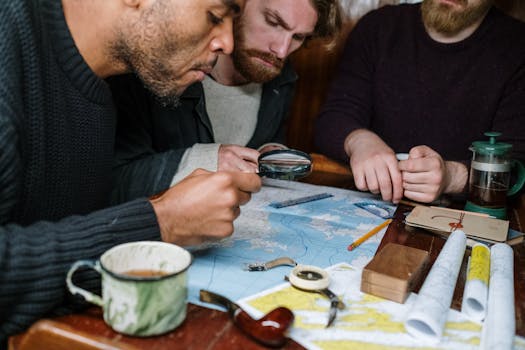
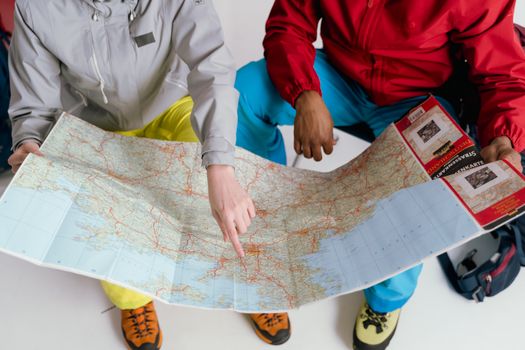
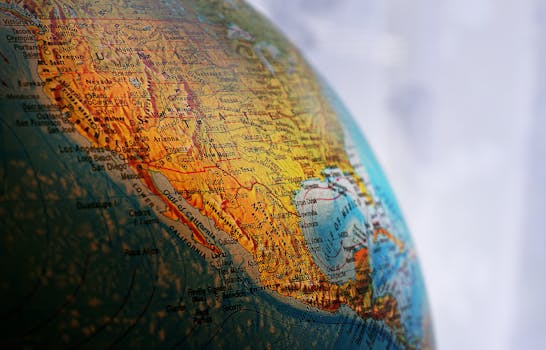
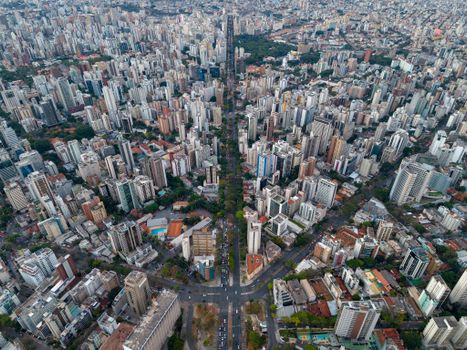
A geographer is someone who studies the Earth's features, including its land, oceans, atmosphere, and the way people live on it. It is much more than just drawing maps! Geographers look at how places are formed, how they change, and how humans interact with their environment. They might study things like climate change, city planning, natural disasters, population growth, or even where shops are best placed. They often use special tools like Geographic Information Systems (GIS) to create digital maps and analyse information, helping them to understand patterns and solve real-world problems. For example, a geographer might help decide where to build new flood defences, plan the route for a new road, or understand how a town's population is changing. Being a geographer means you get to combine science, history, and social studies to understand the world around us. You could be working outdoors collecting data, in an office analysing maps and statistics, or even in a lab using high-tech equipment. It is a really varied career that can lead to many different paths, as understanding 'place' and 'space' is important in so many areas. You will need to be good at problem-solving, curious about the world, and enjoy looking at data and maps to see the bigger picture.

Geographer

Flag Media

Please select a reason for flagging this content.

📊 Statistics

Average Salary (Entry Level)

New geographers in the UK often start with salaries around 20,000 to 25,000 pounds per year, especially in their first jobs after university.

Average Salary (Experienced)

With a few years of experience, a geographer's salary can rise significantly, typically ranging from 30,000 to 50,000 pounds per year, or even higher for specialist roles.

Job Growth

While specific numbers for 'geographers' can be tricky, many roles that require geographical skills, especially in environmental planning and data analysis, are seeing steady demand across the UK.

🚀 Careers in this path

Flag Media

Please select a reason for flagging this content.

Cartographer

If you like understanding places and how to show them on a map, a Cartographer makes different types of maps and charts. You'd use computers to design maps for everything from hiking trails to city planning, making sure they are clear and easy to understand.

Flag Media

Please select a reason for flagging this content.

Environmental Consultant

If you're interested in how places affect our planet and how we can protect it, an Environmental Consultant helps businesses and governments make decisions that are good for the environment. You might study how to reduce pollution, protect wildlife, or make sure new buildings are eco-friendly.

Flag Media

Please select a reason for flagging this content.

Urban Planner

If you enjoy thinking about how towns and cities are organised and how they could be improved, an Urban Planner helps design and manage the growth of places where people live and work. You'd think about where to put new houses, shops, parks, and roads to make a community work well for everyone.

Build Your Foundations

Excel in School Geography

Pay close attention in your geography lessons. This is where you'll learn the basics about physical geography (like mountains and rivers) and human geography (like cities and populations).

Focus on understanding maps, different climates, environmental issues, and how communities are formed. Ask questions about places you're curious about and try to link what you learn to real-world events you see on the news.

Explore Beyond the Classroom

Read books, watch documentaries, and explore online resources about different places, cultures, and environmental topics. Visit museums that have exhibits on geology or human history.

Look for documentaries about natural wonders, wildlife, or how different societies live. The BBC often has great programmes. Websites like National Geographic or the Ordnance Survey can also offer fascinating insights into the world around us.

Develop Key Skills

Work on skills like problem-solving, research, presenting information, and using maps. These are super important for a geographer.

Practice reading different types of maps, from road maps to topographical maps. Try to solve problems that involve location or environmental impact. When doing school projects, focus on how you present your findings clearly and accurately.

Higher Education & Specialisation

Choose A-Levels Wisely

When you're choosing your subjects for A-levels (or equivalent qualifications), make sure geography is one of them. Maths, science, or another essay-based subject can also be really helpful.

Geography A-level will deepen your understanding significantly. Maths can be useful for data analysis, and sciences like Environmental Science or Biology can complement physical geography. An essay subject like History or Sociology can help with human geography and report writing.

Pursue a University Degree

After your A-levels, study for a Geography degree at university. You can often choose to specialise in areas like environmental geography, urban planning, or GIS (Geographic Information Systems).

Look at different university courses to see what specialisms they offer. Some degrees might be BSc (Bachelor of Science) focusing more on physical geography and data, while others might be BA (Bachelor of Arts) with a stronger focus on human and cultural geography. Consider attending open days to learn more.

Gain Practical Experience

During your university holidays, look for opportunities to get work experience or volunteer in areas related to geography, like environmental organisations or planning departments.

Volunteering for a local conservation group, helping with a council's planning office, or even assisting on a university research project can give you valuable real-world experience. This will show employers you're keen and have practical skills.

Start Your Career Journey

Look for Entry-Level Roles

After university, start applying for jobs that require geography graduates. These could be in environmental consultancy, urban planning, teaching, or data analysis using geographic information.

Entry-level roles might be 'Graduate Geographer', 'Assistant Planner', 'Environmental Consultant Trainee', or 'GIS Technician'. Websites like Prospects.ac.uk or TARGETjobs are great for finding graduate roles in the UK.

Consider Further Study

Some specific geography careers might benefit from a Master's degree, especially if you want to specialise even further, like in GIS, remote sensing, or a very specific environmental field.

A Master's degree can give you an edge in competitive fields or open doors to research-focused roles. For example, an MSc in GIS can lead to highly skilled roles in mapping and data analysis, or a Master's in Environmental Management for conservation work.

Network and Stay Updated

Connect with other geographers and professionals in related fields. Join professional bodies and stay up-to-date with new technologies and ideas in geography.

Joining organisations like the Royal Geographical Society (with IBG) can provide access to events, publications, and networking opportunities. Attending conferences or webinars will keep your knowledge fresh and help you learn about new developments in the field.

🎬 Useful Videos

🎯 View Apprenticeships

Explore relevant apprenticeships that can help you kickstart your career in Geographer. Apprenticeships offer hands-on experience and training while earning a wage.

Career Progressions

No career progressions found for Geographer

Sample Qualifications

A Geographer often specialises in spatial analysis and mapping, aligning closely with the primary duties of a Cartographer, which involves designing and creating maps and geographical information systems.

How to become

You can get into this job through:

  • a university course
  • an apprenticeship
  • working towards this role
  • the armed forces

University

You can take a degree in a subject that includes data gathering and analysis, such as:

  • geography
  • geographical information systems (GIS)
  • land surveying
  • earth sciences
  • oceanography
  • meteorology

Employers may also accept degrees in other subjects like computer science, software engineering or graphic design.

A postgraduate qualification may help you to find work in a specialist field of cartography like GIS.

Entry requirements

You'll usually need:

  • 2 to 3 A levels, or equivalent, for a degree
  • a degree in a relevant subject for postgraduate study

More Information

Apprenticeship

You could apply to an organisation to do an apprenticeship, such as:

  • Geospatial Survey Technician Level 3 Advanced Apprenticeship
  • Geospatial Mapping and Science Specialist Level 6 Degree Apprenticeship
  • Spatial Data Specialist Level 7 Degree Apprenticeship

Entry requirements

You'll usually need:

  • 5 GCSEs at grades 9 to 4 (A* to C), or equivalent, including English and maths, for an advanced apprenticeship
  • 4 or 5 GCSEs at grades 9 to 4 (A* to C) and A levels, or equivalent, for a higher or degree apprenticeship

More Information

Work

You may be able to start as a trainee cartographic or GIS technician and work your way up through training and promotion.

Employers may want you to have:

  • an apprenticeship in geospatial surveying or similar field
  • A levels in geography, mathematics or computing
  • a qualification equivalent to A level standard, for example a diploma in applied science

Other Routes

You can apply to become a geographic technician with the Army, or join the Royal Air Force and train as an aviation data analyst (air cartographer).

At the end of your service, you could use your experience to find work in commercial cartography and mapping.

More Information

Career tips

You can find opportunities to work as a cartographer in the public and private sector with:

  • Ordnance Survey
  • local and national government departments
  • transport companies
  • mapping and publishing companies
  • surveying and energy companies

Professional and industry bodies

You could join the British Cartographic Society for networking, information resources and career development support.

Further information

You can find out more about a career in cartography from:

Interested in More Career Paths?

Explore other careers or use our AI to discover personalised paths based on your interests.

Stay connected

Join our newsletter to stay up to date on features and releases

Address
Developing Experts Limited
Exchange Street Buildings
35-37 Exchange Street
Norwich
NR2 1DP
UK

Phone
01603 273515

Email
[email protected]

Copyright 2026 Developing Experts, All rights reserved.
