

Creating Career Path...

Finding Further Careers...

Geographer

View this career for different education levels:

Imagine someone who loves learning all about the Earth and the people living on it. That's a geographer! They study everything from mountains and rivers to cities and how people use the land. They might look at maps to understand where things are, or study how weather changes. Geographers help us understand our world better, like why some places have lots of rain and others are sunny, or how cities grow. They often use computers to create amazing maps and pictures that show us different things about our planet. Being a geographer means you get to ask lots of questions about the world. You might help decide where to build new houses so they dont get flooded, or figure out the best way to protect our forests. Some geographers go out and explore, taking measurements or talking to people to understand how they live. Others work in offices, using special computer programs to analyse information and make colourful maps. It's a job where you get to think about big ideas and help make our world a better place for everyone.

Geographer

Flag Media

Please select a reason for flagging this content.

📊 Statistics

Average Salary

A geographer in the UK might start earning around 22,000 pounds a year. As they get more experienced, this can go up to 45,000 pounds or even more. This is an average for entry to experienced roles.

Job Growth

The number of jobs for geographers and related roles in the UK is expected to grow steadily. About 5 to 10 percent more jobs are predicted over the next few years, as we need more people to understand our planet.

Number of Positions

There are many different types of jobs for geographers. Thousands of people work in geography-related roles across the UK, in places like government, environmental groups, and mapping companies.

🚀 Careers in this path

Flag Media

Please select a reason for flagging this content.

Map Maker

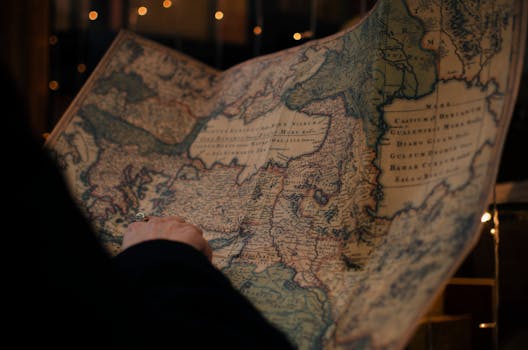
Imagine drawing treasure maps, but for real places like your street or a big park! You would use special tools to help people find their way around and learn about different places.

Flag Media

Please select a reason for flagging this content.

Weather Watcher

Have you ever wondered why it rains or where the sunshine comes from? A Weather Watcher studies clouds, wind, and rain to help people know if they need to bring an umbrella or their sunglasses!

Flag Media

Please select a reason for flagging this content.

Explorer of Places

This is like being a detective for the Earth! You would travel (or even just look closely at your local area) to learn about mountains, rivers, cities, and how people live in different parts of the world.

Learn About Our Amazing World

Explore Your Neighbourhood

Look closely at the streets, buildings, parks, and rivers where you live. How are they arranged? Why are they there? This is your first geography lesson!

Start by drawing a simple map of your street or local park. Notice what plants grow there, what kinds of buildings you see, and how people move around. Think about where the sun rises and sets, and how that affects your area. You can even create a treasure hunt using your map for your friends or family!

Become a Map Maker

Maps are like secret codes that tell us where things are. Try drawing your own maps of places you know or even imaginary worlds.

Get some big paper and coloured pencils. You can draw maps of your house, your school, or even a magical island from your imagination. Remember to use symbols for different things, like a tree for a forest or a house for a building. Think about using a compass to show directions like North, East, South, and West.

Discover Different Climates

Our world has many different types of weather, from sunny deserts to snowy mountains. Learn about them!

Read books or watch videos about places like the Amazon rainforest, the Sahara desert, or the Arctic. What kind of clothes do people wear there? What animals live there? What is the weather like most of the time? You could even draw pictures of different weather types and the landscapes they create.

Grow Your Earth Knowledge

Read Books About Geography

There are lots of exciting books that can teach you about mountains, oceans, volcanoes, and different countries.

Ask your parents or teachers for books about the Earth, nature, and different cultures. Look for books with lots of pictures and maps. Your local library is a fantastic place to find these! Try to learn one new interesting fact about a different country or a natural landmark each week.

Watch Documentaries

TV shows and videos about our planet can show you amazing places and how geographers study them.

Ask an adult to help you find documentaries about wildlife, nature, or different countries. Shows like 'Planet Earth' or 'Blue Planet' are wonderful for seeing how different parts of our world work. Pay attention to how the land or sea changes and how it affects the animals and people living there.

Learn About Your Country

Discover the rivers, mountains, and cities of the United Kingdom. Where are they and what makes them special?

Get a map of the UK and try to find famous landmarks like Ben Nevis, the River Thames, or the Giant's Causeway. Learn about different regions and what makes them unique, like the different accents people have or the special foods they eat. You could even plan a pretend trip around the UK, deciding what you'd see and do in each place.

Become a Young Earth Scientist

Understand Weather Patterns

Become a weather watcher! Notice how the weather changes each day and try to guess what it will be like tomorrow.

Keep a simple weather diary for a week. Write down if it's sunny, cloudy, rainy, or windy. You can even draw pictures of the sky. Talk about why you think the weather changes. You might even want to make a simple rain gauge using a plastic bottle to measure how much rain falls!

Discover Global Warming

Learn about why our planet is getting warmer and what we can do to help keep it healthy.

Ask an adult to explain what 'global warming' means in simple terms. Think about small things you can do at home or school to help, like turning off lights when you leave a room, recycling rubbish, or saving water. Every little bit helps our amazing planet!

Use Digital Maps

Explore the world from your computer! Use online maps to zoom in on your house or travel to faraway places.

With an adult's help, explore websites like Google Maps or Google Earth. You can type in an address and see it from above, or even explore different countries. See if you can find famous landmarks or natural wonders like the Great Wall of China or the Grand Canyon without even leaving your home!

🎬 Useful Videos

🎯 View Apprenticeships

Explore relevant apprenticeships that can help you kickstart your career in Geographer. Apprenticeships offer hands-on experience and training while earning a wage.

Career Progressions

No career progressions found for Geographer

Sample Qualifications

A Geographer often specialises in the study of the Earth's surface, features, inhabitants, and phenomena. This frequently involves the creation and interpretation of maps, which is the primary duty of a Cartographer. While other roles might use spatial data, a Cartographer's core function aligns most closely with the analytical and representational aspects of a Geographer's work.

How to become

You can get into this job through:

  • a university course
  • an apprenticeship
  • working towards this role
  • the armed forces

University

You can take a degree in a subject that includes data gathering and analysis, such as:

  • geography
  • geographical information systems (GIS)
  • land surveying
  • earth sciences
  • oceanography
  • meteorology

Employers may also accept degrees in other subjects like computer science, software engineering or graphic design.

A postgraduate qualification may help you to find work in a specialist field of cartography like GIS.

Entry requirements

You'll usually need:

  • 2 to 3 A levels, or equivalent, for a degree
  • a degree in a relevant subject for postgraduate study

More Information

Apprenticeship

You could apply to an organisation to do an apprenticeship, such as:

  • Geospatial Survey Technician Level 3 Advanced Apprenticeship
  • Geospatial Mapping and Science Specialist Level 6 Degree Apprenticeship
  • Spatial Data Specialist Level 7 Degree Apprenticeship

Entry requirements

You'll usually need:

  • 5 GCSEs at grades 9 to 4 (A* to C), or equivalent, including English and maths, for an advanced apprenticeship
  • 4 or 5 GCSEs at grades 9 to 4 (A* to C) and A levels, or equivalent, for a higher or degree apprenticeship

More Information

Work

You may be able to start as a trainee cartographic or GIS technician and work your way up through training and promotion.

Employers may want you to have:

  • an apprenticeship in geospatial surveying or similar field
  • A levels in geography, mathematics or computing
  • a qualification equivalent to A level standard, for example a diploma in applied science

Other Routes

You can apply to become a geographic technician with the Army, or join the Royal Air Force and train as an aviation data analyst (air cartographer).

At the end of your service, you could use your experience to find work in commercial cartography and mapping.

More Information

Career tips

You can find opportunities to work as a cartographer in the public and private sector with:

  • Ordnance Survey
  • local and national government departments
  • transport companies
  • mapping and publishing companies
  • surveying and energy companies

Professional and industry bodies

You could join the British Cartographic Society for networking, information resources and career development support.

Further information

You can find out more about a career in cartography from:

Interested in More Career Paths?

Explore other careers or use our AI to discover personalised paths based on your interests.

Stay connected

Join our newsletter to stay up to date on features and releases

Address
Developing Experts Limited
Exchange Street Buildings
35-37 Exchange Street
Norwich
NR2 1DP
UK

Phone
01603 273515

Email
[email protected]

Copyright 2026 Developing Experts, All rights reserved.
