



Creating Career Path...

Finding Further Careers...

Urban Planner

View this career for different education levels:

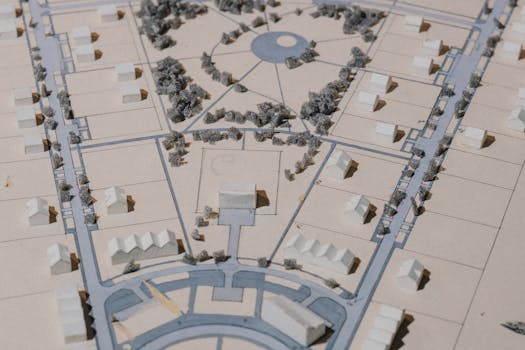
An Urban Planner is like a super-designer for towns and cities. Imagine you're playing a giant game of SimCity in real life – that's a bit like what they do! They decide where new houses should be built, where parks should go, how roads should connect, and even how to protect old buildings or natural areas. They think about how people will live, work, and travel in a place, making sure everything works well together. It's a job all about making places better for everyone, now and in the future, by balancing different needs like housing, jobs, shops, and green spaces. They also make sure that new buildings and projects follow important rules and don't harm the environment. Urban Planners work with lots of different people, including architects, engineers, local councils, and even the public. They look at maps, collect information about an area, and use their knowledge to create plans for how a town or city should grow and develop. They might work on big projects like designing a whole new neighbourhood, or smaller ones like deciding if a new shop can be built on a high street. It's a very important job because it shapes the places we all live in, making sure they are good, safe, and pleasant for everyone.

Urban Planner

Flag Media

Please select a reason for flagging this content.

📊 Statistics

Average Starting Salary

For a new Urban Planner in the UK, you could expect to earn around 25,000 to 30,000 pounds per year. As you gain experience, this can increase quite a lot.

Experienced Salary Range

With several years of experience, a Senior Urban Planner in the UK can earn between 40,000 and 65,000 pounds annually, and even more for very senior roles.

Job Growth

The demand for Urban Planners in the UK is expected to remain stable or slightly grow, as there's always a need to plan and improve our towns and cities.

🚀 Careers in this path

Flag Media

Please select a reason for flagging this content.

Town Planner

Imagine you're designing your dream town! A Town Planner helps decide where to put new houses, parks, schools, and shops so everyone has a good place to live and play. They think about how people will travel around and make sure there's enough green space.

Flag Media

Please select a reason for flagging this content.

Landscape Architect

Do you love parks, gardens, and beautiful outdoor spaces? A Landscape Architect designs these areas! They plan where to put trees, flowers, paths, and benches in parks, school grounds, or even new housing estates, making them look lovely and work well for people and nature.

Flag Media

Please select a reason for flagging this content.

Transport Planner

How do people get from home to school or the shops? A Transport Planner helps figure out the best ways for people to travel. They might think about new cycle lanes, better bus routes, safer walking paths, or even where to put new train stations, making journeys easier and more environmentally friendly.

Discover & Learn

Explore Your Local Area

Start by looking at your own town or city with fresh eyes. What do you like about it? What would you change?

Pay attention to things like parks, roads, shops, and houses. Think about how people get around, where they spend time, and if there are any areas that could be improved. You could even draw a map of your favourite spots and the parts you'd redesign.

Research Urban Planning

Find out what urban planning really involves. Look for videos or articles online about city design.

Many universities and professional bodies like the Royal Town Planning Institute (RTPI) have information on their websites about what urban planners do. You might find documentaries about famous cities or how new neighbourhoods are built. Look for terms like 'sustainability', 'public transport', and 'green spaces'.

Develop Key Skills

Think about school subjects that help with problem-solving, understanding places, and communicating ideas.

Subjects like Geography will teach you about landscapes and human environments. Design & Technology, Art, or Graphics can help with visualising ideas. English and Maths are important for clear communication and analysing information. Learning about local history can also give you insights into how your community developed.

Education & Training

Choose Relevant GCSEs

Pick subjects that will give you a good foundation for studying urban planning later on.

Geography is often a core subject for aspiring urban planners. Other useful GCSEs include Maths, English, Design & Technology, and possibly a humanities subject like History. Aim for good grades in these subjects to keep your options open for further study.

Study A-Levels or Equivalent

After GCSEs, you'll need to choose A-Levels or a BTEC that will help you get into university.

Popular A-Level choices for urban planning degrees include Geography, Environmental Studies, Maths, and sometimes Art or Design. A BTEC in subjects like Engineering, Construction, or Applied Science can also be a good pathway. Check university entry requirements for specific courses you are interested in.

University Degree

Most urban planners in the UK have a university degree, often in Town Planning or a related field.

Look for degrees accredited by the Royal Town Planning Institute (RTPI). These 'spatial planning' degrees usually last three to four years. Some universities offer a combined undergraduate and postgraduate degree or a postgraduate Master's degree for those who studied a different subject at undergraduate level. This accreditation is important for becoming a chartered planner.

Build Experience & Career

Gain Work Experience

While studying, try to get some work experience with a planning consultancy, local council, or housing developer.

Work experience, even if it's just for a week or two, can give you a real insight into the day-to-day work of an urban planner. It's a chance to see projects in action, understand planning policies, and network with professionals in the field. Many universities also offer placements as part of their degree programmes.

Join the RTPI

Become a member of the Royal Town Planning Institute (RTPI), the professional body for planners.

The RTPI provides support, training, and networking opportunities. After completing an accredited degree and gaining a few years of supervised work experience, you can work towards becoming a 'Chartered Town Planner'. This demonstrates your professional competence and commitment to the field.

Start Your Career

Look for entry-level jobs as a 'Junior Planner' or 'Planning Assistant' with local councils, private companies, or non-profit organisations.

Your first role will involve supporting senior planners, conducting research, preparing reports, and learning about planning policies and regulations. There are many different areas within planning you can specialise in later, such as environmental planning, transport planning, or urban design. The more experience you gain, the more responsibility you'll take on.

🎬 Useful Videos

🎯 View Apprenticeships

Explore relevant apprenticeships that can help you kickstart your career in Urban Planner. Apprenticeships offer hands-on experience and training while earning a wage.

Career Progressions

This page showcases various career options and the pathways to reach them. Each career listed here shares transferable skills and knowledge, making it easier for individuals to transition between them.

Your current career is highlighted to help you see how it fits into the broader landscape of potential career choices. By clicking on any career, you can learn more about it, including the training and education required to pursue it.

Remember, progressing in your career often involves further learning and training. This page provides insights into future career options as well as those that can lead up to your current one.

These career progression decisions are informed by comparing the skills and knowledge needed for different occupations, along with data on how people move between them. Explore the possibilities and discover the exciting journey ahead in your career!

Sample Qualifications

An Urban Planner is responsible for developing and implementing plans for the use of land and physical facilities in urban and rural areas, which directly aligns with the duties and scope of a Town Planner in the UK.

How to become

You can get into this job through:

  • a university course
  • an apprenticeship
  • working towards this role

University

You can study for a degree or a postgraduate qualification accredited by the Royal Town Planning Institute (RTPI).

Subjects include:

  • planning, environment and development
  • city and regional planning
  • geography and planning
  • urban planning and property development

You can do postgraduate qualification in planning if you have a degree in an unrelated subject.

Entry requirements

You'll usually need:

  • 2 to 3 A levels, or equivalent, for a degree
  • a degree in any subject for a postgraduate course

More Information

Apprenticeship

You could apply to do a Chartered Town Planner Level 7 Degree Apprenticeship.

This can take around 5 years to complete and is a mix of on-the-job training and study at university. Contact apprenticeship training providers for details.

Entry requirements

Most people following this route have:

  • 4 or 5 GCSEs at grades 9 to 4 (A* to C) and A levels, or equivalent, for a degree apprenticeship

More Information

Work

You could start as a town planning assistant with an organisation and take further training while you work.

You'll need the backing of your employer and you'll combine practical experience with part-time or distance learning study towards an accredited planning qualification.

Volunteering

You'll find it useful to get as much work experience as possible. This will give you a better understanding of the career, and the contacts you make may help you to find paid work.

You can search for companies listed by the Royal Town Planning Institute or contact your local council to ask about opportunities.

More Information

Professional and industry bodies

You could join the Royal Town Planning Institute for networking, events and professional development training opportunities.

Further information

You can find out more about careers in town planning from the Royal Town Planning Institute.

Interested in More Career Paths?

Explore other careers or use our AI to discover personalised paths based on your interests.

Stay connected

Join our newsletter to stay up to date on features and releases

Address
Developing Experts Limited
Exchange Street Buildings
35-37 Exchange Street
Norwich
NR2 1DP
UK

Phone
01603 273515

Email
[email protected]

Copyright 2026 Developing Experts, All rights reserved.
