
Creating Career Path...

Finding Further Careers...

Watchmaker

View this career for different education levels:

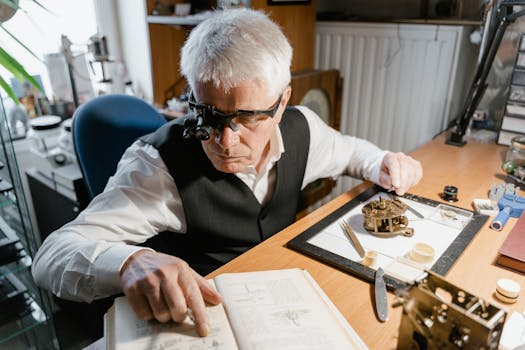
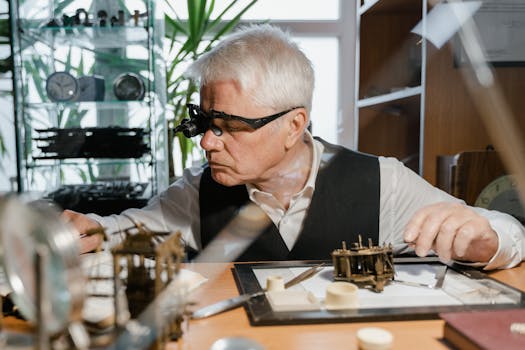
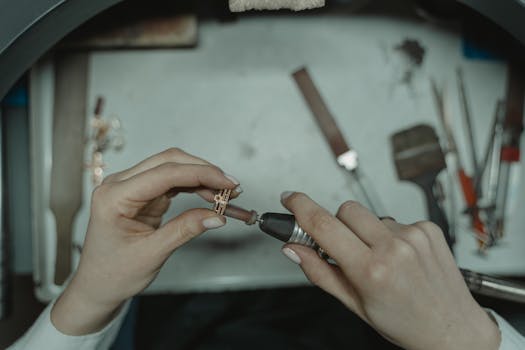
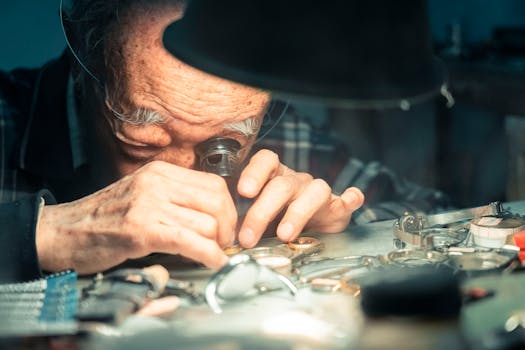
A watchmaker is a highly skilled craftsperson specialising in the construction, repair, and maintenance of watches and clocks. This intricate profession demands exceptional manual dexterity, patience, and a keen eye for detail. Daily tasks can range from disassembling complex mechanical movements, cleaning and lubricating tiny components, to replacing worn parts, regulating timekeeping accuracy, and reassembling the watch. Watchmakers often work with a variety of tools, including microscopes, tweezers, and specialised calibration equipment, dealing with components that are often less than a millimetre in size. The role can involve anything from routine servicing of modern timepieces to the painstaking restoration of antique watches, requiring a deep understanding of horological history and mechanics. Many watchmakers work for luxury brands, independent repair shops, or establish their own businesses, serving a clientele that values precision and craftsmanship.

Watchmaker

Flag Media

Please select a reason for flagging this content.

📊 Statistics

Salary Range

Starting salaries for trainee watchmakers can be around £18,000 to £22,000. Experienced and highly skilled watchmakers, particularly those working with luxury brands or in specialised repair, can earn £30,000 to £50,000 or more per year. Those running their own successful businesses may achieve higher incomes.

Number of Positions

While precise figures are difficult to obtain for this niche profession, the number of dedicated watchmaker positions in the UK is relatively small compared to other industries. However, there is a consistent demand for skilled professionals, particularly for the repair and restoration of mechanical watches, due to the intricate nature of the work and an aging workforce.

Typical Working Hours

Full-time watchmakers typically work around 37-40 hours per week, often Monday to Friday. However, those running their own businesses or working in retail environments may have more flexible or extended hours, including some weekend work, depending on client demand.

🚀 Careers in this path

Flag Media

Please select a reason for flagging this content.

Horologist specialising in Antique Clocks

As a Horologist specialising in Antique Clocks, you would focus on the restoration, repair, and conservation of historical timepieces such as longcase clocks, carriage clocks, and mantle clocks. This often involves intricate mechanical work, metalwork, woodworking, and a deep understanding of historical manufacturing techniques and materials. You might work for museums, private collectors, or specialist restoration workshops, using traditional tools and methods. A keen eye for detail and patience are essential.

Flag Media

Please select a reason for flagging this content.

Micro-Mechanic for Luxury Watches

A Micro-Mechanic for Luxury Watches works with high-end, contemporary wristwatches, often from prestigious Swiss or German brands. This role involves very fine and precise work, assembling, disassembling, cleaning, lubricating, and regulating tiny components under magnification. You would need to understand complex movements, tourbillons, and perpetual calendars. This career often involves training directly with a specific brand or a certified service centre, focusing on precision, quality control, and customer service.

Flag Media

Please select a reason for flagging this content.

Watch Designer and Prototyper

Moving beyond purely mechanical work, a Watch Designer and Prototyper combines creative design skills with technical understanding. You would be involved in conceptualising new watch models, from initial sketches to detailed CAD drawings, considering aesthetics, ergonomics, and manufacturability. This role often includes creating functional prototypes to test designs and materials. It requires a blend of artistic talent, knowledge of materials science, and an understanding of watchmaking principles, potentially leading to work with independent brands or established manufacturers.

Foundation and Skill Development

Research and Explore the Craft

Gain a comprehensive understanding of what watchmaking entails, its history, different types of watches, and the skills required. This initial exploration will confirm your interest and commitment to this highly specialised field.

Start by reading books and online articles about horology, famous watchmakers, and the evolution of timepieces. Watch documentaries and YouTube channels dedicated to watchmaking and repair. Consider visiting a watch museum or a local watch repair shop to observe the craft firsthand and speak to experienced professionals. This will give you a realistic insight into the daily life and challenges of a watchmaker.

Develop Manual Dexterity and Precision

Watchmaking requires exceptional fine motor skills and a steady hand. Begin practicing activities that enhance these attributes.

Engage in hobbies like model making, miniature painting, or intricate needlework. Practice disassembling and reassembling small, inexpensive mechanical items (e.g., old clocks, broken gadgets) to get accustomed to tiny components and specialised tools. Consider purchasing a basic set of watchmaking tools and a cheap mechanical watch movement to practice handling delicate parts and screws under magnification.

Gain Foundational Mechanical Knowledge

Familiarise yourself with basic mechanical principles, gearing, and the physics of motion, which are fundamental to understanding how watches work.

Take an introductory course in basic engineering principles or mechanics, if available, either online or at a local college. Read textbooks or online resources on physics related to levers, gears, springs, and friction. Understanding these concepts will provide a strong theoretical basis for comprehending the intricate mechanisms within a watch.

Formal Training and Qualification

Undertake a Specialised Horology Course

Enrol in a recognised watchmaking programme to acquire the theoretical knowledge and practical skills necessary for the profession.

Look for BHI (British Horological Institute) approved courses in the UK, such as those offered by the BHI itself or selected colleges like Birmingham City University (Horology programme) or West Dean College. These courses typically cover watch repair, restoration, manufacturing techniques, and the use of specialist tools and machinery. They often lead to professional qualifications that are highly respected within the industry.

Complete Practical Workshops and Projects

Actively participate in hands-on training sessions and complete practical projects to solidify your skills and build a portfolio.

During your formal training, focus on mastering techniques like disassembling, cleaning, lubricating, and reassembling various watch movements. Practice escapement adjustments, hairspring manipulation, balance wheel poising, and casing. Document your projects with clear photographs and descriptions to build a portfolio demonstrating your capabilities to potential employers.

Seek Internships or Apprenticeships

Gain real-world experience by working under the guidance of experienced watchmakers in a professional environment.

Many watch brands, independent workshops, or luxury retailers offer apprenticeships or internship opportunities. These placements are invaluable for applying your learned skills in a commercial setting, learning industry best practices, and understanding the demands of client work. They also provide excellent networking opportunities and can often lead to permanent employment.

Professional Development and Specialisation

Secure an Entry-Level Watchmaker Position

Begin your professional career by obtaining a role in a workshop, service centre, or luxury boutique, continuing to hone your craft.

Apply for positions advertised by watch brands (e.g., Rolex, Omega, Swatch Group), independent watch repair shops, or jewellery retailers with in-house repair services. Be prepared for interviews that may include practical tests of your skills. Starting in an entry-level role allows you to work on a variety of timepieces, learn from senior watchmakers, and develop speed and efficiency.

Pursue Continuous Learning and Specialisation

Stay updated with new technologies, techniques, and specific brand training, potentially choosing a niche within watchmaking.

The world of horology is constantly evolving. Attend masterclasses, advanced training courses (often provided by watch manufacturers), and industry seminars. You might specialise in areas like vintage watch restoration, complicated movement repair (e.g., tourbillons, perpetual calendars), micro-mechanics, or even specific brands. Obtaining certifications from major watch brands can significantly boost your career prospects.

Consider Starting Your Own Business

With sufficient experience, capital, and a strong client base, you might choose to open your own watchmaking or repair workshop.

This step requires not only expert watchmaking skills but also business acumen. Develop a business plan, secure funding, choose a suitable location, and build a strong professional network. Focus on marketing your services, building a reputation for quality and reliability, and managing client relationships. This path offers independence and the freedom to work on projects of your choosing, but also comes with the responsibilities of running a business.

🎯 View Apprenticeships

Explore relevant apprenticeships that can help you kickstart your career in Watchmaker. Apprenticeships offer hands-on experience and training while earning a wage.

Career Progressions

This page showcases various career options and the pathways to reach them. Each career listed here shares transferable skills and knowledge, making it easier for individuals to transition between them.

Your current career is highlighted to help you see how it fits into the broader landscape of potential career choices. By clicking on any career, you can learn more about it, including the training and education required to pursue it.

Remember, progressing in your career often involves further learning and training. This page provides insights into future career options as well as those that can lead up to your current one.

These career progression decisions are informed by comparing the skills and knowledge needed for different occupations, along with data on how people move between them. Explore the possibilities and discover the exciting journey ahead in your career!

Sample Qualifications

A Watchmaker is primarily involved in the intricate repair, maintenance, and restoration of watches, which directly aligns with the duties of a Watch or clock repairer.

How to become

You can get into this job through:

  • a university course
  • a college course
  • an apprenticeship
  • specialist courses run by training organisations

University

There is a small number of university courses in England, covering this subject, for example:

  • a degree in horology
  • a foundation degree in historic craft practices - clocks
  • a diploma in conservation studies - clocks

Entry requirements

You'll usually need:

  • at least 1 A level, or equivalent, for a foundation degree
  • 2 to 3 A levels, or equivalent, for a degree

More Information

College

You may be able to do a part-time course in clock or watch servicing, which could help you to get a trainee position with a watch and clock repair company.

Entry requirements

Entry requirements for these courses vary.

More Information

Apprenticeship

You could apply for a place on a Watchmaker Level 3 Advanced Apprenticeship.

This apprenticeship takes around 2 years to complete.

Entry requirements

To get onto an apprenticeship, you'll find it useful to have:

  • 5 GCSEs at grades 9 to 4 (A* to C), or equivalent, including English and maths, for an advanced apprenticeship

More Information

Other Routes

You could take training through the British Horological Institute. They offer short courses for beginners along with more advanced qualifications.

You can study for a professional qualification on the Watchmaker Training Programme at The British School of Watchmaking.

The Worshipful Company of Clockmakers also has details about full-time and part-time training courses.

More Information

Professional and industry bodies

You could join the British Horological Institute and The Worshipful Company of Clockmakers for training opportunities and professional development.

Further information

You can find out more about watch and clockmaking careers from the British Horological Institute.

Interested in More Career Paths?

Explore other careers or use our AI to discover personalised paths based on your interests.

Stay connected

Join our newsletter to stay up to date on features and releases

Address
Developing Experts Limited
Exchange Street Buildings
35-37 Exchange Street
Norwich
NR2 1DP
UK

Phone
01603 273515

Email
[email protected]

Copyright 2025 Developing Experts, All rights reserved.
