
Creating Career Path...

Finding Further Careers...

Watchmaker

View this career for different education levels:

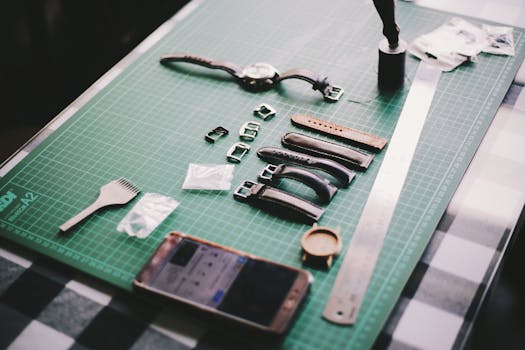
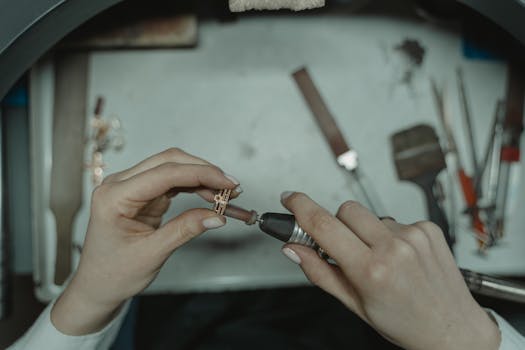
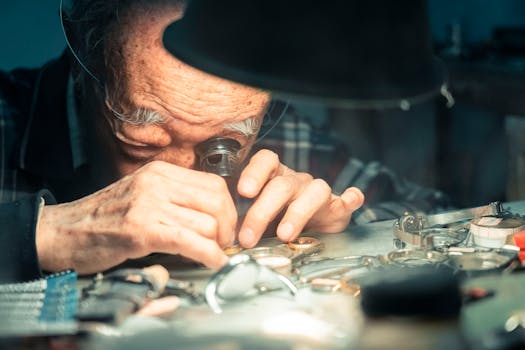
Imagine a watch, ticking away on your wrist or on a wall. Who makes sure it keeps the right time? That is a watchmaker! A watchmaker is like a doctor for watches. They carefully take apart tiny gears, springs, and hands, fix anything that is broken, and then put it all back together again. It is a job that needs very steady hands, excellent eyesight, and a lot of patience. You would use special tiny tools, like magnifying glasses and very small screwdrivers, to work on the delicate parts. Watchmakers do not just fix old watches; they can also help make new ones or make special ones for people who want something unique. It is a very skilled job that keeps beautiful timepieces working perfectly for many years.

Watchmaker

Flag Media

Please select a reason for flagging this content.

📊 Statistics

Average Starting Salary

A new watchmaker in the UK might start earning around 18,000 to 22,000 pounds a year. This can grow a lot as you get more experience and special skills.

Experienced Watchmaker Salary

An experienced watchmaker with special skills can earn between 30,000 and 50,000 pounds a year, and even more if they work on very fancy or old watches.

Job Availability

There are about 200-300 watchmaker jobs advertised in the UK each year. It is a special job, so there aren't thousands of openings, but there is always a need for skilled people.

🚀 Careers in this path

Flag Media

Please select a reason for flagging this content.

Clockmaker

Imagine making big clocks for towers or for people's homes, making sure they chime perfectly at the right time. You'd be a master of gears and springs, just like a watchmaker, but on a bigger scale!

Flag Media

Please select a reason for flagging this content.

Toy Repairer

If a favourite toy with moving parts, like a robot or a wind-up car, gets broken, you'd be the special person who can fix it! You'd carefully take it apart and put it back together so it can play again.

Flag Media

Please select a reason for flagging this content.

Miniature Engineer

This is like someone who builds really tiny working models of machines or gadgets, maybe even tiny engines or robots that can do small jobs. It's all about making tiny things work perfectly.

Discovering Watches

Be Curious About Clocks

Start by looking at clocks and watches around your home or school. How do you think they work? What do you notice about their parts?

Pay attention to different types of clocks, from small wristwatches to wall clocks. Notice the hands, numbers, and how they move. Ask grownups if they have any old, broken clocks or watches you can carefully look at (with their permission, of course!). You might even find some simple clock kits for children online that let you put together a basic clock face.

Build With Tiny Things

Practice being careful and using your fingers to put small things together, like building blocks or models with tiny pieces.

Playing with LEGOs, jigsaw puzzles with small pieces, or even model aeroplanes and cars can help you get good at using your hands precisely. These activities teach you patience and how to follow instructions to build something. It's like training your fingers to be super gentle and accurate, which is very important for a watchmaker!

Draw and Design

Try drawing your own clock or watch designs. What would your dream watch look like inside and out?

Use paper and crayons or pencils to draw what you imagine a watch looks like. You can draw the outside, with different colours or shapes, but also try to imagine what the gears and springs inside might look like. This helps you think about how things fit together and how they might work. You could even design a watch with special powers or features!

Learning the Basics

Explore How Time Works

Learn about how we tell time and why clocks were invented. It's a fascinating story!

Ask your teachers or grownups about the history of timekeeping. People used to use sundials, water clocks, and even candles to tell time before mechanical clocks were invented. Learning about this history helps you understand why watches and clocks are so important and how much cleverness went into making them work.

Visit a Clock Shop or Museum

If there's a clock shop or a museum with old clocks nearby, ask a grownup to take you. You might see real watchmakers at work!

Seeing real clocks and watches up close, especially old and fancy ones, can be very inspiring. Sometimes, museums have special exhibits that show how clocks work, or you might even be lucky enough to see a watchmaker fixing a watch. Ask questions and observe how carefully they handle the tiny parts. It's like watching a magic show, but with gears!

Read About Watches

Find books or simple online articles that explain how watches work in a fun and easy way.

There are many books for children that explain complex machines in simple terms. Look for ones about gears, mechanisms, or how things move. You might find animated videos online that show the inside of a watch moving, which can be super helpful to understand how all the tiny pieces work together like a team.

Becoming a Junior Watchmaker

Learn to Use Tools Safely

Practice using small tools like screwdrivers or tweezers for other hobbies, always with a grownup's help and supervision.

As you get older, you'll want to get good at using tools safely. Maybe you can help a grownup with a DIY project or learn to fix something simple around the house. This teaches you how to handle tools carefully and precisely, which is exactly what a watchmaker does with their tiny tools. Always remember safety first!

Take Science Classes

When you go to secondary school, pay attention in your science and technology classes. They teach you about how things work.

Science, especially physics, helps you understand concepts like forces, motion, and how materials behave, which are all important for understanding how watches function. Design and Technology (D&T) classes can also be very useful, as they often involve designing and making things, helping you develop practical skills.

Find a Watchmaking Course

Later, when you're older, you can find special colleges or places that teach you to be a real watchmaker.

In the UK, there are specific courses and apprenticeships available for aspiring watchmakers. These programmes teach you everything from how to dismantle and assemble watches to repairing tiny components and even making new parts. You'll learn about different types of watches, from mechanical to quartz, and how to use specialised tools. Some well-known places for watchmaking training include the British School of Watchmaking.

🎯 View Apprenticeships

Explore relevant apprenticeships that can help you kickstart your career in Watchmaker. Apprenticeships offer hands-on experience and training while earning a wage.

Career Progressions

This page showcases various career options and the pathways to reach them. Each career listed here shares transferable skills and knowledge, making it easier for individuals to transition between them.

Your current career is highlighted to help you see how it fits into the broader landscape of potential career choices. By clicking on any career, you can learn more about it, including the training and education required to pursue it.

Remember, progressing in your career often involves further learning and training. This page provides insights into future career options as well as those that can lead up to your current one.

These career progression decisions are informed by comparing the skills and knowledge needed for different occupations, along with data on how people move between them. Explore the possibilities and discover the exciting journey ahead in your career!

Sample Qualifications

A Watchmaker's primary role involves the repair, maintenance, and restoration of watches, which directly aligns with the duties of a Watch or clock repairer.

How to become

You can get into this job through:

  • a university course
  • a college course
  • an apprenticeship
  • specialist courses run by training organisations

University

There is a small number of university courses in England, covering this subject, for example:

  • a degree in horology
  • a foundation degree in historic craft practices - clocks
  • a diploma in conservation studies - clocks

Entry requirements

You'll usually need:

  • at least 1 A level, or equivalent, for a foundation degree
  • 2 to 3 A levels, or equivalent, for a degree

More Information

College

You may be able to do a part-time course in clock or watch servicing, which could help you to get a trainee position with a watch and clock repair company.

Entry requirements

Entry requirements for these courses vary.

More Information

Apprenticeship

You could apply for a place on a Watchmaker Level 3 Advanced Apprenticeship.

This apprenticeship takes around 2 years to complete.

Entry requirements

To get onto an apprenticeship, you'll find it useful to have:

  • 5 GCSEs at grades 9 to 4 (A* to C), or equivalent, including English and maths, for an advanced apprenticeship

More Information

Other Routes

You could take training through the British Horological Institute. They offer short courses for beginners along with more advanced qualifications.

You can study for a professional qualification on the Watchmaker Training Programme at The British School of Watchmaking.

The Worshipful Company of Clockmakers also has details about full-time and part-time training courses.

More Information

Professional and industry bodies

You could join the British Horological Institute and The Worshipful Company of Clockmakers for training opportunities and professional development.

Further information

You can find out more about watch and clockmaking careers from the British Horological Institute.

Interested in More Career Paths?

Explore other careers or use our AI to discover personalised paths based on your interests.

Stay connected

Join our newsletter to stay up to date on features and releases

Address
Developing Experts Limited
Exchange Street Buildings
35-37 Exchange Street
Norwich
NR2 1DP
UK

Phone
01603 273515

Email
[email protected]

Copyright 2025 Developing Experts, All rights reserved.
