



Creating Career Path...

Finding Further Careers...

Maritime Archaeologist

View this career for different education levels:

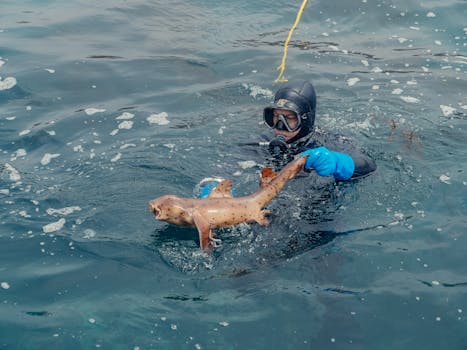
A Maritime Archaeologist in the UK specialises in the study of human interaction with the sea, lakes, and rivers through material remains. This involves exploring and documenting shipwrecks, submerged landscapes, coastal settlements, and other underwater cultural heritage sites. The role often combines academic research with practical fieldwork, which can involve diving in challenging conditions to survey, excavate, and record sites. Beyond fieldwork, maritime archaeologists spend considerable time on conservation of artefacts, post-excavation analysis, report writing, and engaging with the public through exhibitions or educational programmes. They play a crucial role in understanding Britain's rich seafaring past and ensuring the protection of its underwater heritage for future generations. The work requires a strong understanding of archaeological principles, maritime history, and often includes specialist skills such as underwater photography, remote sensing techniques (e.g., side-scan sonar, magnetometry), and artefact conservation. Many roles are project-based or contract-dependent, meaning flexibility and a willingness to travel for fieldwork are often necessary. Collaboration with marine scientists, conservators, and other archaeological specialists is common, making teamwork and communication skills highly valued. It's a career that blends intellectual curiosity with adventurous practical application.

Maritime Archaeologist

Flag Media

Please select a reason for flagging this content.

📊 Statistics

Typical Starting Salary

For entry-level roles in the UK, a Maritime Archaeologist can expect to earn in the range of £22,000 to £28,000 per year, particularly with organisations like Historic England or commercial archaeological units.

Experienced Salary Range

With several years of experience and specialisation, salaries can rise to £30,000 to £45,000. Senior roles, project management, or academic positions can command salaries upwards of £50,000 annually, depending on the employer and project scope.

Job Market Overview

While not a high-volume career, the UK has a significant maritime heritage. There are typically around 50-100 roles advertised annually, including contract, permanent, and research positions, spread across commercial units, governmental bodies, universities, and charities. Competition can be high for permanent roles.

🚀 Careers in this path

Flag Media

Please select a reason for flagging this content.

Marine Geophysicist

Utilises advanced sonar and seismic equipment to map the seabed and identify submerged features, often working with archaeological teams to locate potential wreck sites or ancient landscapes. Strong maths and physics skills are beneficial.

Flag Media

Please select a reason for flagging this content.

Underwater Heritage Manager

Focuses on the conservation, protection, and interpretation of underwater cultural heritage sites. This role often involves policy development, site monitoring, and public engagement, combining archaeological knowledge with project management.

Flag Media

Please select a reason for flagging this content.

Diving Archaeologist Technician

Provides specialist diving and technical support on archaeological excavations underwater. This involves setting up grids, handling equipment, photography, and site recording in challenging marine environments, often requiring commercial diving qualifications.

Build Your Foundational Knowledge

Academic Degree in Archaeology or History

Obtain an undergraduate degree in Archaeology, Maritime Archaeology, History, or a related field to establish a strong academic base.

Many universities in the UK offer relevant undergraduate programmes. Look for courses with a strong emphasis on archaeological theory, methods, and British history. Some universities may offer modules specifically related to maritime history or archaeology, which would be highly beneficial. Aim for a 2:1 or higher to improve your prospects for postgraduate study.

Gain Relevant Diving Qualifications

Acquire professional diving certifications essential for underwater fieldwork, such as HSE Professional Scuba or equivalent.

Maritime archaeology primarily takes place underwater, so strong diving skills are crucial. While recreational certifications (like PADI Advanced Open Water or Rescue Diver) are a good start, you'll eventually need professional diving qualifications like the HSE Professional Scuba Diver, which is recognised for archaeological work in the UK. Look into courses offered by commercial diving schools or specialist archaeological diving organisations.

Volunteer and Gain Field Experience

Seek out volunteer opportunities on archaeological digs, both terrestrial and maritime, to gain practical fieldwork experience.

Practical experience is invaluable. Volunteer with local archaeological societies, trusts, or university-led projects. Even terrestrial archaeology can teach you fundamental excavation, recording, and conservation skills applicable to maritime sites. Look for opportunities advertised by organisations like the Council for British Archaeology (CBA), Historic England, or the Nautical Archaeology Society (NAS).

Specialise and Develop Skills

Pursue a Postgraduate Degree

Complete a Master's degree in Maritime Archaeology or a closely related specialist field.

A Master's (MA or MSc) is often essential for a career in maritime archaeology. Programmes typically cover topics such as archaeological theory, fieldwork methods, conservation of submerged artefacts, remote sensing, and maritime history. Universities such as the University of Southampton, University of Bristol, and Bangor University are well-regarded for their maritime archaeology programmes in the UK.

Undertake Specialist Training

Develop additional skills through workshops and courses in areas like remote sensing, photogrammetry, or artefact conservation.

Beyond diving, modern maritime archaeology increasingly relies on technology. Skills in side-scan sonar, magnetometry, ROV operation, 3D modelling (photogrammetry), GIS, and conservation techniques for waterlogged materials are highly sought after. Organisations like the Nautical Archaeology Society (NAS) offer various training courses that can significantly enhance your CV.

Network and Join Professional Bodies

Connect with professionals in the field and become a member of relevant archaeological societies.

Networking is crucial for career progression. Attend conferences, workshops, and seminars where you can meet established archaeologists and potential employers. Join professional bodies like the Nautical Archaeology Society (NAS), the Chartered Institute for Archaeologists (CIfA), or the British Sub-Aqua Club (BSAC) for access to resources, job postings, and networking events.

Launch Your Career

Secure Entry-Level Positions

Apply for assistant archaeologist, field archaeologist, or project officer roles with commercial archaeology units or heritage organisations.

Entry-level roles can be competitive. Look for vacancies with commercial archaeological units that undertake marine projects, or with heritage bodies like Historic England, National Trust, or national museums. Be prepared for contract-based work, as many archaeological projects are finite. Highlight your diving qualifications, fieldwork experience, and specialist skills in your applications.

Continue Professional Development

Regularly update your skills, maintain diving certifications, and participate in ongoing training and research.

Maritime archaeology is a continually evolving field. Stay current with new technologies, research methodologies, and conservation practices. Maintain your diving medicals and certifications, and consider advanced diving qualifications if relevant to your career path. Engaging in professional development shows commitment and keeps your expertise sharp.

Consider Further Research or Consultancy

Explore options for doctoral research (PhD) or establishing a consultancy for specialised maritime archaeological services.

For those interested in academic research, a PhD can open doors to university lecturing, research positions, or senior roles within heritage organisations. Alternatively, experienced maritime archaeologists can establish their own consultancies, offering specialist services to developers, government bodies, or other archaeological firms, particularly in areas like marine licence applications and impact assessments.

🎯 View Apprenticeships

Explore relevant apprenticeships that can help you kickstart your career in Maritime Archaeologist. Apprenticeships offer hands-on experience and training while earning a wage.

Career Progressions

No career progressions found for Maritime Archaeologist

Sample Qualifications

A Maritime Archaeologist specialises in the study of human interaction with the sea, lakes, and rivers through material remains. This role fundamentally involves archaeological principles and methods, making 'Archaeologist' the most appropriate overarching job title from the provided list, as maritime is a specialisation within the broader field of archaeology.

How to become

You can get into this job through:

  • a university course
  • an apprenticeship

University

Most professional archaeologists have a degree and many also have a postgraduate qualification.

You can do a degree in archaeology or a related subject, like:

  • environmental archaeology
  • human evolution
  • archaeological science
  • ancient history
  • conservation and cultural heritage

You can search for higher education archaeology courses on British Archaeological Jobs and Resources.

After completing a first degree, you could take a postgraduate course and specialise in a particular field. 

Examples include:

  • osteoarchaeology - studying human remains
  • marine archaeology - investigating coastal and underwater sites
  • digital archaeology - creating visualisations of ruins and finds

Entry requirements

You'll usually need:

  • 2 to 3 A levels, or equivalent, for a degree
  • a degree in a relevant subject for postgraduate study

More Information

Apprenticeship

You could apply to do an Archaeological Technician Level 3 Advanced Apprenticeship, with an archaeological consultancy, university department or heritage organisation. This could lead to a position like archaeological site assistant or finds technician.

With further training, you could become a professional archaeologist.

You could also complete an Archaeological Specialist Level 7 Postgraduate Degree Apprenticeship.

The degree apprenticeship typically takes 3 years to complete and combines learning on-the-job with university study.

Employers will assess your skills, experience and qualifications when you apply, and usually require a relevant first degree.

Entry requirements

Employers will set their own entry requirements.

More Information

Volunteering

Competition for courses and jobs is very strong. It's essential that you get practical experience.

Local and regional archaeological associations run volunteer fieldwork programmes for all age groups.

These offer you the chance to get hands-on experience, doing tasks like:

  • site surveys
  • excavations
  • recording finds

You can find volunteering opportunities through the Council for British Archaeology.

More Information

Career tips

There are a lot of different specialisms in archaeology and skills you have from another career can be useful, for example:

  • computer-aided design (CAD)
  • illustration
  • photography
  • geographical information systems (GIS)

Professional and industry bodies

You can join the Chartered Institute for Archaeologists for professional development training and networking opportunities.

Further information

You'll find more details about how to become an archaeologist from the:

Interested in More Career Paths?

Explore other careers or use our AI to discover personalised paths based on your interests.

Stay connected

Join our newsletter to stay up to date on features and releases

Address
Developing Experts Limited
Exchange Street Buildings
35-37 Exchange Street
Norwich
NR2 1DP
UK

Phone
01603 273515

Email
[email protected]

Copyright 2025 Developing Experts, All rights reserved.
