

Creating Career Path...

Finding Further Careers...

MRI Radiographer

View this career for different education levels:

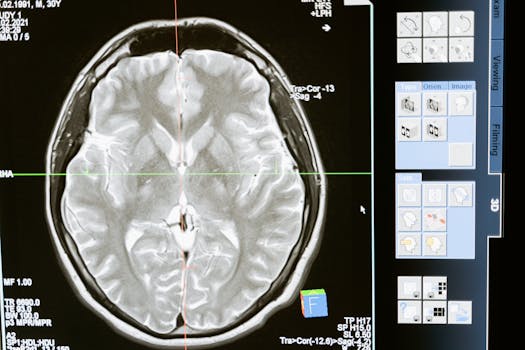
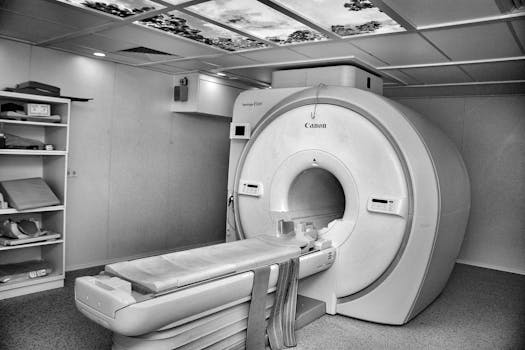
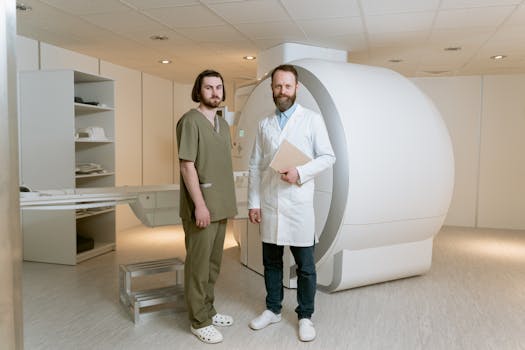
Imagine a special camera that can see inside your body without needing to open you up. That is what an MRI scanner does, and an MRI Radiographer is the clever person who knows how to use it! They help doctors see what is happening inside people, like bones, muscles, and even brains. They make sure you are comfortable and safe during the scan, explaining everything in a friendly way. They operate big, amazing machines that use magnets and radio waves to create detailed pictures. It is a really important job because these pictures help doctors figure out if someone is poorly and how best to help them get better. Being an MRI Radiographer means you get to work in hospitals or special scanning centres. You need to be good at talking to people, making them feel calm, and also very careful and precise with the machinery. You learn how to take different types of pictures depending on what the doctor needs to see. It is a bit like being a photographer, but for inside the body! You wear a uniform, and you work as part of a team of doctors and nurses, all helping people who are unwell.

MRI Radiographer

Flag Media

Please select a reason for flagging this content.

📊 Statistics

Salary Range

An MRI Radiographer in the UK can expect to earn between 30,000 and 45,000 pounds per year. If they become very experienced or take on more responsibility, it can be even higher, sometimes up to 55,000 pounds.

Number of Positions

There are over 25,000 radiographers working across the UK, and a good number of these are MRI Radiographers. There are always new jobs appearing as hospitals need more people to help patients.

Working Hours

Most MRI Radiographers work about 37.5 hours a week. Sometimes they might work evenings or weekends, especially if they work in a busy hospital that needs scans done at all times.

🚀 Careers in this path

Flag Media

Please select a reason for flagging this content.

MRI Scan Helper

Imagine you are a super helper for children who need an MRI scan. You would show them the big scanner and explain it's like a special camera that takes pictures inside their body, but it doesn't hurt. You'd help them feel brave and comfortable.

Flag Media

Please select a reason for flagging this content.

Hospital Storyteller

You could be a storyteller who visits children in the hospital. You'd tell fun stories about how doctors and nurses help people, or tales about brave characters who go on adventures inside their own bodies to find out how they work. This helps children understand and feel less worried.

Flag Media

Please select a reason for flagging this content.

Medical Imaging Toy Creator

Imagine you design and build special toys that look like the machines doctors use, like a toy MRI scanner. Children could play with these toys to learn about what happens at the hospital. You'd make them fun, colourful, and easy to understand.

Learning and Playing

Be Curious About Science

Start by being really interested in how things work, especially the human body and technology! Science is a big part of being an MRI Radiographer.

At school, pay attention in your science lessons. Ask your teachers lots of questions about the body, magnets, and electricity. You can also read fun science books or watch documentaries about how the human body works and amazing machines. Learning about how bones, muscles, and organs fit together is a great start!

Practise Being Kind

MRI Radiographers help people who might be a bit nervous or scared. Being kind, calm, and good at talking to people is super important.

Practise being a good listener to your friends and family. Offer to help them if they are sad or worried. When you play, try to explain games clearly and gently to others, just like an MRI Radiographer explains the scanning process to patients. Being patient and understanding will help you a lot in this job.

Visit a Hospital (if you can!)

If your grown-ups can arrange it, visiting a hospital or learning about what happens inside can be a really exciting experience.

Sometimes hospitals have open days or virtual tours that you can join. You might even see pictures of MRI machines or learn about what doctors and nurses do. Seeing the hospital environment can help you imagine what it's like to work there and how many different people work together to help patients.

School Adventures

Focus on Key Subjects

When you get older, it's really helpful to do well in subjects like Science (especially Biology and Physics) and Maths. These are like the building blocks for understanding MRI machines.

At secondary school, choosing GCSEs and A-Levels that focus on science and maths will set you on the right path. Physics is important because MRI machines use strong magnets and radio waves, which are all about physics! Biology helps you understand the parts of the body you'll be scanning.

Join Science Clubs

Many schools have science or technology clubs. Joining one is a super fun way to learn more and meet others who love science too!

These clubs might do exciting experiments, build cool things, or go on trips to science museums. It's a great way to explore your interest in how things work, which is perfect for a future MRI Radiographer. You could even learn about magnets or how cameras work, which are a bit like what an MRI machine does.

Learn About Health and Care

Understanding how to look after people and keep them safe is a big part of this job. Learning about first aid can be a good start.

You could learn basic first aid, which teaches you how to help someone who is hurt. This shows you how important it is to be careful and caring when someone needs help, just like an MRI Radiographer cares for patients during their scan. Some schools also offer health and social care courses.

University and Training

Go to University

To become an MRI Radiographer, you need to study at university for a special degree called 'Diagnostic Radiography'.

You'll typically need to complete a three-year undergraduate degree, such as a BSc (Hons) in Diagnostic Radiography. Universities across the UK offer this course. During this degree, you'll learn all about the human body, how different scanning machines work (including MRI!), and how to look after patients safely and kindly. You'll spend time in classrooms learning and also lots of time in real hospitals.

Get Hands-on Experience

During your university course, you'll spend lots of time in real hospitals, learning how to use the MRI machine and helping real patients.

This is called 'clinical placement' or 'work experience'. You'll work alongside experienced MRI Radiographers, observing and then carefully learning how to set up the machine, position patients comfortably, and ensure the pictures are clear. This practical experience is really important for becoming confident and skilled in the job. It's where you put all your classroom learning into practice.

Register as a Radiographer

After you finish your degree, you need to register with a special group called the 'Health and Care Professions Council' (HCPC) to officially become an MRI Radiographer.

The HCPC makes sure that all healthcare professionals in the UK are properly trained and safe to work. Once you're registered, it means you're officially qualified and ready to start your amazing job taking pictures inside people's bodies. You'll then be able to apply for jobs in hospitals and clinics as a qualified MRI Radiographer.

🎬 Useful Videos

🎯 View Apprenticeships

Explore relevant apprenticeships that can help you kickstart your career in MRI Radiographer. Apprenticeships offer hands-on experience and training while earning a wage.

Career Progressions

This page showcases various career options and the pathways to reach them. Each career listed here shares transferable skills and knowledge, making it easier for individuals to transition between them.

Your current career is highlighted to help you see how it fits into the broader landscape of potential career choices. By clicking on any career, you can learn more about it, including the training and education required to pursue it.

Remember, progressing in your career often involves further learning and training. This page provides insights into future career options as well as those that can lead up to your current one.

These career progression decisions are informed by comparing the skills and knowledge needed for different occupations, along with data on how people move between them. Explore the possibilities and discover the exciting journey ahead in your career!

Sample Qualifications

An MRI Radiographer is a specific type of Radiographer who specialises in magnetic resonance imaging. They are qualified to operate MRI scanners and interpret images, which aligns perfectly with the broader Radiographer role, unlike an assistant or a non-healthcare technician.

How to become

You can get into this job through:

  • a university course
  • an apprenticeship
  • working towards this role

University

You'll need to do a degree or postgraduate qualification approved by the Health and Care Professions Council to become a radiographer.

Your choice of degree course will depend on whether you want to work in diagnostic or therapeutic radiography.

You may be able to take a fast-track postgraduate qualification over 2 years if you're a health professional or have a relevant degree.

Extra student financial support may be available through the NHS Learning Support Fund.

You can also train as a radiographer in the armed forces. Find out more at:

Entry requirements

You'll usually need:

  • 4 or 5 GCSEs at grades 9 to 4 (A* to C), or equivalent, including English, maths and science
  • 3 A levels, or equivalent, including at least 1 science
  • a degree in a relevant subject for postgraduate study

More Information

Apprenticeship

You may be able to do a Diagnostic or Therapeutic Radiographer Level 6 Degree Apprenticeship.

This takes a minimum of 36 months and is a mix of learning in the workplace and academic study at an approved university.

Entry requirements

You'll usually need:

  • 4 or 5 GCSEs at grades 9 to 4 (A* to C) and A levels, or equivalent, for a higher or degree apprenticeship

More Information

Work

You can start as a radiography assistant and work your way up to assistant practitioner. With the support of your employer you may then be able to work and study part-time for a radiography degree and professional qualification.

Volunteering

Volunteering in a hospital may give you the chance to speak with radiography staff to help you decide whether you want to train as a diagnostic or therapeutic radiographer.

More Information

Registration

Career tips

You'll be expected to show an understanding of the NHS values when applying for jobs and training.

Further information

You can find out more about a career in radiography from Health Careers and The College of Radiographers.

Interested in More Career Paths?

Explore other careers or use our AI to discover personalised paths based on your interests.

Stay connected

Join our newsletter to stay up to date on features and releases

Address
Developing Experts Limited
Exchange Street Buildings
35-37 Exchange Street
Norwich
NR2 1DP
UK

Phone
01603 273515

Email
[email protected]

Copyright 2025 Developing Experts, All rights reserved.