

Creating Career Path...

Finding Further Careers...

Cartographer

View this career for different education levels:

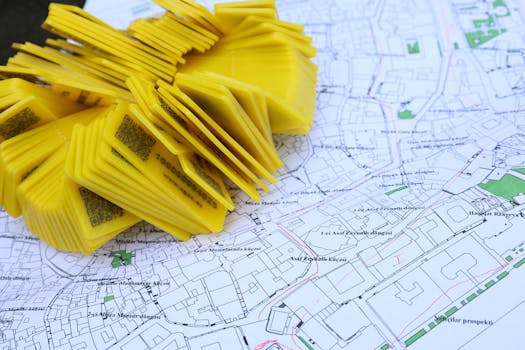
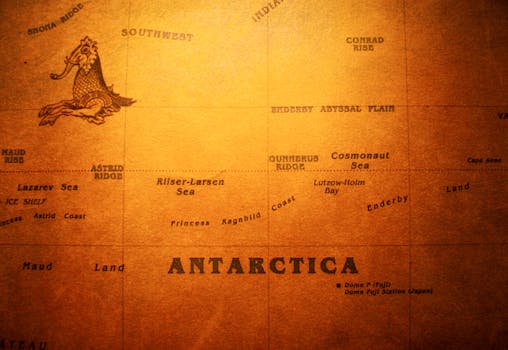
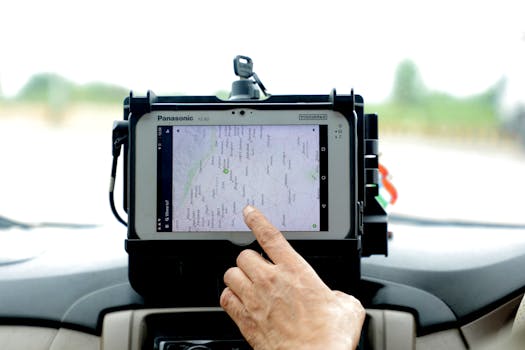
A Cartographer is like a detective for places and spaces! Imagine all the maps you see, whether on your phone, in a book, or even a treasure map. A Cartographer is the person who designs and creates these maps. They dont just draw pictures though; they collect lots of information about an area, like where roads are, how high mountains are, where buildings stand, and even things like population density or environmental data. They use special computer software called Geographic Information Systems (GIS) to analyse this information and turn it into clear, accurate, and easy-to-understand maps. These maps are super important for lots of things, like planning new towns, navigating new places, understanding climate change, or even delivering parcels. Being a Cartographer means you need to be very good at looking at details, solving puzzles with data, and having a good understanding of geography and technology. You would spend a lot of time working with computers, using sophisticated software to process satellite images, aerial photos, and survey data. Its a creative job too, as you decide how to best present all this information so that people can use the map effectively. For example, you might choose specific colours, symbols, and labels to make a map easy to read and understand. It is a vital role in helping us understand the world around us and how we interact with it.

Cartographer

Flag Media

Please select a reason for flagging this content.

📊 Statistics

Average UK Salary

Starting salaries for Cartographers in the UK can be around 20,000 to 25,000 pounds per year. With more experience, this can rise to between 30,000 and 45,000 pounds annually.

Number of Positions

While not a huge industry, there are typically several hundred job openings for Cartographers or related geospatial roles advertised in the UK each year. Many roles are within government agencies, engineering firms, and utility companies.

Typical Working Hours

Most Cartographers in the UK work standard office hours, often 37-40 hours a week, Monday to Friday. Sometimes there might be a need to work extra hours for big projects, but it is generally a regular schedule.

🚀 Careers in this path

Flag Media

Please select a reason for flagging this content.

Geospatial Analyst

Imagine you're a super detective, but for maps! You'd use special computer tools to look at maps and satellite pictures to solve puzzles. You might help decide where new roads should go, track changes in forests, or even find the best spot for a new park.

Flag Media

Please select a reason for flagging this content.

Marine Cartographer

Do you love the ocean? A marine cartographer is like a mapmaker for the seas! You'd create detailed charts that help ships navigate safely, showing depths, reefs, and shipping lanes. It's important work to protect sailors and sea life.

Flag Media

Please select a reason for flagging this content.

Urban Planner

If you like thinking about how towns and cities work, this could be for you! An urban planner uses maps and information to design how a town grows. You might help decide where new houses, shops, or schools should be built, making sure everything fits together nicely for the people who live there.

Build Your Foundations

Ace Your School Subjects

Focus on subjects like Geography, Maths, and Science at school. These will give you a great base for understanding how maps work.

Geography helps you understand places, landscapes, and how human activities impact them – all crucial for map-making. Maths is key for understanding scales, coordinates, and data analysis. Science subjects like Computing or ICT will be helpful for learning about the software used in cartography.

Explore Maps Around You

Start paying attention to different types of maps you see every day. Think about how they're made and what information they show.

Look at maps on your phone, in books, on public transport, or even at theme parks. Notice what symbols they use, how colours are chosen, and how they represent real-world places. This helps you understand different mapping styles and purposes.

Join a Geography Club or Society

If your school has one, join a geography club! It's a fun way to learn more about the world and meet others interested in maps and places.

These clubs often do cool activities like field trips, map-reading challenges, or guest speaker sessions. It's a fantastic way to deepen your interest and discover new aspects of geography and mapping outside of regular lessons.

Develop Key Skills

Learn Computer Skills

Practise using computers for different tasks, especially for research and handling data. Cartographers use special computer programmes a lot!

Familiarise yourself with word processing, spreadsheets, and presentation software. Basic coding skills, even just understanding how logic works, can be really beneficial later on. Many cartography tools are software-based, so being comfortable with computers is a must.

Practise Problem-Solving

Cartographers often have to solve puzzles, like how to best show complicated information clearly on a map. Try to think logically and creatively.

When you're faced with a problem, try to break it down into smaller, manageable steps. Think about different ways to approach it and what the best solution might be. This skill is vital for designing effective and accurate maps.

Work on Your Attention to Detail

Maps need to be super accurate! Develop your ability to notice small things and ensure everything is just right.

Practise tasks that require precision, whether it's drawing, building models, or checking your homework carefully. In cartography, a tiny mistake can lead to big problems, so being meticulous is a hugely important skill.

Next Steps and Further Education

Choose Relevant A-Levels or College Courses

When you're older, pick subjects like Geography, Maths, Computer Science, or even Graphic Design if you want to go to university.

These subjects will give you the academic background needed for a degree in cartography or a related field. Geography provides the theoretical knowledge, Maths for data analysis, Computer Science for software skills, and Graphic Design for the visual aspect of map creation.

Consider a University Degree

Look into university courses like 'Geography', 'Geographic Information Systems (GIS)', 'Surveying', or 'Environmental Science' after your A-levels.

Many cartographers have degrees in these subjects. GIS is especially important as it's the main technology used in modern map-making. University will provide you with in-depth knowledge and hands-on experience with industry-standard software and techniques.

Explore Apprenticeships

Some companies offer apprenticeships in geospatial or surveying roles. This lets you learn on the job while earning money.

Apprenticeships are a fantastic way to gain practical experience and qualifications at the same time. You'll work alongside experienced professionals, learning the ropes directly from them, and some apprenticeships can lead directly into a full-time job as a cartographer or a related geospatial professional.

🎬 Useful Videos

🎯 View Apprenticeships

Explore relevant apprenticeships that can help you kickstart your career in Cartographer. Apprenticeships offer hands-on experience and training while earning a wage.

Career Progressions

No career progressions found for Cartographer

Sample Qualifications

How to become

You can get into this job through:

  • a university course
  • an apprenticeship
  • working towards this role
  • the armed forces

University

You can take a degree in a subject that includes data gathering and analysis, such as:

  • geography
  • geographical information systems (GIS)
  • land surveying
  • earth sciences
  • oceanography
  • meteorology

Employers may also accept degrees in other subjects like computer science, software engineering or graphic design.

A postgraduate qualification may help you to find work in a specialist field of cartography like GIS.

Entry requirements

You'll usually need:

  • 2 to 3 A levels, or equivalent, for a degree
  • a degree in a relevant subject for postgraduate study

More Information

Apprenticeship

You could apply to an organisation to do an apprenticeship, such as:

  • Geospatial Survey Technician Level 3 Advanced Apprenticeship
  • Geospatial Mapping and Science Specialist Level 6 Degree Apprenticeship
  • Spatial Data Specialist Level 7 Degree Apprenticeship

Entry requirements

You'll usually need:

  • 5 GCSEs at grades 9 to 4 (A* to C), or equivalent, including English and maths, for an advanced apprenticeship
  • 4 or 5 GCSEs at grades 9 to 4 (A* to C) and A levels, or equivalent, for a higher or degree apprenticeship

More Information

Work

You may be able to start as a trainee cartographic or GIS technician and work your way up through training and promotion.

Employers may want you to have:

  • an apprenticeship in geospatial surveying or similar field
  • A levels in geography, mathematics or computing
  • a qualification equivalent to A level standard, for example a diploma in applied science

Other Routes

You can apply to become a geographic technician with the Army, or join the Royal Air Force and train as an aviation data analyst (air cartographer).

At the end of your service, you could use your experience to find work in commercial cartography and mapping.

More Information

Career tips

You can find opportunities to work as a cartographer in the public and private sector with:

  • Ordnance Survey
  • local and national government departments
  • transport companies
  • mapping and publishing companies
  • surveying and energy companies

Professional and industry bodies

You could join the British Cartographic Society for networking, information resources and career development support.

Further information

You can find out more about a career in cartography from:

Interested in More Career Paths?

Explore other careers or use our AI to discover personalised paths based on your interests.

Stay connected

Join our newsletter to stay up to date on features and releases

Address
Developing Experts Limited
Exchange Street Buildings
35-37 Exchange Street
Norwich
NR2 1DP
UK

Phone
01603 273515

Email
[email protected]

Copyright 2025 Developing Experts, All rights reserved.
