

Creating Career Path...

Finding Further Careers...

Cartographer

View this career for different education levels:

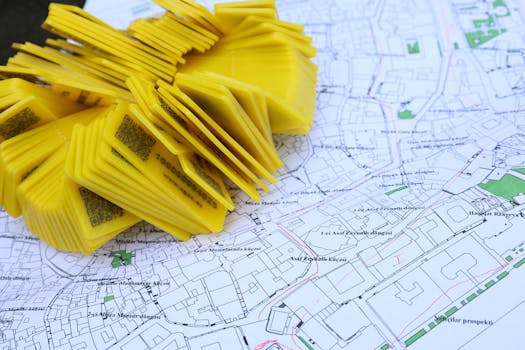
Imagine you are drawing a super-accurate treasure map for the whole world or a tiny part of it. That is what a Cartographer does! They are like special map makers who create all sorts of maps, from ones you see on your phone to big detailed ones for builders or scientists. They use amazing computer programs and information from satellites that orbit high above the Earth to make sure their maps are correct and easy to understand. They help us find our way, plan new buildings, and even understand how our planet is changing. It is a bit like being a detective for places, gathering clues and putting them all together on a map.

Cartographer

Flag Media

Please select a reason for flagging this content.

📊 Statistics

Starting Salary

A new Cartographer in the UK might earn around 20,000 to 25,000 pounds a year.

Experienced Salary

With more experience, a Cartographer can earn between 30,000 and 45,000 pounds a year, sometimes even more for senior roles.

Job Openings

There are usually a few hundred job openings for Cartographers and related roles in the UK each year, as their skills are needed in many different areas.

🚀 Careers in this path

Flag Media

Please select a reason for flagging this content.

Treasure Map Maker

Imagine drawing maps that lead to hidden treasure! You'd draw the islands, the X marks the spot, and maybe even a big scary monster guarding the treasure.

Flag Media

Please select a reason for flagging this content.

Theme Park Designer

You'd draw maps for super fun theme parks, showing where all the rollercoasters, sweet shops, and exciting rides are. You'd make sure everyone knows how to find their favourite bits!

Flag Media

Please select a reason for flagging this content.

Zoo Map Creator

Your job would be to draw colourful maps for a zoo, showing where all the amazing animals live, like the lions, giraffes, and cheeky monkeys. You'd help visitors find their way around.

Learning About Our World

Be a Map Detective

Start by looking at maps all around you, like maps in books, on your phone, or even a globe! See how they show different places.

When you look at maps, try to spot different features like rivers, mountains, roads, and towns. Notice how colours and symbols are used to represent these things. You could even try drawing a map of your bedroom or your journey to school, showing where everything is.

Explore Your Local Area

Go for walks or bike rides in your neighbourhood and pay attention to landmarks and how places connect.

As you explore, try to remember the order of shops, the names of streets, and where parks or specific buildings are. This helps you understand how a real-world area can be represented on a map. You could even try to draw a simple map of your street from memory.

Learn About Geography

Ask your teachers about geography lessons at school. This is where you learn about the Earth and its features.

Geography lessons are fantastic for future cartographers! You'll learn about continents, oceans, different countries, and how weather affects the land. Understanding these things helps you imagine what a map of a far-off place might look like.

Getting Ready for Bigger Maps

Practice Drawing and Art

Drawing helps you learn about shapes, lines, and how to make things clear on paper, which is important for maps.

Cartographers need to be good at drawing because maps are like special drawings! Practice drawing buildings, trees, and landscapes. You can also try drawing patterns and symbols to represent different things, just like maps use symbols for hospitals or post offices.

Learn About Computers

Maps are often made on computers these days, so getting comfortable using them is a great skill.

Playing simple computer games that involve building things or exploring virtual worlds can help you get used to using a mouse and keyboard. You could also try drawing programs or even just learning how to save files and find things on a computer.

Be Good at Puzzles and Solving Problems

Making maps is like solving a big puzzle to show information clearly.

When you play with LEGO or complete jigsaws, you're practicing problem-solving. Cartographers have to figure out the best way to show lots of information on a map so that everyone can understand it, which is like solving a puzzle to make everything fit.

Becoming a Map Maker

Study at Secondary School

Focus on subjects like Geography, Maths, and maybe even Art or Design and Technology at secondary school.

Geography will teach you even more about our planet and how to read complex maps. Maths helps with understanding measurements and scales, which are crucial for making accurate maps. Art and Design can help you make maps look good and easy to understand.

Go to College or University

After school, you might go to college or university to study a special subject called 'Geospatial Science' or 'Cartography'.

At university, you'll learn how to use very clever computer programs called Geographic Information Systems (GIS). These programs help cartographers collect, store, and display map information. You'll learn how to take information from satellites and turn it into useful maps.

Find an Apprentice Role

Some people learn by working with experienced cartographers and studying at the same time through an apprenticeship.

An apprenticeship is like learning a job while you're doing it. You'd work with real map-makers, helping them with their projects, and they would teach you all the tricks and special skills. This is a brilliant way to get hands-on experience and learn from the best!

🎬 Useful Videos

🎯 View Apprenticeships

Explore relevant apprenticeships that can help you kickstart your career in Cartographer. Apprenticeships offer hands-on experience and training while earning a wage.

Career Progressions

No career progressions found for Cartographer

Sample Qualifications

How to become

You can get into this job through:

  • a university course
  • an apprenticeship
  • working towards this role
  • the armed forces

University

You can take a degree in a subject that includes data gathering and analysis, such as:

  • geography
  • geographical information systems (GIS)
  • land surveying
  • earth sciences
  • oceanography
  • meteorology

Employers may also accept degrees in other subjects like computer science, software engineering or graphic design.

A postgraduate qualification may help you to find work in a specialist field of cartography like GIS.

Entry requirements

You'll usually need:

  • 2 to 3 A levels, or equivalent, for a degree
  • a degree in a relevant subject for postgraduate study

More Information

Apprenticeship

You could apply to an organisation to do an apprenticeship, such as:

  • Geospatial Survey Technician Level 3 Advanced Apprenticeship
  • Geospatial Mapping and Science Specialist Level 6 Degree Apprenticeship
  • Spatial Data Specialist Level 7 Degree Apprenticeship

Entry requirements

You'll usually need:

  • 5 GCSEs at grades 9 to 4 (A* to C), or equivalent, including English and maths, for an advanced apprenticeship
  • 4 or 5 GCSEs at grades 9 to 4 (A* to C) and A levels, or equivalent, for a higher or degree apprenticeship

More Information

Work

You may be able to start as a trainee cartographic or GIS technician and work your way up through training and promotion.

Employers may want you to have:

  • an apprenticeship in geospatial surveying or similar field
  • A levels in geography, mathematics or computing
  • a qualification equivalent to A level standard, for example a diploma in applied science

Other Routes

You can apply to become a geographic technician with the Army, or join the Royal Air Force and train as an aviation data analyst (air cartographer).

At the end of your service, you could use your experience to find work in commercial cartography and mapping.

More Information

Career tips

You can find opportunities to work as a cartographer in the public and private sector with:

  • Ordnance Survey
  • local and national government departments
  • transport companies
  • mapping and publishing companies
  • surveying and energy companies

Professional and industry bodies

You could join the British Cartographic Society for networking, information resources and career development support.

Further information

You can find out more about a career in cartography from:

Interested in More Career Paths?

Explore other careers or use our AI to discover personalised paths based on your interests.

Stay connected

Join our newsletter to stay up to date on features and releases

Address
Developing Experts Limited
Exchange Street Buildings
35-37 Exchange Street
Norwich
NR2 1DP
UK

Phone
01603 273515

Email
[email protected]

Copyright 2025 Developing Experts, All rights reserved.
