
You could take a college course in construction skills or construction operations.
Courses like these may help you when applying for jobs.
Entry requirements
Entry requirements for these courses vary.
A construction worker is someone who helps build or repair buildings and other structures, like roads, bridges, and even sports stadiums! It's a really important job because without them, we wouldn't have all the places we live, work, and play in. They do all sorts of things, from laying bricks and mixing cement to operating machinery and making sure everything is safe. You could be working on a new house, a big office block, or even helping to build a new school. It's often a job where you're outdoors and moving around a lot, so it's good if you like being active and aren't afraid of getting a bit mucky! You usually start by learning on the job, perhaps as an apprentice, where you get to work with experienced people and learn all the different skills you need.

A typical construction worker in the UK can expect to earn between 20,000 and 35,000 pounds per year. More experienced workers or those with specialised skills can earn more.
The construction industry in the UK is always busy! There are tens of thousands of job opportunities available across the country each year, from big cities to smaller towns, as new buildings and infrastructure are always being built or repaired.
Most construction workers in the UK work around 40 hours a week, Monday to Friday. However, sometimes there might be a need to work extra hours, like on weekends, to get a project finished on time.
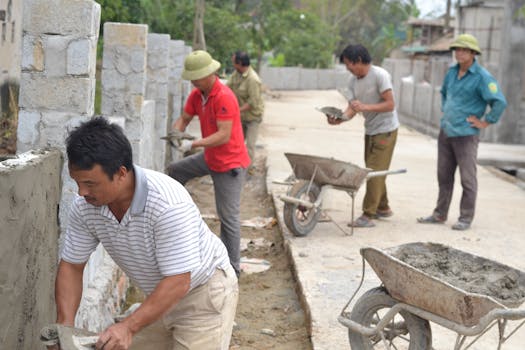
Imagine building walls for houses and schools, piece by piece, using bricks and mortar. It's a bit like playing with LEGOs, but on a much bigger scale!

Have you ever wondered where the water in your taps comes from? Plumbers are the people who install and fix all the pipes that bring water into buildings and take waste water away. They're like problem-solvers for water!

Electricians are super important! They put in all the wires and plugs that make the lights turn on, the TV work, and your phone charge. They make sure everything in a building has safe electricity.
Construction isn't just one job! There are lots of different roles like bricklayers, carpenters, electricians, plumbers, and more. Find out what each one does.
You could research these roles online, watch videos, or even see if there are any local construction sites where you could observe (safely from a distance, of course!). Understanding the variety of roles will help you decide which part of construction might interest you most. Think about what kind of tasks you enjoy doing – do you like working with wood, wiring, or pipes?
Start practicing hands-on skills at home or in school. This could involve DIY projects, woodworking in design and technology classes, or even helping out with repairs around the house.
Getting hands-on experience now will be really beneficial. Ask your parents or guardians if you can help with simple tasks like assembling flat-pack furniture, painting a wall, or fixing something. In school, make the most of subjects like Design and Technology (DT) where you might learn to use tools and work with different materials. These experiences build a foundation for construction work.
If you know anyone who works in construction, ask them about their job. What do they like? What are the challenges? Their experiences can give you a real insight.
Speaking to real people in the industry is invaluable. They can share stories about a typical day, the skills they use, and how they got started. Don't be afraid to ask questions – people generally love talking about their work! If you don't know anyone personally, you could look for career events or online forums where professionals might share their experiences.
In secondary school, pay attention in subjects like Maths, Design and Technology (DT), and Science. These subjects teach you important skills and knowledge for construction.
Maths is crucial for measurements, calculations, and understanding plans. DT will give you practical experience with tools and materials. Science can help you understand how materials behave and the principles behind structures. English is also important for reading plans and communicating clearly. Doing well in these subjects will give you a strong academic base for further training.
After your GCSEs, you can look into vocational college courses in construction or start an apprenticeship. Apprenticeships let you learn on the job while earning a wage.
College courses, like a BTEC in Construction, provide a solid theoretical and practical foundation. Apprenticeships are a fantastic way to gain real-world experience, get paid, and often lead directly to a job. You'll work alongside experienced tradespeople and learn specific skills like bricklaying, carpentry, or plumbing. Look for apprenticeship opportunities online or through your school's careers advisor.
Try to get some work experience on a construction site, even if it's just for a week or two. This shows you what a real working environment is like.
Work experience is incredibly valuable. It helps you understand the day-to-day realities of the job, the importance of teamwork, and health and safety. You can also make contacts in the industry. Ask your school about work experience placements or contact local construction companies directly to see if they offer opportunities. Even if you're just observing, you'll learn a lot.
Finish your college course or complete your apprenticeship. This will give you the official qualifications and experience needed to work professionally.
Once you've completed your training, you'll have a recognised qualification or certification that proves your skills and knowledge. This is essential for getting hired and for your career progression. Make sure you keep a record of all your achievements and projects.
Start applying for entry-level jobs in construction. Use job websites, local company websites, and ask around your network.
Your first job might be as a labourer, an apprentice (if you haven't done one already), or a trainee in a specific trade. Be open to different opportunities to gain experience. Your school's careers advisor, college tutors, or apprenticeship providers can often help with job searching and writing a good CV.
Construction is always changing, so keep learning new skills and staying up-to-date with new building methods and safety rules.
Even after you start working, it's important to keep developing your skills. You might want to specialise in a particular trade, learn about sustainable building practices, or take courses in health and safety. This continuous learning will help you advance in your career, earn more, and stay employable. Many companies offer internal training or support for external courses.
A bricklayer is a type of construction worker who specialises in laying bricks and blocks to build walls, chimneys, and other structures. It requires precision and skill.

A carpenter works with wood to build and install things like roofs, doors, window frames, and even wooden floors in buildings. They use tools to cut, shape, and join wood.

A plumber installs and repairs pipes and fittings for water systems, heating, and drainage in buildings. They make sure you have running water and warm houses!
Explore relevant apprenticeships that can help you kickstart your career in Construction Worker. Apprenticeships offer hands-on experience and training while earning a wage.
This page showcases various career options and the pathways to reach them. Each career listed here shares transferable skills and knowledge, making it easier for individuals to transition between them.
Your current career is highlighted to help you see how it fits into the broader landscape of potential career choices. By clicking on any career, you can learn more about it, including the training and education required to pursue it.
Remember, progressing in your career often involves further learning and training. This page provides insights into future career options as well as those that can lead up to your current one.
These career progression decisions are informed by comparing the skills and knowledge needed for different occupations, along with data on how people move between them. Explore the possibilities and discover the exciting journey ahead in your career!
Both roles involve manual, on-site construction tasks and similar activities such as site preparation, material handling and basic assembly carried out under supervision. They share safety training, use of common tools, and the physically demanding nature of the work, making Construction labourer the closest match to Construction Worker.
You can get into this job through:
You could take a college course in construction skills or construction operations.
Courses like these may help you when applying for jobs.
Entry requirements for these courses vary.
You could apply to do a Level 2 Intermediate Apprenticeship with a construction firm.
Apprenticeship examples include:
You'll usually need:
You can apply directly for jobs. There are no set requirements but it may help if you have:
You may need your own safety boots, hard hat and hi-viz top, though some employers will supply these.
You can find out more about working in construction from:
Explore other careers or use our AI to discover personalised paths based on your interests.
Address
Developing Experts Limited
Exchange Street Buildings
35-37 Exchange Street
Norwich
NR2 1DP
UK
Phone
01603 273515
Email
[email protected]
Copyright 2026 Developing Experts, All rights reserved.

Unlock expert-designed lessons, resources, and assessments tailored for educators. No credit card required.
Claim Your Free Trial →We use cookies to enhance your browsing experience and analyze our traffic. Learn more.
