



Creating Career Path...

Finding Further Careers...

Construction Worker

View this career for different education levels:

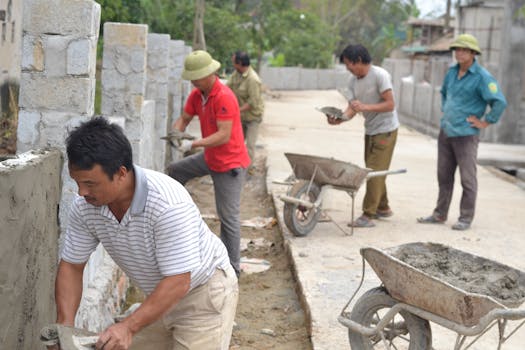
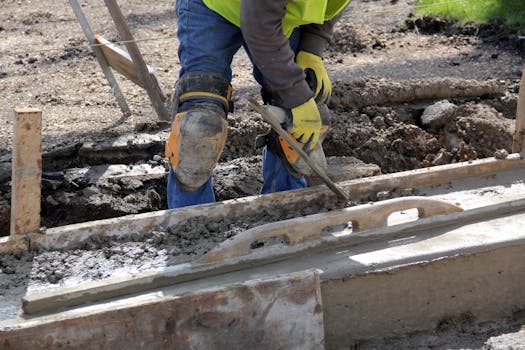
Imagine helping to build the amazing buildings you see every day, from your school to the shops in town! That's what a construction worker does. They work outdoors a lot, using tools and machines to put together bricks, wood, and metal to create strong and safe structures. One day they might be digging foundations, the next they could be putting up walls or even helping to put a roof on a new house. It's a very active job where you get to see what you've built grow bigger and bigger each day. You'll work with a team of other people, all doing different important jobs to make sure the building is just right and very safe for everyone to use. It's really rewarding to know you've helped create something that will last for a long time!

Construction Worker

Flag Media

Please select a reason for flagging this content.

📊 Statistics

Average Salary

A construction worker in the UK can expect to earn an average salary of around 28,000 to 35,000 pounds a year. This can go up if you learn special skills, like operating big machines!

Number of Jobs

There are lots of construction jobs in the UK! In 2022, there were over 2.7 million people working in the construction industry, helping to build homes, schools, and offices all over the country.

Working Hours

Most construction workers in the UK work around 40 hours a week, usually from Monday to Friday. Sometimes they might start early to get a big job done, but they often get weekends off!

🚀 Careers in this path

Flag Media

Please select a reason for flagging this content.

Bricklayer

A bricklayer is like a super builder who carefully puts bricks together with special glue called mortar to make strong walls for houses and other buildings. They need to be very neat and good at puzzles!

Flag Media

Please select a reason for flagging this content.

Crane Operator

Imagine driving a giant robot arm! A crane operator sits high up in a big machine called a crane and uses joysticks and buttons to lift really heavy things like steel beams and big pieces of wood up into the sky to help build tall buildings. It's like playing a giant construction game!

Flag Media

Please select a reason for flagging this content.

Plasterer

A plasterer is like a magical artist who makes walls and ceilings super smooth and ready for paint or wallpaper. They spread a special creamy mix called plaster all over the bumpy parts to make everything perfectly flat and nice. It's like painting with a special white mud!

Learning about Building

Play with Building Toys

Start by playing with LEGO, blocks, or other construction toys to understand how things fit together.

Playing with building toys is a fantastic way to develop your imagination and problem-solving skills. You can experiment with different shapes and sizes, learning about balance and stability. Try to build the tallest tower or the strongest bridge!

Visit Construction Sites

Ask a grown-up to take you to safely look at real construction sites from a distance. See the big machines and how they work.

When you visit a construction site (always from a safe distance and with a grown-up!), you'll see cranes lifting heavy beams, diggers moving earth, and workers wearing hard hats. It's exciting to see a building grow from the ground up and understand the different parts that make it strong.

Watch Building Shows

Watch TV shows or videos about how houses and other buildings are made.

There are many fun shows and videos that explain how buildings are constructed. These can teach you about the different jobs people do on a building site, from architects who design the buildings to the people who lay the bricks and fit the roofs. You can learn about different materials too, like wood, brick, and concrete.

Helping and Trying

Help with Home Projects

Help grown-ups with little jobs around the house, like tidying up or holding things.

Even small tasks like helping to paint a wall, tidy up a garden shed, or hand tools to a grown-up are great ways to learn. You'll understand the importance of being careful, organised, and working as part of a team. Always make sure to ask before you help and follow instructions carefully.

Learn About Tools

Ask grown-ups about different tools they use, like hammers or screwdrivers, and what they are for.

Learning about tools is like learning a secret language! A hammer is for knocking nails, a screwdriver turns screws, and a measuring tape helps you get the size just right. Always remember that real tools can be dangerous, so you should only learn about them with a grown-up and never use them without permission.

Take Design Classes at School

When you're a bit older, you might get to do Design and Technology at school, where you can make models.

In Design and Technology (DT) lessons at school, you'll get to design and build your own projects. You might make a small wooden birdhouse, a simple robot, or even a bridge out of straws. This helps you think creatively and use different materials to solve problems, just like a real construction worker!

Getting Ready for Work

Get a College Course

When you're older, you can go to college to learn skills like bricklaying or carpentry.

After school, many construction workers go to college to do a special course. These courses teach you all about building safely and properly. You can learn to be a bricklayer, a carpenter (who works with wood), a plasterer, or many other exciting jobs. You'll get hands-on experience and learn from expert teachers.

Do an Apprenticeship

You can learn on the job by working with experienced builders, like a superhero's sidekick!

An apprenticeship is a fantastic way to learn. You work for a construction company and get paid while you learn from experienced builders. They'll show you how to do everything, and you'll get to practice your skills on real building sites. It's like having a special teacher right there with you every day, helping you become a master builder.

Learn About Safety

Construction sites need to be very safe, so you'll learn all about how to keep yourself and others safe.

Safety is super important on a construction site. You'll learn about wearing special clothes like hard hats and safety boots, and how to use tools and machines carefully. Knowing how to be safe means everyone can go home happy at the end of the day, and it's a big part of being a responsible construction worker.

🎬 Useful Videos

🎯 View Apprenticeships

Explore relevant apprenticeships that can help you kickstart your career in Construction Worker. Apprenticeships offer hands-on experience and training while earning a wage.

Career Progressions

This page showcases various career options and the pathways to reach them. Each career listed here shares transferable skills and knowledge, making it easier for individuals to transition between them.

Your current career is highlighted to help you see how it fits into the broader landscape of potential career choices. By clicking on any career, you can learn more about it, including the training and education required to pursue it.

Remember, progressing in your career often involves further learning and training. This page provides insights into future career options as well as those that can lead up to your current one.

These career progression decisions are informed by comparing the skills and knowledge needed for different occupations, along with data on how people move between them. Explore the possibilities and discover the exciting journey ahead in your career!

Sample Qualifications

Road work is a direct subset of construction, involving the same on-site manual labour, use of hand and power tools, and adherence to health and safety practices. It generally relies on practical, on-the-job training rather than formal degrees, making it closely aligned with the qualifications expected of a Construction Worker.

How to become

You can get into this job through:

  • a college course
  • an apprenticeship
  • applying directly

College

You could take a college course to get some of the skills needed for this job. Courses include:

  • construction skills
  • highways maintenance - excavation operations
  • construction and civil engineering operations

Entry requirements

Entry requirements for these courses vary.

More Information

Apprenticeship

You could apply to do a Road Surfacing Operative, or Highways Maintenance Skilled Operative, Level 2 Intermediate Apprenticeship.

These apprenticeships take between a year and 6 months and 2 years to complete.

Entry requirements

You'll usually need:

  • some GCSEs, usually including English and maths, or equivalent, for an intermediate apprenticeship

More Information

Direct Application

You may be able to apply for jobs if you've got experience in other areas of construction, like labouring and groundwork, or from operating plant machinery, like mechanical diggers.

More Information

Further information

You can find out more about becoming a road worker from Go Construct.

Interested in More Career Paths?

Explore other careers or use our AI to discover personalised paths based on your interests.

Stay connected

Join our newsletter to stay up to date on features and releases

Address
Developing Experts Limited
Exchange Street Buildings
35-37 Exchange Street
Norwich
NR2 1DP
UK

Phone
01603 273515

Email
[email protected]

Copyright 2025 Developing Experts, All rights reserved.
