
You could take a college course, which may help you when looking for work.
Courses include:
- care
- health and social care
- T Level in Health
Entry requirements
Entry requirements for these courses vary.
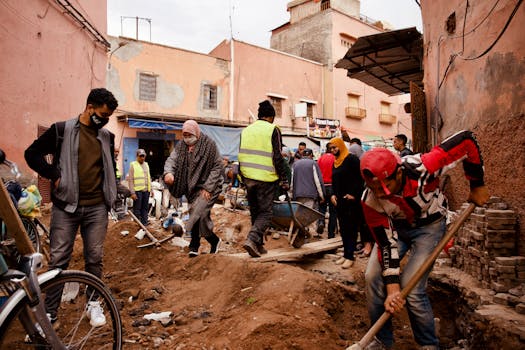
An aid worker is someone who helps people in need, often in countries where there has been a disaster like an earthquake, a flood, or a war. They might help by giving out food and water, setting up shelters, providing medical care, or helping communities rebuild after a crisis. It's a job that can be really rewarding, but it also means working in challenging environments and being away from home for periods. Aid workers often have to be adaptable, good at solving problems, and compassionate, as they are dealing with people who are going through very difficult times. They might work for big international charities or smaller local organisations, and their work can involve everything from planning projects to getting their hands dirty on the ground.

For entry-level roles in the UK, an aid worker might expect to earn around 20,000 to 25,000 pounds per year, though this can vary greatly depending on the organisation and location of work.
With experience, especially in management or specialised roles, salaries can range from 35,000 to 50,000 pounds or more annually. Senior leadership positions can command higher salaries, sometimes exceeding 60,000 pounds.
The UK is home to hundreds of humanitarian and development charities. While exact numbers of 'aid worker' roles are hard to pin down, many thousands of people work for these organisations, both within the UK and overseas.

Imagine being responsible for getting all the important stuff like food, medicine, and tents to places where people need help after an emergency. You'd be like a super organiser, making sure everything arrives safely and on time.

This is about helping communities become stronger and happier in the long term. You might work with local people to set up new schools, improve healthcare, or create fun activities for kids. It's all about making a lasting positive difference.

Think about how important clean water and proper toilets are for staying healthy. A WASH specialist helps design and build systems so people have access to these things, especially in places that have been affected by disasters. You'd be helping to prevent illness and keep communities safe.
Doing well in school, especially in subjects like English, Maths, Geography, and Science, is a great start. These subjects help you develop important skills like problem-solving and understanding the world.
Excellent communication skills are vital for an Aid Worker, so English is particularly important. Maths helps with budgeting and logistics, while Geography gives you a broader understanding of different countries and cultures. Science can be useful if you're interested in areas like public health or environmental aid.
Being able to speak another language, like French, Spanish, or Arabic, can be incredibly useful as an Aid Worker. It helps you communicate with people from different backgrounds.
Many aid organisations work in countries where English is not the primary language. Learning a common international language like French (used in many African countries) or Spanish (used widely in Central and South America) can open up many opportunities. Even basic phrases can make a big difference in building trust and understanding.
Volunteer for local charities or community projects. This shows you're keen to help others and gives you experience working with different people.
Volunteering helps you develop empathy, teamwork, and organisational skills. You could help at a local food bank, a charity shop, or even organise a fundraising event for a cause you care about. These experiences, even small ones, demonstrate your commitment to helping others and are valuable for future applications.
Many Aid Workers have a university degree in subjects like International Development, Humanitarian Studies, Public Health, Engineering, or even a medical degree.
While not always essential, a degree can provide you with specialized knowledge and a strong theoretical foundation. Look for courses that include modules on global issues, project management, or specific aid sectors. Some universities even offer courses with fieldwork opportunities, which can be invaluable.
If you're older, consider volunteering with an organisation that works abroad. This gives you firsthand experience of what aid work is like.
There are many reputable organisations that offer short-term volunteering placements abroad. Look for programmes that are ethical, sustainable, and provide proper training and support. This kind of experience is highly valued by aid agencies as it demonstrates your ability to adapt to new environments and work effectively in challenging conditions.
Skills like first aid, driving, basic mechanics, or even photography can be really useful in an aid context.
Aid work often takes place in remote or challenging locations where practical skills are essential. A first aid certificate could be lifesaving, while a driving licence (especially for off-road vehicles) is often a requirement. Basic mechanics can help keep vehicles running, and photography can be used to document work and raise awareness.
Many aid organisations offer entry-level roles or internships. These are a great way to get your foot in the door and learn from experienced professionals.
Check the websites of major aid organisations like Oxfam, Save the Children, Médecins Sans Frontières (Doctors Without Borders), or the Red Cross. They often have 'early careers' or 'graduate' programmes. Be prepared to start in administrative or support roles, as these are crucial for understanding how an organisation functions.
Attend online webinars, career fairs, or use platforms like LinkedIn to connect with people already working in humanitarian aid. Learning from their experiences can be very helpful.
Networking can open doors to opportunities you might not find otherwise. Ask people about their career paths, what they enjoy, and what challenges they face. This can give you valuable insights and advice, and sometimes even lead to mentorship opportunities.
Aid work can be demanding and often involves working in difficult conditions. Being flexible, resilient, and able to adapt to new situations is key.
You might be deployed to different countries, work long hours, and face unexpected challenges. A positive attitude, problem-solving skills, and the ability to work well under pressure are incredibly important. Showing you can cope with change and maintain a calm approach will make you a highly valued member of any aid team.
Someone who plans and manages projects aimed at improving living conditions in developing countries over the long term, focusing on things like education, healthcare, and economic growth.

A person who works to raise money for charities and aid organisations, helping them to get the resources they need to carry out their important work.

This role involves organising and managing the immediate response to a disaster, making sure that help gets to where it's needed quickly and effectively.
Explore relevant apprenticeships that can help you kickstart your career in Aid Worker. Apprenticeships offer hands-on experience and training while earning a wage.
This page showcases various career options and the pathways to reach them. Each career listed here shares transferable skills and knowledge, making it easier for individuals to transition between them.
Your current career is highlighted to help you see how it fits into the broader landscape of potential career choices. By clicking on any career, you can learn more about it, including the training and education required to pursue it.
Remember, progressing in your career often involves further learning and training. This page provides insights into future career options as well as those that can lead up to your current one.
These career progression decisions are informed by comparing the skills and knowledge needed for different occupations, along with data on how people move between them. Explore the possibilities and discover the exciting journey ahead in your career!
Aid work and care work both focus on supporting vulnerable people and improving their well-being. They rely on strong interpersonal skills, empathy and safeguarding awareness, with needs assessment and coordination of practical support, typically developed through vocational routes or on-the-job training rather than highly technical qualifications.
You can get into this job through:
You could take a college course, which may help you when looking for work.
Courses include:
Entry requirements for these courses vary.
You could apply to do an apprenticeship with a care organisation or the NHS.
Apprenticeship options include:
You can apply for a foundation apprenticeship if you're aged 16 to 21.
If you're aged 22 to 24, you can apply if you:
You'll usually need:
You can volunteer with an organisation that supports vulnerable people, like a care home, charity, hospital or hospice. This can help you when applying for paid work.
You can find volunteering opportunities through:
You can apply for care worker jobs directly. If you get the role, you'll be given on-the-job training by your employer.
It's important to be kind, caring and have a respectful attitude towards people who need care and support.
Some employers might want you to have GCSEs in English and maths at grades 9 to 4 (A* to C), or equivalent. However, many will offer training to applicants who have the right personal qualities.
Time spent caring for someone you know also counts as having experience in a caring role.
You can find out more about careers in care from:
Explore other careers or use our AI to discover personalised paths based on your interests.
Address
Developing Experts Limited
Exchange Street Buildings
35-37 Exchange Street
Norwich
NR2 1DP
UK
Phone
01603 273515
Email
[email protected]
Copyright 2026 Developing Experts, All rights reserved.

Unlock expert-designed lessons, resources, and assessments tailored for educators. No credit card required.
Claim Your Free Trial →We use cookies to enhance your browsing experience and analyze our traffic. Learn more.
