Creating Career Path...

Finding Further Careers...

Forensic Science

View this career for different education levels:

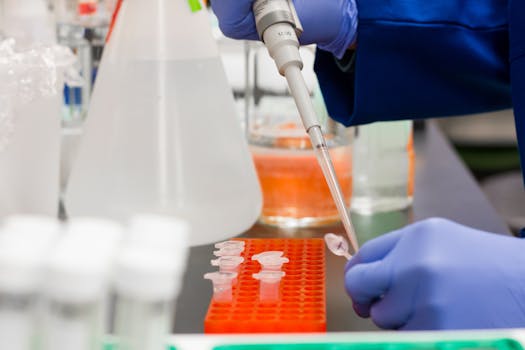
Forensic science uses science to help solve crimes. Forensic scientists collect and analyse evidence from crime scenes, such as fingerprints, fibres, DNA and chemical traces. They write reports and may present findings in court. To work in the UK, you usually study science at school or college, then gain a degree in forensic science or a related subject, followed by work experience or training with a police lab or private lab.

Forensic Science

Flag Media

Please select a reason for flagging this content.

📊 Statistics

Typical salary

In the UK, trainee scientists often earn around 18 000 to 25 000 pounds a year as an entry level role, with qualified forensic scientists earning roughly 25 000 to 40 000 pounds a year, and potential senior salaries above 45 000 pounds.

Job numbers

There are several hundred forensic science roles across police laboratories, private labs and research centres in the UK, with ongoing demand for skilled staff in crime scene analysis and laboratory work.

Average working hours

Most forensic scientists work typical full time hours, but shifts are common in police and crime labs to cover 24 hour incident response.

🚀 Careers in this path

Flag Media

Please select a reason for flagging this content.

Crime Scene Investigator helper

A role that helps collect clues at a pretend crime scene in a classroom or science club, learning how scientists work with evidence and photographs

Flag Media

Please select a reason for flagging this content.

Lab assistant in a biology room

A junior helper who assists with simple experiments and learns how scientists study plants and animals safely

Flag Media

Please select a reason for flagging this content.

Museum science explorer

A small role where you learn how scientists explain facts about bones, fossils and artefacts to visitors in a friendly way

Stage 1: Learn the Basics

Step 1: Understand what forensic science is

Learn what forensic science involves and the kinds of evidence scientists study.

Forensic science uses ideas from biology, chemistry and physics to understand evidence. You might study fingerprints, DNA, fibres, and tool marks. This stage helps you see how science applies to real life in solving mysteries.

Step 2: Build strong science basics

Focus on biology, chemistry and maths to prepare for lab work.

Work on your science grades and practise experiments. Good observation, recording results clearly and asking questions are important skills for any scientist.

Step 3: Learn about labs

Find out what a real forensic lab is like and what scientists do there.

Labs follow safety rules and use equipment to test samples. You can visit a local science centre or arrange a school trip to see how labs work in practice.

Stage 2: Develop Practical Skills

Step 1: Practice careful observation

Learn to notice small details that others might miss.

Keep a science journal of your observations. Practice identifying objects, colours and patterns and describe them clearly.

Step 2: Learn basic lab techniques

Try simple experiments that mirror real forensic tests in a safe way.

You might study making moulds, comparing samples with simple tests or reading results from a colour change. Always follow safety rules and ask for help from a teacher.

Step 3: Understand evidence handling

See how scientists collect and protect evidence to keep it unspoilt.

In real life, chain of custody and careful documentation matter. Learn the idea of keeping samples in clean containers and recording who handles them.

Stage 3: Explore Higher Education

Step 1: Choose science subjects for GCSE and beyond

Pick biology, chemistry and maths to prepare for university.

Think about options like combined science plus maths. Aim for strong grades to keep future study options open.

Step 2: Look for relevant university courses

Find degree courses in forensic science or related fields.

Courses often cover crime scene analysis, toxicology, genetics and chemistry. Some degrees offer placements in labs or with police forces.

Step 3: Seek practical experience

Join science clubs, work experience or volunteering to gain hands on skills.

Ask about internships with university laboratories, museums, or local police science teams. Real experience helps you learn what a future job would feel like.

Stage 4: Start a Career Path

Step 1: Apply for entry level roles or apprenticeships

Look for trainee or apprentice roles in laboratories or forensics units.

Entry routes can include science technician roles or apprenticeships that combine work with study. These paths help you learn on the job while earning.

Step 2: Consider postgraduate study

Some roles benefit from a master or diploma in forensic science or a related field.

Postgraduate qualifications can open doors to advanced labs, specialist testing and research roles. Check what institutions offer and what entry requirements they have.

Step 3: Build professional skills

Develop communication, teamwork and meticulous record keeping.

Working with legal teams and presenting findings clearly is important. Practice writing simple but precise reports and explaining results in plain language.

🎬 Useful Videos

🎯 View Apprenticeships

Explore relevant apprenticeships that can help you kickstart your career in Forensic Science. Apprenticeships offer hands-on experience and training while earning a wage.

Career Progressions

This page showcases various career options and the pathways to reach them. Each career listed here shares transferable skills and knowledge, making it easier for individuals to transition between them.

Your current career is highlighted to help you see how it fits into the broader landscape of potential career choices. By clicking on any career, you can learn more about it, including the training and education required to pursue it.

Remember, progressing in your career often involves further learning and training. This page provides insights into future career options as well as those that can lead up to your current one.

These career progression decisions are informed by comparing the skills and knowledge needed for different occupations, along with data on how people move between them. Explore the possibilities and discover the exciting journey ahead in your career!

Sample Qualifications

Forensic Science aligns most closely with the role of a forensic scientist. Both involve applying scientific methods to collect, analyse and interpret physical evidence, maintain chain of custody, and produce expert reports for investigations and court proceedings, typically underpinned by a degree in forensic science or a related discipline and practical laboratory training.

How to become

You can get into this job through:

  • a university course
  • an apprenticeship
  • applying directly

University

You can do a degree or postgraduate qualification in:

  • forensic science
  • a related subject like chemistry, biological science, physics or medical sciences

Entry to jobs is competitive, so it may help to choose a university qualification accredited by The Chartered Society of Forensic Sciences.

Entry requirements

You'll usually need:

  • 2 or 3 A levels, or equivalent, including chemistry
  • a degree in a relevant subject for postgraduate study

More Information

Apprenticeship

You could apply to do a Degree Apprenticeship, such as:

  • Scientist Level 6
  • Research Scientist Level 7

It will help if you do your aprenticeship with a company that provides forensic science services, or with a police force that has its own in-house lab facilities.

Entry requirements

You'll usually need:

  • 4 or 5 GCSEs at grades 9 to 4 (A* to C) and A levels, or equivalent, for a degree apprenticeship

More Information

Direct Application

You can apply directly to forensic services providers if you've got a lot of lab experience, and qualifications in science, especially chemistry.

More Information

Career tips

If you want to specialise in recovering data from computers and mobile phones, you'll need relevant experience and qualifications. Useful subjects include computing, electrical engineering, electronics or physics.

Professional and industry bodies

You can join The Chartered Society of Forensic Sciences for professional development and advice. The society has student membership, for undergraduates aiming to get into a forensic science career.

Further information

You can find out more on careers in forensics from The Chartered Society of Forensic Sciences.

Interested in More Career Paths?

Explore other careers or use our AI to discover personalised paths based on your interests.

Stay connected

Join our newsletter to stay up to date on features and releases

Address
Developing Experts Limited
Exchange Street Buildings
35-37 Exchange Street
Norwich
NR2 1DP
UK

Phone
01603 273515

Email
[email protected]

Copyright 2025 Developing Experts, All rights reserved.
