

Creating Career Path...

Finding Further Careers...

Train Driver

View this career for different education levels:

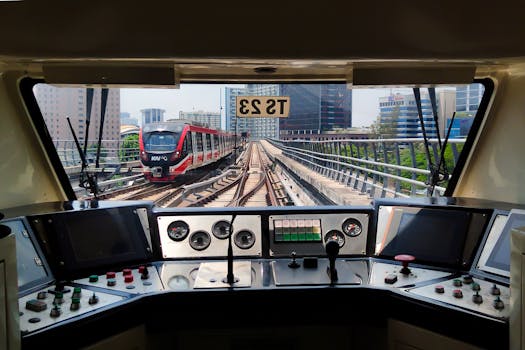
Train drivers are responsible for operating passenger and freight trains safely and efficiently across the UK rail network. Their main duties include controlling the train's speed, braking, and communicating with signal operators and station staff. A key part of the job is ensuring the safety of passengers, crew, and cargo by following strict safety procedures and responding to emergencies or unexpected events. Train drivers must have excellent concentration, quick decision-making skills, and a strong sense of responsibility. Training is provided on the job and usually lasts between 12 and 18 months. Entry requirements often include GCSEs in English and maths, and candidates must be at least 21 years old.

Train Driver

Flag Media

Please select a reason for flagging this content.

📊 Statistics

Average Salary

The average salary for a train driver in the UK is between £48,000 and £60,000 per year, with experienced drivers earning up to £70,000.

Number of Train Drivers

There are approximately 20,000 train drivers working across the UK rail network.

Working Hours

Train drivers typically work 35 to 40 hours per week, often including early mornings, late nights, weekends, and bank holidays.

🚀 Careers in this path

Flag Media

Please select a reason for flagging this content.

London Underground Train Operator

Drive passenger trains on the London Underground network, ensuring the safety and comfort of passengers while following strict timetables and safety procedures.

Flag Media

Please select a reason for flagging this content.

Freight Train Driver

Operate trains that transport goods and materials across the country, working closely with logistics teams to ensure timely deliveries and safe operation.

Heritage Railway Driver

Drive steam or vintage diesel trains on heritage railways, providing a historical travel experience for visitors and maintaining traditional railway practices.

Obtain Required Qualifications

Meet Basic Entry Requirements

You must be at least 20 years old and have good eyesight, hearing, and general health. Most train companies will require GCSEs (or equivalent) in English and Maths.

Train companies set their own entry requirements, but you generally need to pass medical checks and assessments. A full UK driving licence can help but is not always essential. Some companies may also look for a clean criminal record.

Apply for a Train Driver Trainee Position

Look for trainee train driver vacancies with rail operators such as Network Rail, Great Western Railway, or Northern Rail. Applications can be competitive.

Vacancies are usually listed on the websites of train operating companies or on specialist job boards. Entry is directly into a trainee role, where you will receive all necessary training on the job.

Complete Training and Assessment

Undertake Initial Train Driver Training

Once accepted, you will start a structured training programme combining classroom learning, simulator work, and practical experience.

Training typically lasts between 9 and 18 months. You will learn about signalling systems, safety regulations, emergency procedures, and train operations. You will also spend time shadowing experienced drivers.

Pass the Required Assessments

You must pass a series of theoretical and practical assessments, including a final competency test, to qualify as a licensed train driver.

Assessments cover route knowledge, safety procedures, signalling, and train handling. Only after passing all assessments will you be allowed to drive trains unsupervised.

Develop Your Career

Gain Experience and Build Your Skills

Once qualified, continue to develop your knowledge of different routes, types of trains, and advanced safety procedures.

With experience, you may move on to driving high-speed trains, become a driver instructor, or progress into management roles within the rail industry. Regular refresher training and assessments are required to maintain your licence.

🎯 View Apprenticeships

Explore relevant apprenticeships that can help you kickstart your career in Train Driver. Apprenticeships offer hands-on experience and training while earning a wage.

Career Progressions

This page showcases various career options and the pathways to reach them. Each career listed here shares transferable skills and knowledge, making it easier for individuals to transition between them.

Your current career is highlighted to help you see how it fits into the broader landscape of potential career choices. By clicking on any career, you can learn more about it, including the training and education required to pursue it.

Remember, progressing in your career often involves further learning and training. This page provides insights into future career options as well as those that can lead up to your current one.

These career progression decisions are informed by comparing the skills and knowledge needed for different occupations, along with data on how people move between them. Explore the possibilities and discover the exciting journey ahead in your career!

Sample Qualifications

A train conductor works closely with train drivers and is responsible for passenger safety and operational procedures on trains, similar to a train driver in terms of the railway environment. Both roles require understanding of train operations and adherence to safety regulations, making them closely aligned in qualifications and responsibilities.

How to become

You can get into this job through:

  • a college course
  • an apprenticeship
  • working towards this role
  • applying directly

College

You could do a college course like a Level 2 Certificate in Customer Service, which would teach you some of the general skills you need. This may help when you apply for jobs.

Entry requirements

You'll usually need:

  • 2 or more GCSEs at grades 9 to 3 (A* to D), or equivalent, for a level 2 course

More Information

Apprenticeship

You may be able to get into this career by completing a passenger transport onboard and station team member intermediate apprenticeship with a train operating company.

Entry requirements

You'll usually need:

  • some GCSEs, usually including English and maths, or equivalent, for an intermediate apprenticeship

More Information

Work

You may be able to move into this job after first working as a member of the platform or ticketing staff at a train station.

Direct Application

There are no set entry qualifications if you want to apply directly to train operating companies, although employers will expect you to have a good standard of English and maths.

If selected for interview, companies will usually test you on your maths, communication, and customer service skills.

More Information

Career tips

Experience of working with the public in retail or customer service could give you an advantage. It will also help if you have good knowledge of UK geography and the rail network.

Further information

You can find out more about train operating companies through the Rail Delivery Group.

Interested in More Career Paths?

Explore other careers or use our AI to discover personalised paths based on your interests.

Stay connected

Join our newsletter to stay up to date on features and releases

Address
Developing Experts Limited
Exchange Street Buildings
35-37 Exchange Street
Norwich
NR2 1DP
UK

Phone
01603 273515

Email
[email protected]

Copyright 2025 Developing Experts, All rights reserved.
