

Creating Career Path...

Finding Further Careers...

Medical Laboratory Scientist

View this career for different education levels:

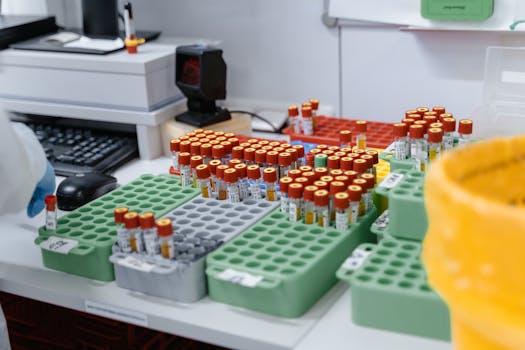
Medical laboratory scientists play a vital role in healthcare by analysing samples such as blood, urine and tissue to help diagnose diseases and monitor patient health. Working within hospital laboratories, private labs or research settings, they use a variety of scientific techniques and sophisticated equipment to detect abnormalities and provide critical information to doctors and other healthcare professionals. The work involves attention to detail, following strict safety protocols, and sometimes working unsocial hours if the laboratory operates 24/7. Medical laboratory scientists are also responsible for maintaining accurate records, quality control, and sometimes training junior staff or students. The career offers opportunities for specialisation in areas like haematology, microbiology, or clinical biochemistry.

Medical Laboratory Scientist

Flag Media

Please select a reason for flagging this content.

📊 Statistics

Average Salary

Medical laboratory scientists in the UK typically earn between £25,000 and £40,000 per year, depending on experience and location.

Job Openings

As of 2023, there are over 22,000 registered biomedical scientists and medical laboratory scientists working within the NHS and private sector in the UK.

Entry Requirements

Most roles require a degree accredited by the Institute of Biomedical Science (IBMS) and registration with the Health and Care Professions Council (HCPC).

🚀 Careers in this path

Flag Media

Please select a reason for flagging this content.

Haematology Laboratory Technician

Focuses on analysing blood samples to diagnose conditions such as anaemia and leukaemia in a clinical laboratory setting.

Flag Media

Please select a reason for flagging this content.

Microbiology Biomedical Scientist

Specialises in detecting and identifying infectious diseases by studying samples of blood, tissue, and bodily fluids.

Flag Media

Please select a reason for flagging this content.

Histology Technician

Prepares and examines tissue samples under a microscope to help diagnose diseases, including cancer.

Build a Strong Science Foundation

Study Relevant Subjects at School

Focus on science subjects such as Biology, Chemistry, and Mathematics at GCSE and A-level.

Choosing science-based subjects early in your education will help you gain the necessary background knowledge for university courses related to medical laboratory science. Aim for good grades in these subjects, as most universities will require at least one science A-level, preferably Biology or Chemistry, for entry onto a biomedical science degree.

Consider Work Experience

Seek out opportunities for work experience in healthcare or laboratory settings.

Many hospitals, clinics, or university labs offer short-term placements or work shadowing for students interested in medical science. This experience will give you a firsthand understanding of the working environment and can strengthen your university application.

Get Qualified

Complete a Biomedical Science Degree

Apply for and complete an accredited degree in Biomedical Science or a related subject.

Most Medical Laboratory Scientists in the UK hold a degree accredited by the Institute of Biomedical Science (IBMS). These courses typically last three years and include both theoretical and practical laboratory training. You may also consider degree apprenticeships or sandwich courses that include a placement year in a hospital laboratory.

Register with the HCPC

Obtain registration with the Health and Care Professions Council (HCPC) to practise as a Biomedical Scientist.

After completing your degree and a period of laboratory training, you must register with the HCPC. This ensures you meet the professional standards required to practise in NHS and other accredited laboratories. Your university course may include a placement that enables you to complete the necessary portfolio for registration.

Start Your Career and Develop Expertise

Apply for Medical Laboratory Scientist Roles

Look for entry-level biomedical scientist jobs in hospitals, private labs, or research centres.

Entry-level positions are often advertised by NHS Trusts and private healthcare providers. As a newly qualified scientist, you will work under supervision, performing a range of diagnostic tests and learning to use specialist laboratory equipment.

Continue Professional Development

Engage in ongoing learning and consider specialisation.

As you gain experience, you may choose to specialise in areas such as haematology, microbiology, immunology, or genetics. Continuing Professional Development (CPD) is essential to keep your skills updated and to progress into senior or specialist roles. You can attend courses, workshops, and conferences, or work towards postgraduate qualifications.

🎬 Useful Videos

🎯 View Apprenticeships

Explore relevant apprenticeships that can help you kickstart your career in Medical Laboratory Scientist. Apprenticeships offer hands-on experience and training while earning a wage.

Career Progressions

This page showcases various career options and the pathways to reach them. Each career listed here shares transferable skills and knowledge, making it easier for individuals to transition between them.

Your current career is highlighted to help you see how it fits into the broader landscape of potential career choices. By clicking on any career, you can learn more about it, including the training and education required to pursue it.

Remember, progressing in your career often involves further learning and training. This page provides insights into future career options as well as those that can lead up to your current one.

These career progression decisions are informed by comparing the skills and knowledge needed for different occupations, along with data on how people move between them. Explore the possibilities and discover the exciting journey ahead in your career!

Sample Qualifications

A Medical Laboratory Scientist and a Clinical Scientist both work within laboratory settings, utilising advanced scientific knowledge and analytical skills to perform tests, research, and interpret data related to human health. They often require similar qualifications in biomedical sciences and play roles in laboratory diagnosis, research, and clinical assessments.

How to become

You can get into this job through:

  • a university course
  • an apprenticeship
  • an NHS training programme for non-graduates

University

You can do a degree to start your training as a clinical scientist. 

Subjects include:

  • life sciences
  • biology or biochemistry
  • genetics
  • biomedical science
  • medical physics

After completing your degree, you can apply for the NHS Scientific Training Programme (STP). During the 3-year programme, you'll combine employment in the NHS with study for a postgraduate master's degree.

Entry requirements

You'll usually need:

  • 2 or 3 A levels, or equivalent, including a science, for a degree
  • a degree in a relevant subject for postgraduate study

More Information

Apprenticeship

You could apply for a place on a higher or degree apprenticeship, such as:

  • Healthcare Science Associate Level 4 Higher Apprenticeship
  • Healthcare Practitioner Level 6 Degree Apprenticeship
  • Clinical Science Level 7 Postgraduate Apprenticeship

When you finish your apprenticeship, you can apply to join one of the NHS training programmes and continue your training to become a clinical scientist.

Entry requirements

You'll usually need:

  • 4 or 5 GCSEs at grades 9 to 4 (A* to C) and A levels, or equivalent, for a higher or degree apprenticeship

More Information

Other Routes

If you do not have a degree, you could apply to join the NHS Practitioner Training Programme (PTP).

During the 3-year programme, you'll be employed in the NHS and study for an accredited university degree in healthcare science.

If you work as a healthcare science associate in the NHS, you may be able to apply for a place on the PTP.

More Information

Registration

Career tips

When looking to join an NHS training programme or an apprenticeship, you'll be expected to have an understanding of how NHS values apply in your work.

Further information

You can find out more about how to become a clinical scientist from Health Careers.

Interested in More Career Paths?

Explore other careers or use our AI to discover personalised paths based on your interests.

Stay connected

Join our newsletter to stay up to date on features and releases

Address
Developing Experts Limited
Exchange Street Buildings
35-37 Exchange Street
Norwich
NR2 1DP
UK

Phone
01603 273515

Email
[email protected]

Copyright 2025 Developing Experts, All rights reserved.
