




Creating Career Path...

Finding Further Careers...

Supermarket Worker

View this career for different education levels:

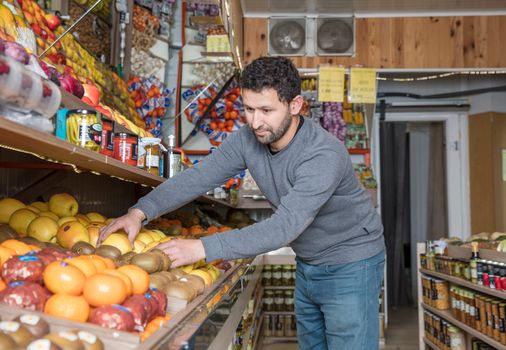
Being a supermarket worker means you are at the heart of making sure people can buy their food and everyday items. You might do lots of different things, like stacking shelves to make sure everything is in the right place and looks tidy, helping customers find what they are looking for, or working on the till (checkout) to scan items and take payments. It is a really important job because you help keep the shop running smoothly and make sure customers have a good shopping experience. You will learn about teamwork, how to talk to people, and how to keep things organised. This role often involves being on your feet quite a bit and sometimes lifting boxes, so it helps to be active. You will meet all sorts of people, from colleagues to customers, and every day can be a bit different depending on how busy the shop is. It is a great way to gain your first work experience and learn skills that are useful in many other jobs.

Supermarket Worker

Flag Media

Please select a reason for flagging this content.

📊 Statistics

Average Starting Salary

A new supermarket worker in the UK can expect to earn around 11 to 12 pounds per hour, especially in entry-level roles.

Number of Positions

The retail sector, which includes supermarkets, employs over 3 million people across the UK, making it one of the largest employers.

Typical Working Hours

Many supermarket roles offer flexible hours, including part-time work, evening shifts, and weekend shifts, making it suitable for various schedules.

🚀 Careers in this path

Flag Media

Please select a reason for flagging this content.

Supermarket Shelf Stacker

This involves carefully placing products onto shelves, making sure they are tidy and easy for customers to find. It is important to check dates on food items to ensure they are fresh.

Flag Media

Please select a reason for flagging this content.

Supermarket Trolley Collector

This role is about gathering shopping trolleys from the car park and around the store, making sure there are always enough available for customers to use when they arrive.

Flag Media

Please select a reason for flagging this content.

Supermarket Checkout Assistant

Working at the till, you would scan items for customers, take payments, and help them pack their shopping. It is about being friendly and making sure customers have a good experience.

Learning About Supermarkets

Visit Your Local Supermarket

Spend some time looking around a supermarket to see how it works and what people do there.

Pay attention to the different sections like the fruit and veg, the bakery, the tills, and customer service. Notice how products are arranged and how staff help shoppers. This will give you a real-life feel for the environment.

Talk to Someone Who Works There

If you can, ask a supermarket worker about their job and what they like about it.

You might be able to ask a friendly worker at the customer service desk or a family friend who works in retail. Ask them what a typical day is like, what skills are important, and what they enjoy most. Most people are happy to share their experiences.

Research Supermarket Roles

Look online or in books to find out about different jobs within a supermarket, like a cashier, shelf stacker, or baker.

Supermarkets have many different roles! Some people work on the shop floor helping customers, others work behind the scenes in the stockroom, or in specialist departments like the fish counter or pharmacy. Understanding these different roles will help you decide what might suit you.

Building Useful Skills

Practise Being Organised

Help keep things tidy at home, like sorting your toys or helping put away groceries. This builds organisational skills.

Being organised is really important in a supermarket. You need to know where things go, keep shelves looking neat, and manage stock. Practising this at home, like organising your bedroom or helping your parents with the weekly shop, is a great start.

Improve Your Maths Skills

Work on your addition and subtraction. It's useful for counting change and understanding prices.

While tills do most of the hard work for you, having good basic maths skills is really helpful. You might need to check prices, count items, or help customers with simple calculations. It will make you much more confident and quicker at the till.

Be Friendly and Helpful

Practise being polite and offering to help people, like family or friends. This improves customer service skills.

A big part of working in a supermarket is helping customers. This means smiling, being polite, listening to their questions, and trying your best to help them find what they need. Practising this with people you know will make it easier when you are helping real customers in a shop.

Getting Ready for Work

Look for Volunteer Work

When you're a bit older, consider volunteering at a local charity shop or community project to gain experience.

Volunteer work is fantastic because it shows future employers you are responsible and willing to work. A charity shop is a great place to learn about serving customers, handling goods, and working as part of a team, similar to a supermarket environment.

Focus on School Subjects

Pay attention in school, especially in subjects that help with communication and basic maths.

English lessons help you communicate clearly with customers and colleagues, and maths helps with handling money and stock. Doing well in school shows you are committed and can learn new things, which employers really value.

Understand Age Restrictions

Learn about the legal age you need to be to work in the UK and when you can start looking for part-time jobs.

In the UK, there are rules about when you can start working and how many hours you can do, especially if you are under 16. Generally, you can do some light part-time work from age 13, but there are more options once you are 16. Knowing these rules will help you plan when to apply for jobs.

🎬 Useful Videos

🎯 View Apprenticeships

Explore relevant apprenticeships that can help you kickstart your career in Supermarket Worker. Apprenticeships offer hands-on experience and training while earning a wage.

Career Progressions

This page showcases various career options and the pathways to reach them. Each career listed here shares transferable skills and knowledge, making it easier for individuals to transition between them.

Your current career is highlighted to help you see how it fits into the broader landscape of potential career choices. By clicking on any career, you can learn more about it, including the training and education required to pursue it.

Remember, progressing in your career often involves further learning and training. This page provides insights into future career options as well as those that can lead up to your current one.

These career progression decisions are informed by comparing the skills and knowledge needed for different occupations, along with data on how people move between them. Explore the possibilities and discover the exciting journey ahead in your career!

Sample Qualifications

While 'Supermarket Worker' isn't an exact match, the closest role based on general duties involving processing, handling, and presenting goods within a commercial setting, albeit a manufacturing one, would be a Production Worker. Other roles are too specialised or unrelated to a supermarket environment.

How to become

You can get into this job through:

  • an apprenticeship
  • applying directly

Apprenticeship

You could apply to do an apprenticeship, for example:

  • Engineering and Manufacturing Level 2 Foundation Apprenticeship
  • Lean Manufacturing Operative Level 2 Intermediate Apprenticeship
  • Food and Drink Process Operator Level 2 Intermediate Apprenticeship
  • Battery Manufacturing Technician Level 3 Advanced Apprenticeship

There are many other apprenticeships available, covering specific manufacturing industries, such as automotive, chemicals and engineering.

Foundation apprenticeship

You can apply for a foundation apprenticeship if you're aged 16 to 21.

If you're aged 22 to 24, you can apply if you:

Entry requirements

You'll usually need:

  • no specific qualifications or experience to apply for a foundation apprenticeship
  • some GCSEs, usually including English and maths, or equivalent, for an intermediate apprenticeship
  • 5 GCSEs at grades 9 to 4 (A* to C), or equivalent, including English and maths, for an advanced apprenticeship


More Information

Direct Application

You could apply for production jobs directly. Some employers may look for GCSEs at grades 9 to 3 (A* to D), or equivalent qualifications. Experience of production line work would be useful.

You may have to take a test at interview to assess your practical skills.

More Information

Career tips

Forklift truck training could be useful for some jobs.

Interested in More Career Paths?

Explore other careers or use our AI to discover personalised paths based on your interests.

Stay connected

Join our newsletter to stay up to date on features and releases

Address
Developing Experts Limited
Exchange Street Buildings
35-37 Exchange Street
Norwich
NR2 1DP
UK

Phone
01603 273515

Email
[email protected]

Copyright 2026 Developing Experts, All rights reserved.