Creating Career Path...

Finding Further Careers...

Lorry Driver

View this career for different education levels:

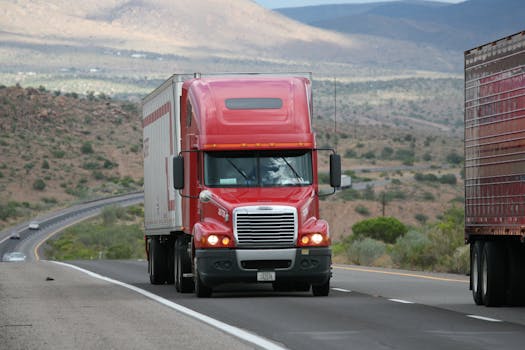
Being a Lorry Driver, also known as an HGV (Heavy Goods Vehicle) driver, means you are responsible for transporting goods across the country, or sometimes even internationally. Imagine all the things you see in shops or delivered to your home Lorry Drivers are the ones who make sure they get there! You will drive large vehicles, often pulling a trailer, and your job involves loading and unloading goods, checking your vehicle is safe, and planning the best routes to get to your destination on time. It is a really important job because without Lorry Drivers, shops would be empty and many businesses would struggle. This career requires you to be a careful and responsible driver, have good concentration for long periods, and be able to stick to schedules. You will also need to be good at problem-solving, like figuring out how to deal with unexpected traffic or tricky delivery spots. Lorry Drivers spend a lot of time on the road, so it is a good career for someone who enjoys independence and seeing different parts of the country. You might deliver all sorts of things, from food and clothes to building materials or fuel. It is a vital part of keeping the UK running smoothly.

Lorry Driver

Flag Media

Please select a reason for flagging this content.

📊 Statistics

Average Salary (UK)

In the UK, a Lorry Driver can expect to earn an average salary of around 32,500 pounds per year. This can go up to 40,000 pounds or more for experienced drivers or those with special licenses.

Entry Level Salary (UK)

For new or trainee Lorry Drivers, starting salaries typically range from 24,000 to 28,000 pounds per year.

Job Outlook (UK)

There are many Lorry Driver jobs available across the UK. It is a sector with consistent demand, meaning there are good opportunities for people wanting to get into this career.

🚀 Careers in this path

Flag Media

Please select a reason for flagging this content.

Delivery Driver

Driving smaller vans to deliver parcels, groceries, or takeaway food to people's homes or businesses. This could be a good starting point to learn about routes and customer service.

Flag Media

Please select a reason for flagging this content.

Bus Driver

Driving buses along set routes, helping people get around town or city. This involves good driving skills and interacting with the public.

Flag Media

Please select a reason for flagging this content.

Forklift Operator

Operating a special vehicle called a forklift to move heavy goods around warehouses, factories, or construction sites. This is a skilled job that helps organise things behind the scenes.

Build Your Skills and Knowledge

Study at school

Focus on subjects that help you understand how things work and how to plan journeys.

At school, pay attention in subjects like Maths for calculating routes and fuel, and English for understanding instructions and communicating clearly. Learning about geography can also be useful for understanding maps and different areas of the country. These subjects build a strong foundation for future learning.

Get your provisional driving licence

When you turn 17, you can apply for your provisional driving licence for a car.

Before you can even think about driving a lorry, you'll need to learn to drive a car and pass your car driving test. You can apply for a provisional licence at 17, which allows you to learn to drive a car with supervision. This is the first essential step to becoming a confident driver.

Gain car driving experience

Practice driving a car and pass your driving test to become a skilled and safe driver.

It's really important to become a good and safe car driver first. This means getting lots of practice with an approved instructor and then passing your car driving test. The skills you learn, like road awareness, hazard perception, and safe braking, are all vital for driving a much larger vehicle like a lorry.

Train for Your Lorry Licence

Turn 18 and apply for provisional HGV entitlement

Once you are 18, you can apply to add provisional HGV (Heavy Goods Vehicle) entitlement to your licence.

After you turn 18 and have a full car driving licence, you can apply to the DVLA to get a provisional Category C or C+E entitlement added to your licence. This means you are allowed to start learning to drive a lorry with an instructor. You'll also need to have a medical examination to make sure you're fit enough for the job.

Pass your HGV theory tests

You'll need to pass several theory tests specifically for driving lorries.

Just like with a car, there are theory tests for lorries. These include multiple-choice questions about road rules, traffic signs, and safe driving, as well as a hazard perception test. You'll need to study a lot to pass these, as they cover information specific to larger vehicles and professional driving.

Complete practical HGV driving lessons

Take special driving lessons with an approved instructor in a lorry.

Once your provisional HGV entitlement is sorted and you've passed your theory tests, you can start practical driving lessons. An approved HGV driving instructor will teach you how to handle a large lorry, including manoeuvres like reversing, coupling/uncoupling a trailer, and driving safely on different types of roads. This training is usually quite intensive.

Pass your HGV practical driving test

Show you can drive a lorry safely and skillfully in a driving test.

This is the big one! After your lessons, you'll take a practical driving test in a lorry. You'll need to demonstrate excellent driving skills, including road awareness, vehicle control, and safe driving habits. Passing this test means you'll earn your full HGV driving licence, usually Category C (rigid lorry) or C+E (articulated lorry).

Start Your Lorry Driving Career

Complete your Driver CPC

Get your Driver Certificate of Professional Competence (CPC) qualification.

Even after passing your HGV driving test, you'll need to complete your Driver CPC qualification if you want to drive lorries professionally. This involves four parts, including a case study theory test and a practical demonstration test. The Driver CPC ensures you have the professional knowledge and skills required for the job, and you'll need to do ongoing training every 5 years.

Look for your first job

Search for companies hiring new lorry drivers to start your career.

Once you have your full HGV licence and Driver CPC, you can start applying for jobs. Many haulage companies, logistics firms, and delivery services are always looking for drivers. You might start with local deliveries or smaller vehicles to gain experience before moving on to long-haul routes or larger lorries.

Continue learning and developing

Always keep your skills up to date and learn new things to be an even better driver.

The world of transport is always changing. As a lorry driver, you'll need to keep up with new road regulations, vehicle technology, and best practices. There are often opportunities for further training, like ADR (carrying dangerous goods) or HIAB (crane operation) licences, which can open up more job possibilities and help you progress in your career.

🎬 Useful Videos

🎯 View Apprenticeships

Explore relevant apprenticeships that can help you kickstart your career in Lorry Driver. Apprenticeships offer hands-on experience and training while earning a wage.

Career Progressions

This page showcases various career options and the pathways to reach them. Each career listed here shares transferable skills and knowledge, making it easier for individuals to transition between them.

Your current career is highlighted to help you see how it fits into the broader landscape of potential career choices. By clicking on any career, you can learn more about it, including the training and education required to pursue it.

Remember, progressing in your career often involves further learning and training. This page provides insights into future career options as well as those that can lead up to your current one.

These career progression decisions are informed by comparing the skills and knowledge needed for different occupations, along with data on how people move between them. Explore the possibilities and discover the exciting journey ahead in your career!

Sample Qualifications

A Lorry Driver primarily operates Heavy Goods Vehicles (HGVs) for transporting goods, which directly aligns with the duties and vehicle type associated with an HGV driver.

How to become

You can get into this job through:

  • an apprenticeship
  • working towards this role
  • specialist training providers

Apprenticeship

You could do a Large Goods Vehicle (LGV) Driver C and E Level 2 Intermediate Apprenticeship.

This can take around 1 year to complete and combines on-the-job learning and study with a training provider.

The armed forces also offer some HGV driving apprenticeship roles.

Entry requirements

You'll usually need:

  • some GCSEs, usually including English and maths, or equivalent, for an intermediate apprenticeship

More Information

Work

If you're already working for a transport operator in a non-driving role, your employer might support you through training to get your HGV driving licence.

Other Routes

Course

You'll need to get a professional driving qualification called the Driver Certificate of Professional Competence (CPC).

Lots of organisations offer this course. You can find training to become a HGV driver or search for training providers through the Driver and Vehicle Standards Agency.

You might find it useful to compare several providers before signing up to one.

The course will cover driving skills, basic mechanics and how to load items. At the end of your course you'll need to pass 4 parts of the CPC test which includes:

  • a driving theory test
  • online case studies
  • a test of your practical driving ability
  • a practical demonstration test

If you're going to work with hazardous goods, for example fuel oil, you'll also need an Advisory Dangerous Goods by Road (ADR) Certificate.

Refresher course

If you're returning to work, you may need to do refresher training. Find out more about returning to be a HGV driver.

Skills Bootcamp

You might be able to apply for a place on a Skills Bootcamp for HGV driving.

Skills Bootcamps are flexible courses that last up to 16 weeks.

You can apply if you:

  • are 19 or older
  • have a full (category B) driving license

The provider running your course might have extra criteria for applying.

When you pass the course, you:

  • are guaranteed a job interview with an employer near where you live
  • can drive large vehicles
  • will have a category C or category CE driving licence

More Information

Career tips

You may be able to increase your income by working overtime.

Companies often need more HGV drivers at peak times. You could look for seasonal jobs on retail and delivery company websites, or with driver recruitment agencies.

Further information

You can find out more about how to become a qualified HGV driver from GOV.UK and Generation Logistics.

Interested in More Career Paths?

Explore other careers or use our AI to discover personalised paths based on your interests.

Stay connected

Join our newsletter to stay up to date on features and releases

Address
Developing Experts Limited
Exchange Street Buildings
35-37 Exchange Street
Norwich
NR2 1DP
UK

Phone
01603 273515

Email
[email protected]

Copyright 2026 Developing Experts, All rights reserved.