




Creating Career Path...

Finding Further Careers...

Road Worker

View this career for different education levels:

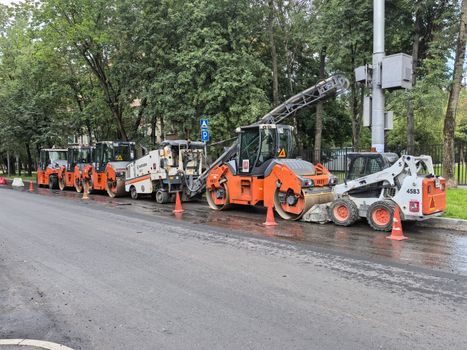
As a road worker, you'll be on the front line of maintaining and improving the UK's vital road network. This career is hands-on and primarily involves outdoor work, often in varying weather conditions. Your day-to-day tasks could include repairing potholes, laying new asphalt, operating heavy machinery like diggers or rollers, setting up traffic management systems to ensure site safety, and undertaking general groundwork. It's a role that requires good physical fitness, an attention to detail, and a strong commitment to health and safety regulations. You might be involved in major motorway upgrades, local road repairs, or even pedestrian walkway construction, working as part of a team to ensure our roads are safe and efficient for everyone. Key responsibilities include preparing surfaces, using hand and power tools, assisting with drainage systems, and adhering strictly to site safety protocols. You'll gain practical skills in civil engineering and construction, often leading to opportunities for specialisation in areas like plant operation or road surfacing. It's a physically demanding but rewarding career, essential for keeping the country moving and directly contributing to public safety and infrastructure development.

Road Worker

Flag Media

Please select a reason for flagging this content.

📊 Statistics

Average Salary (UK)

Starting salaries for road workers in the UK are typically around 20,000 to 25,000 GBP per year, while experienced workers can earn between 28,000 and 35,000 GBP annually. Specialist roles or supervisory positions can command higher salaries.

Job Outlook (UK)

The demand for skilled road workers in the UK remains steady. Significant government investment in infrastructure projects, including new road construction, maintenance, and upgrades, ensures consistent job availability across the country.

Working Hours

Most road workers in the UK work around 40 hours a week. However, due to the nature of road works, shift patterns can vary and often include evenings, nights, weekends, and public holidays, especially for projects that need to minimise disruption to traffic.

🚀 Careers in this path

Flag Media

Please select a reason for flagging this content.

Highways Maintenance Operative

This role focuses specifically on the upkeep and repair of roads, pavements, and street furniture. You'd be involved in patching potholes, repairing kerbs, clearing drainage, and ensuring road safety. It's a hands-on role with good opportunities for training and development within local councils or private contractors.

Flag Media

Please select a reason for flagging this content.

Groundworker (Civil Engineering)

As a groundworker on a civil engineering project, you'd be preparing sites for larger construction. This could involve excavating trenches for utilities, laying foundations, concreting, and assisting with the initial stages of road construction or major infrastructure projects. It's a fundamental role with varied tasks and strong demand.

Flag Media

Please select a reason for flagging this content.

Traffic Management Operative

This career involves setting up and maintaining temporary traffic control systems around roadworks or events. You'd be responsible for deploying signs, cones, and barriers, as well as managing vehicle and pedestrian flow to ensure safety for both workers and the public. It requires strong attention to detail and adherence to safety regulations.

Foundation & Entry

Gain Relevant Qualifications or Experience

Begin by acquiring foundational knowledge and skills relevant to construction and manual labour.

While specific academic qualifications aren't always mandatory for an entry-level road worker role, a good standard of education (GCSEs or equivalent) including English and Maths can be beneficial. Consider undertaking a Level 1 or 2 NVQ in Construction Operations, or a similar qualification, to demonstrate your commitment and understanding of basic site safety and practices. Practical experience in any manual labour role, even outside of construction, will also be highly valued.

Secure an Entry-Level Position

Look for opportunities to join a highways maintenance crew or a civil engineering company.

Many local councils and private contractors (such as Balfour Beatty, Tarmac, Amey, or Eurovia) regularly recruit for Highways Maintenance Operatives or General Labourers. These roles often provide on-the-job training. Search job boards, company websites, and local council careers pages. Emphasise any practical skills, a strong work ethic, and a willingness to learn in your application.

Obtain Essential Certifications

Acquire the necessary safety and operational certifications required for working on roads.

The Construction Skills Certification Scheme (CSCS) card is generally a minimum requirement for working on construction sites, including roads. You'll typically need to pass the CITB Health, Safety and Environment Test to obtain this. Additionally, gaining a full UK driving licence is crucial, especially for driving work vehicles. Qualifications such as New Roads and Streetworks Act (NRSWA) Operative or Supervisor are often gained once in the role through employer-provided training, but showing an awareness of them is beneficial.

Skill Development & Specialisation

Undertake On-the-Job Training

Actively participate in and learn from daily tasks and senior colleagues.

Once in a road worker role, you'll receive practical training on various aspects of highways maintenance, including pothole repair, kerb laying, drainage work, and operating specific machinery. Pay close attention to safety procedures and best practices. Ask questions, volunteer for diverse tasks, and demonstrate a keenness to expand your skillset.

Gain NVQ Level 2 in Construction Operations

Formalise your practical skills and knowledge through a recognised qualification.

Many employers will support their operatives in achieving an NVQ Level 2 in Construction Operations and Civil Engineering Services (Highways Maintenance). This qualification will assess your competence in a range of road working tasks, reinforcing your expertise and making you a more valuable asset to your team and future employers. This often involves a work-based assessment process.

Acquire Specialised Machine Operating Licences

Obtain certifications to operate a wider range of plant and machinery.

As you progress, you'll have opportunities to learn to operate more complex machinery such as excavators, road rollers, asphalt pavers, and specific road marking equipment. Each piece of plant requires specific training and certification (often through CPCS – Construction Plant Competence Scheme). Having multiple licences makes you more versatile and opens doors to more specialised and higher-paid roles.

Progression & Leadership

Attain NRSWA Supervisor Qualification

Qualify to oversee work on the public highway, ensuring compliance with regulations.

The New Roads and Streetworks Act (NRSWA) Supervisor qualification is essential for those looking to manage teams or oversee significant roadworks. This course covers the legal requirements for planning, supervising, and signing, lighting, and guarding street works, ensuring safety for both workers and the public. This demonstrates leadership potential and regulatory understanding.

Seek Team Leader or Foreman Roles

Take on more responsibility by leading a team and managing on-site operations.

With extensive experience, relevant qualifications like the NRSWA Supervisor, and a proven track record of reliability and good communication, you can apply for Team Leader or Foreman positions. These roles involve supervising a crew, allocating tasks, ensuring work quality, managing site safety, and liaising with project managers. Strong problem-solving and communication skills are vital here.

Consider Further Management or Specialisation

Explore paths into project management, site management, or highly specialised technical roles.

Beyond team leadership, you could pursue roles such as Highways Supervisor, Works Manager, or even a Project Manager within a civil engineering firm or local authority highways department. Alternatively, you could specialise further in areas like road marking, traffic management planning, or advanced surfacing techniques, becoming a subject matter expert. This might involve further HNC/HND qualifications or specific industry-recognised courses.

🎬 Useful Videos

🎯 View Apprenticeships

Explore relevant apprenticeships that can help you kickstart your career in Road Worker. Apprenticeships offer hands-on experience and training while earning a wage.

Career Progressions

This page showcases various career options and the pathways to reach them. Each career listed here shares transferable skills and knowledge, making it easier for individuals to transition between them.

Your current career is highlighted to help you see how it fits into the broader landscape of potential career choices. By clicking on any career, you can learn more about it, including the training and education required to pursue it.

Remember, progressing in your career often involves further learning and training. This page provides insights into future career options as well as those that can lead up to your current one.

These career progression decisions are informed by comparing the skills and knowledge needed for different occupations, along with data on how people move between them. Explore the possibilities and discover the exciting journey ahead in your career!

Sample Qualifications

The user's input career 'Road Worker' directly matches the official job title 'Road worker' provided in the list, indicating identical qualifications and duties related to road construction and maintenance.

How to become

You can get into this job through:

  • a college course
  • an apprenticeship
  • applying directly

College

You could take a college course to get some of the skills needed for this job. Courses include:

  • construction skills
  • highways maintenance - excavation operations
  • construction and civil engineering operations

Entry requirements

Entry requirements for these courses vary.

More Information

Apprenticeship

You could apply to do a Road Surfacing Operative, or Highways Maintenance Skilled Operative, Level 2 Intermediate Apprenticeship.

These apprenticeships take between a year and 6 months and 2 years to complete.

Entry requirements

You'll usually need:

  • some GCSEs, usually including English and maths, or equivalent, for an intermediate apprenticeship

More Information

Direct Application

You may be able to apply for jobs if you've got experience in other areas of construction, like labouring and groundwork, or from operating plant machinery, like mechanical diggers.

More Information

Further information

You can find out more about becoming a road worker from Go Construct.

Interested in More Career Paths?

Explore other careers or use our AI to discover personalised paths based on your interests.

Stay connected

Join our newsletter to stay up to date on features and releases

Address
Developing Experts Limited
Exchange Street Buildings
35-37 Exchange Street
Norwich
NR2 1DP
UK

Phone
01603 273515

Email
[email protected]

Copyright 2026 Developing Experts, All rights reserved.
