Creating Career Path...

Finding Further Careers...

Mining Geologist

View this career for different education levels:

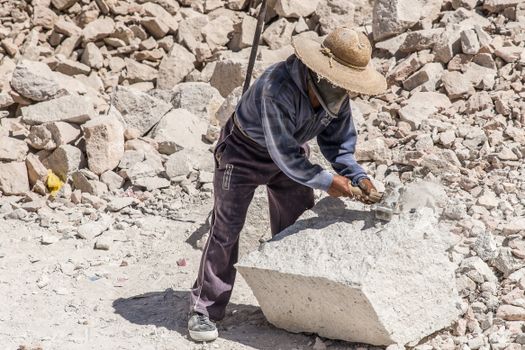
A Mining Geologist is like a detective for the Earth. Their main job is to explore and find valuable minerals and rocks underground, like coal, gold, copper, or even materials needed for new technologies. They use special tools and their knowledge of rocks and Earth processes to figure out where these materials might be hidden. They also help plan how to safely and efficiently dig them out, making sure that the mining operation causes as little harm to the environment as possible. This career involves a lot of outdoor work, sometimes in remote locations, and can include studying maps, taking rock samples, and using computer models. Once a mineral deposit is found, the Mining Geologist works closely with mining engineers to guide the extraction process. They monitor the quality and quantity of the ore being mined and make sure the mine operates effectively. They also play a big role in understanding the geology of the area to make sure the mine is stable and safe. It's a job that requires a good understanding of science, problem-solving skills, and a willingness to work both in an office and out in the field, often in different weather conditions.

Mining Geologist

Flag Media

Please select a reason for flagging this content.

📊 Statistics

Starting Salary

For a new Mining Geologist in the UK, you could expect to earn around 25,000 to 35,000 pounds a year.

Experienced Salary

With more experience, a Mining Geologist in the UK can earn between 40,000 and 70,000 pounds annually. Very experienced geologists might earn even more.

Job Outlook

While mining itself is not as widespread in the UK as in some other countries, there are still opportunities in exploration, resource management, and environmental roles related to minerals. Many UK-trained geologists also work on projects around the world.

🚀 Careers in this path

Flag Media

Please select a reason for flagging this content.

Exploration Geologist

Imagine being a detective for rocks. You'd go out into the field, look at maps, collect rock samples, and use special equipment to find new places where valuable minerals might be hidden underground. It's like a treasure hunt, but with science!

Flag Media

Please select a reason for flagging this content.

Geological Engineer

You'd use your knowledge of rocks and ground to help build safe things like tunnels, bridges, or even big buildings. You'd make sure the ground is strong enough and understand how to prevent problems like landslides or rockfalls, making sure everything is super safe.

Flag Media

Please select a reason for flagging this content.

Mineralogist

This job is all about studying individual minerals. You'd work in a lab, using microscopes and other tools to identify different types of rocks and minerals, understand their properties, and figure out how they were formed. It's like being a scientist who specialises in tiny, sparkly things.

Build Your Foundations

Focus on Science & Maths

At school, pay extra attention in your science and maths lessons, especially Earth Sciences or Geography if your school offers them.

Understanding how the Earth works, from volcanoes to rocks, is super important. Maths helps you with measurements and calculations needed for mapping and analysing data. Biology and Chemistry can also be helpful for understanding different types of rocks and minerals and their properties.

Explore Rocks and Minerals

Start collecting interesting rocks, learning about different types, and visiting museums with geology exhibits.

Many museums have amazing displays of crystals and fossils. You could also get a basic geology book or kit to identify rocks you find in your garden or local park. This hands-on experience will spark your curiosity and help you learn to spot different geological features.

Join a Science Club

Participate in science clubs or activities that involve fieldwork or investigations.

Some schools have science clubs that do experiments or trips. You might even find local geology groups or societies that organise field trips where you can learn from experienced geologists. These experiences are great for meeting people who share your interests and seeing what geology is like outside the classroom.

Further Your Education

Choose A-Levels Wisely

For your A-Levels, pick subjects like Geology, Geography, Maths, Physics, or Chemistry.

Most universities will look for at least two science or maths A-Levels for a geology degree. Geology A-Level is obviously very relevant, but a strong foundation in maths and physical sciences is also crucial. Geography can be useful as it often includes physical geography and mapping skills.

Go to University

Study for a university degree in Geology, Earth Sciences, or a related subject.

A Bachelor's degree (BSc) in Geology or Earth Sciences is usually the starting point. Some degrees might be more specific, like 'Geological Sciences' or 'Applied Geology'. Look for courses that include lots of fieldwork, as this is a big part of a geologist's job and will give you practical experience.

Consider a Master's Degree

Think about doing a Master's degree (MSc) if you want to specialise further, especially in mining geology.

While not always essential, an MSc in 'Mining Geology', 'Mineral Exploration', or 'Economic Geology' can make you more attractive to employers and give you a deeper understanding of specific techniques and challenges in the mining industry. It often involves more advanced research and practical projects.

Gain Experience & Start Your Career

Seek Work Experience

Try to get internships or work placements with mining companies or geological consultancies during your university breaks.

Practical experience is incredibly valuable. Many companies offer summer internships where you can see what the job is really like, meet people in the industry, and apply your university knowledge. This can often lead to a job offer after you graduate.

Apply for Graduate Roles

Look for graduate geologist positions with mining companies, exploration firms, or geological consultancies.

Many large mining companies have structured graduate programmes designed to give you a broad range of experience. These roles often involve working in different locations, sometimes abroad, and gaining hands-on experience in exploration, resource modelling, and mine site geology.

Develop Field Skills

Continuously develop your practical field skills, such as geological mapping, core logging, and using specialist software.

A lot of a mining geologist's work happens outdoors, often in remote locations. Being good at interpreting geological maps, understanding rock samples from drill holes (core logging), and using software for data analysis and 3D modelling will be crucial for your success and progression in this career.

🎬 Useful Videos

🎯 View Apprenticeships

Explore relevant apprenticeships that can help you kickstart your career in Mining Geologist. Apprenticeships offer hands-on experience and training while earning a wage.

Career Progressions

This page showcases various career options and the pathways to reach them. Each career listed here shares transferable skills and knowledge, making it easier for individuals to transition between them.

Your current career is highlighted to help you see how it fits into the broader landscape of potential career choices. By clicking on any career, you can learn more about it, including the training and education required to pursue it.

Remember, progressing in your career often involves further learning and training. This page provides insights into future career options as well as those that can lead up to your current one.

These career progression decisions are informed by comparing the skills and knowledge needed for different occupations, along with data on how people move between them. Explore the possibilities and discover the exciting journey ahead in your career!

Sample Qualifications

A Mining Geologist is a type of Geoscientist specialising in geological survey and analysis within the mining industry. This role involves understanding the Earth's structure and processes, which directly aligns with the broader Geoscientist classification.

How to become

You can get into this job through:

  • a university course
  • an apprenticeship

University

To work as a professional geoscientist you'll need a degree in a relevant subject. Courses often combine theory with fieldwork and practical training.

Degree subjects include:

  • geology
  • geoscience
  • geophysics
  • Earth science

It's becoming more common for new entrants to hold or be working towards postgraduate qualifications like an MSc or PhD.

Integrated postgraduate master's qualifications like a MGeol or MSci can be studied at university. These courses include more independent research and are designed to lead directly onto further study like a PhD.

It's useful to get some work experience through an internship or year in industry placement while you are at university. Your university careers service can help you find opportunities.

Organisations like Geology for Global Development also run projects and placements to help you gain skills.

Entry requirements

You'll usually need:

  • 5 GCSEs at grades 9 to 4 (A* to C), or equivalent, including English, maths and science
  • 2 or 3 A levels, or equivalent, including a science, for a degree
  • a degree in a relevant subject for postgraduate study

More Information

Apprenticeship

You could apply to do a Geoscientist Level 6 Degree Apprenticeship.

You could also apply to do a Geotechnical Engineer Level 7 Integrated Degree Apprenticeship if you already have a first degree in a subject like::

  • engineering
  • science
  • geoscience
  • maths

Entry requirements

You'll usually need:

  • 4 or 5 GCSEs at grades 9 to 4 (A* to C) and A levels, or equivalent, for a higher or degree apprenticeship

More Information

More Information

Career tips

Experience of specialist geological software and computer modelling packages can be an advantage when you are applying for jobs.

Since many employers of geoscientists operate internationally, extra language skills can also be useful.

Further information

You can discover more about careers in geoscience through The Geological Society and Minerals Matter.

Interested in More Career Paths?

Explore other careers or use our AI to discover personalised paths based on your interests.

Stay connected

Join our newsletter to stay up to date on features and releases

Address
Developing Experts Limited
Exchange Street Buildings
35-37 Exchange Street
Norwich
NR2 1DP
UK

Phone
01603 273515

Email
[email protected]

Copyright 2026 Developing Experts, All rights reserved.
