Creating Career Path...

Finding Further Careers...

Mining Geologist

View this career for different education levels:

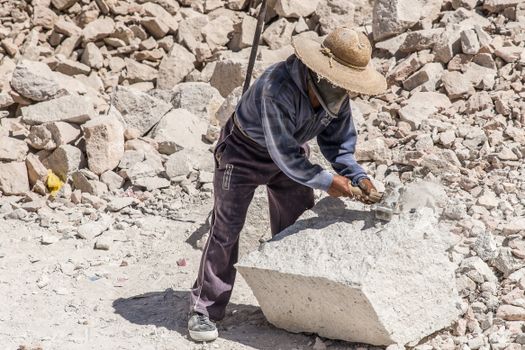
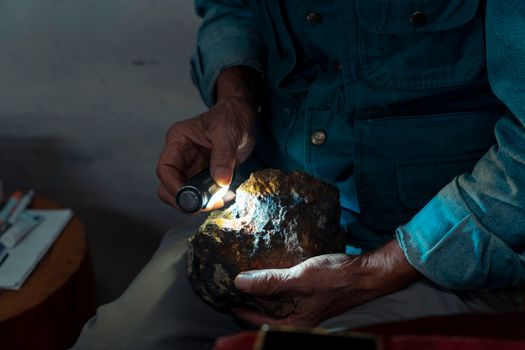
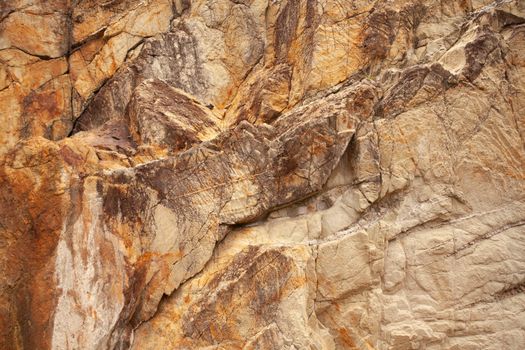
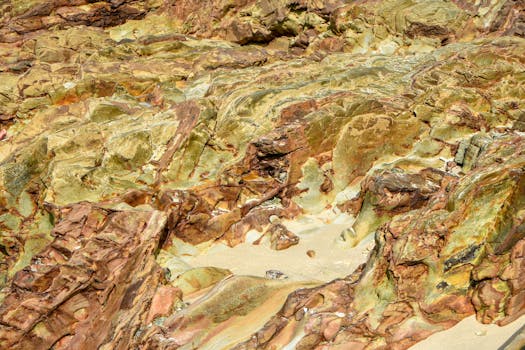
A Mining Geologist plays a crucial role in the extraction of valuable minerals and raw materials from the Earth. Your primary responsibilities involve exploring for new mineral deposits, evaluating the economic viability of existing ones, and providing geological guidance throughout the entire mining process. This career involves extensive fieldwork, often in remote or challenging environments, where you will collect and analyse geological data, map rock formations, and interpret geophysical and geochemical surveys. You'll be responsible for understanding the geological structure of a deposit, assessing its grade and tonnage, and ensuring that mining operations are conducted safely and efficiently based on geological understanding. Beyond exploration, mining geologists are involved in resource modelling and reserve estimation, using specialist software to create 3D models of ore bodies. During the operational phase of a mine, you'll monitor geological conditions, advise on drilling and blasting patterns, and implement strategies to optimise extraction and minimise environmental impact. This career demands a strong scientific background, excellent problem-solving skills, and a willingness to work both independently and as part of a multidisciplinary team, often collaborating with engineers, metallurgists, and environmental specialists. It's a dynamic field where your expertise directly contributes to global resource supply.

Mining Geologist

Flag Media

Please select a reason for flagging this content.

📊 Statistics

Average Starting Salary

Starting salaries for mining geologists in the UK typically range from 25,000 GBP to 35,000 GBP per year, depending on qualifications and location.

Experienced Professional Salary

With several years of experience, a mining geologist in the UK can expect to earn between 45,000 GBP and 70,000 GBP annually, with senior or principal roles potentially exceeding 80,000 GBP.

Job Outlook

While the UK mining sector itself is smaller than in some other countries, UK-qualified mining geologists are highly sought after globally. There is a consistent demand for skilled professionals, often involving international opportunities and field-based roles.

🚀 Careers in this path

Flag Media

Please select a reason for flagging this content.

Exploration Geologist

Focuses on identifying and evaluating new mineral deposits. This involves field work, mapping, geophysical surveys, and drilling programmes to discover economically viable resources. It's a challenging role often in remote locations, requiring strong analytical and problem-solving skills.

Flag Media

Please select a reason for flagging this content.

Geotechnical Engineer (Mining)

Specialises in the stability of rock and soil in mining operations. This role involves designing safe slopes for open-pit mines, supporting underground excavations, and managing ground conditions to prevent hazards. It combines geology with engineering principles, crucial for mine safety and efficiency.

Flag Media

Please select a reason for flagging this content.

Environmental Geologist (Mining Reclamation)

Works on mitigating the environmental impact of mining and rehabilitating former mine sites. This includes assessing water and soil contamination, designing reclamation plans, and ensuring compliance with environmental regulations. It's a vital role for sustainable mining practices and post-mining land use.

Educational Foundation

Achieve a Relevant Undergraduate Degree

The first step is to secure a strong academic foundation in geology or a related earth science discipline.

Most entry-level Mining Geologist roles require a Bachelor's degree in Geology, Earth Sciences, Geological Sciences, or a similar field. Focus on modules such as structural geology, mineralogy, petrology, economic geology, geochemistry, and geophysics. Practical fieldwork components are essential for developing core observational and analytical skills. Look for accredited courses that provide a strong theoretical grounding combined with practical experience.

Consider a Postgraduate Qualification

For enhanced specialisation and career progression, a Master's degree can be highly beneficial.

A Master's (MSc) in Mining Geology, Economic Geology, or Exploration Geology can significantly improve your prospects, especially for more senior or specialised roles. These programmes often provide advanced training in resource estimation, geological modelling, geo-metallurgy, and practical project work, sometimes in collaboration with industry partners. Some roles may even require a PhD for research-intensive positions or academia, but an MSc is generally sufficient for most industry roles.

Develop Core Practical Skills

Alongside academic study, cultivating hands-on geological skills is paramount.

During your degree, actively seek opportunities to develop practical skills such as geological mapping, core logging, geophysical survey interpretation, geochemical sampling, and the use of geological software (e.g., Leapfrog, Micromine, ArcGIS). Participate in university field trips, independent mapping projects, and any practical modules offered. These skills are highly valued by employers and will be critical in your day-to-day work.

Gain Industry Experience

Undertake Internships or Work Placements

Practical experience within the mining industry is invaluable for understanding real-world operations.

Actively look for summer internships, industrial placements, or voluntary work experience with mining companies, geological consultancies, or exploration firms. These opportunities provide exposure to fieldwork, data analysis, and the day-to-day responsibilities of a geologist in a mining context. They are also excellent for networking and often lead to graduate job offers. Many universities have career services that can help you find such placements.

Secure an Entry-Level Position

Start your professional career in a junior or graduate geologist role.

After graduation, apply for graduate schemes or entry-level positions such as 'Graduate Geologist', 'Junior Geologist', or 'Exploration Geologist'. These roles will involve supervised work in various aspects of mining geology, from drill programme supervision and core logging to data interpretation and basic resource modelling. Be prepared to work in remote locations, potentially for extended periods, as many mines are not in urban centres. Gain a full UK driving licence as it is often a requirement.

Continuous Professional Development

Stay updated with the latest industry trends, technologies, and best practices.

The field of mining geology is constantly evolving. Attend industry conferences, workshops, and webinars. Join professional bodies like The Geological Society of London (GeolSoc) or the Institute of Materials, Minerals and Mining (IOM3) to access resources, networking opportunities, and further training. Pursue short courses in areas like advanced geological software, geostatistics, health and safety, or environmental regulations relevant to mining. This commitment to learning is key for career progression.

Career Advancement and Specialisation

Achieve Professional Chartership

Work towards becoming a Chartered Geologist or a similar professional accreditation.

Professional chartership (e.g., CGeol through The Geological Society of London) demonstrates a high level of competence, ethical conduct, and commitment to the profession. It typically requires several years of relevant postgraduate experience, a portfolio of work, and an interview. This accreditation is highly respected in the UK and internationally, enhancing your credibility and opening doors to more senior roles.

Specialise in Key Areas

Develop expertise in a specific niche within mining geology to become a subject matter expert.

As you gain experience, you might choose to specialise in areas such as resource modelling, geometallurgy, geotechnical geology, hydrogeology (related to mining), environmental geology, or specific commodity expertise (e.g., gold, copper, industrial minerals). Specialisation can lead to roles like Senior Resource Geologist, Principal Geologist, or Consultant, allowing you to take on more complex projects and leadership responsibilities.

Take on Leadership and Management Roles

Progress into positions that involve managing teams, projects, and exploration programmes.

With extensive experience and demonstrated leadership capabilities, you can advance to roles like Chief Geologist, Exploration Manager, or even Mine Manager (if you cross-train in mining engineering aspects). These roles involve strategic planning, budgetary responsibility, team leadership, stakeholder management, and ensuring geological input aligns with overall mine objectives. Strong communication and project management skills become increasingly important at this stage.

🎯 View Apprenticeships

Explore relevant apprenticeships that can help you kickstart your career in Mining Geologist. Apprenticeships offer hands-on experience and training while earning a wage.

Career Progressions

This page showcases various career options and the pathways to reach them. Each career listed here shares transferable skills and knowledge, making it easier for individuals to transition between them.

Your current career is highlighted to help you see how it fits into the broader landscape of potential career choices. By clicking on any career, you can learn more about it, including the training and education required to pursue it.

Remember, progressing in your career often involves further learning and training. This page provides insights into future career options as well as those that can lead up to your current one.

These career progression decisions are informed by comparing the skills and knowledge needed for different occupations, along with data on how people move between them. Explore the possibilities and discover the exciting journey ahead in your career!

Sample Qualifications

A Mining Geologist is a type of Geoscientist specialising in geological survey and analysis within the mining industry, focusing on mineral resources and rock formations.

How to become

You can get into this job through:

  • a university course
  • an apprenticeship

University

To work as a professional geoscientist you'll need a degree in a relevant subject. Courses often combine theory with fieldwork and practical training.

Degree subjects include:

  • geology
  • geoscience
  • geophysics
  • Earth science

It's becoming more common for new entrants to hold or be working towards postgraduate qualifications like an MSc or PhD.

Integrated postgraduate master's qualifications like a MGeol or MSci can be studied at university. These courses include more independent research and are designed to lead directly onto further study like a PhD.

It's useful to get some work experience through an internship or year in industry placement while you are at university. Your university careers service can help you find opportunities.

Organisations like Geology for Global Development also run projects and placements to help you gain skills.

Entry requirements

You'll usually need:

  • 5 GCSEs at grades 9 to 4 (A* to C), or equivalent, including English, maths and science
  • 2 or 3 A levels, or equivalent, including a science, for a degree
  • a degree in a relevant subject for postgraduate study

More Information

Apprenticeship

You could apply to do a Geoscientist Level 6 Degree Apprenticeship.

You could also apply to do a Geotechnical Engineer Level 7 Integrated Degree Apprenticeship if you already have a first degree in a subject like::

  • engineering
  • science
  • geoscience
  • maths

Entry requirements

You'll usually need:

  • 4 or 5 GCSEs at grades 9 to 4 (A* to C) and A levels, or equivalent, for a higher or degree apprenticeship

More Information

More Information

Career tips

Experience of specialist geological software and computer modelling packages can be an advantage when you are applying for jobs.

Since many employers of geoscientists operate internationally, extra language skills can also be useful.

Further information

You can discover more about careers in geoscience through The Geological Society and Minerals Matter.

Interested in More Career Paths?

Explore other careers or use our AI to discover personalised paths based on your interests.

Stay connected

Join our newsletter to stay up to date on features and releases

Address
Developing Experts Limited
Exchange Street Buildings
35-37 Exchange Street
Norwich
NR2 1DP
UK

Phone
01603 273515

Email
[email protected]

Copyright 2026 Developing Experts, All rights reserved.
