Creating Career Path...

Finding Further Careers...

Mining Geologist

View this career for different education levels:

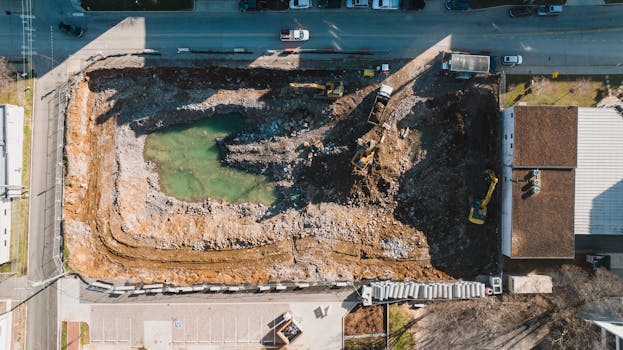
Imagine being an earth detective! A Mining Geologist is like a super-smart detective who helps find valuable rocks and minerals deep inside the Earth. They study rocks and soil to understand where useful things like metals (for making cars or phones) or other materials might be hidden. They work at places called mines, both on the surface and sometimes underground, using special tools to look at the ground and decide where it's best to dig. It's a bit like a treasure hunt, but with scientific clues. They help make sure we get the materials we need for all sorts of things we use every day, making sure it's done safely and cleverly.

Mining Geologist

Flag Media

Please select a reason for flagging this content.

📊 Statistics

Starting Salary

A new Mining Geologist in the UK might earn around 25,000 to 30,000 pounds per year.

Experienced Salary

With more experience, a Mining Geologist in the UK could earn between 40,000 and 70,000 pounds per year, or even more for very senior roles.

Job Openings

There are usually a few hundred job openings for geologists each year in the UK, many of which are in mining or related fields.

🚀 Careers in this path

Flag Media

Please select a reason for flagging this content.

Geologist Helper

Imagine being an assistant to a real geologist! You'd help them look for interesting rocks, fossils, and minerals, learning all about how the Earth works. You might use a magnifying glass to inspect tiny crystals or help draw maps of where different rocks are found. It's like being a detective for the Earth!

Flag Media

Please select a reason for flagging this content.

Rock Hound Explorer

This is a super fun job for someone who loves to explore! You would go on adventures, perhaps to local parks or beaches, searching for cool and unique rocks. You'd learn to identify different types of rocks and minerals, maybe even starting your own collection. Every new rock is a discovery!

Flag Media

Please select a reason for flagging this content.

Dinosaur Bone Finder

Do you love dinosaurs? As a dinosaur bone finder, you would help scientists look for ancient dinosaur bones and other fossils in the ground. You'd carefully dig and brush away dirt, learning about the amazing creatures that lived long, long ago. It's like being a treasure hunter for history!

Learn About Rocks and Earth

Be a Rock Detective

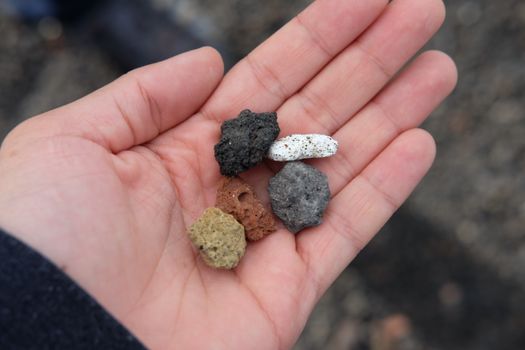
Start collecting cool rocks you find! Look at them closely, touch them, and try to guess what kind of rock they are. You can find rocks in your garden, at the park, or even on the beach.

When you find rocks, notice their colour, how shiny they are, and if they feel rough or smooth. Some rocks have tiny sparkly bits, and others might have stripes. There are many different types of rocks, like igneous, sedimentary, and metamorphic, and it's fun to start learning about them early.

Read About Earth and Dinosaurs

Get books from the library about volcanoes, earthquakes, and dinosaurs. These books often teach you about how the Earth works and how rocks are formed over millions of years.

Reading books about geology, even if they are about dinosaurs, helps you understand the history of our planet. Dinosaurs lived on Earth a long, long time ago, and the rocks they walked on tell us stories about them. You can learn about fossils too, which are like imprints of old life found in rocks.

Visit a Museum

Ask a grown-up to take you to a natural history museum. You can see amazing displays of rocks, crystals, and even dinosaur skeletons there!

Museums are fantastic places to see real examples of the things a Mining Geologist studies. You'll often find special rooms with sparkly minerals, giant crystals, and exhibits that show how rocks are formed and how mines work. It's a great way to see what you might work with one day.

Grow Your Earth Knowledge

Do Well in Science at School

Pay attention in science classes, especially when you learn about the Earth, rocks, and minerals. Ask your teacher lots of questions!

When you're at primary school and then secondary school, science lessons will teach you important things about how the world works. Understanding topics like forces, materials, and ecosystems will give you a good foundation for later learning about geology. Geography lessons are also really helpful, as they teach you about landforms and natural resources.

Join a Science Club

If your school has a science club, join it! You might do fun experiments and learn more about geology with other children.

Science clubs are brilliant for exploring your interests outside of regular lessons. You might get to do experiments with different rocks, learn how to identify minerals, or even go on field trips to places where you can see interesting geological features. It's a great way to make friends who also love science.

Go on Nature Walks

Explore the outdoors with your family. Look at hills, valleys, and riverbeds. Think about how they were formed.

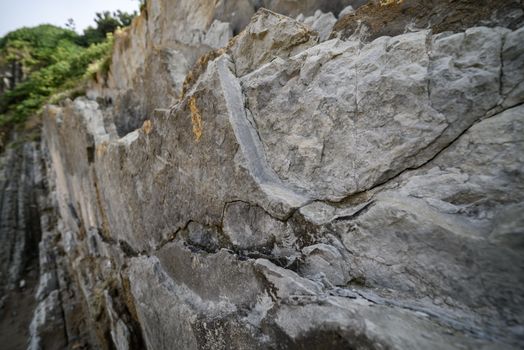
When you go for walks in the countryside or even in local parks, try to observe the natural landscape. Notice if there are any rocks poking out of the ground, or if the soil looks different in different places. Understanding how water, wind, and ice change the Earth's surface is a big part of what a Geologist does.

Become a Geologist

Go to University

When you are older, you will need to go to university to study geology or earth sciences. This is where you become an expert in rocks and the Earth!

To become a Mining Geologist, you will typically need to complete a degree programme at a university. This usually takes three or four years. You'll learn about different types of rocks, how the Earth's plates move, how minerals are formed, and how to use special tools and maps to find them. Some universities even offer courses specifically in 'Mining Geology'.

Get Work Experience

Try to get some holiday jobs or internships with mining companies or geology firms. This lets you see what the job is really like.

Getting work experience during your university holidays is really important. It gives you a chance to apply what you've learned in real-world situations. You might spend time at a mine site, in a laboratory looking at rock samples, or in an office helping with mapping projects. This experience helps you understand the day-to-day tasks of a Mining Geologist and can help you get a job after you graduate.

Start Your Mining Geologist Job

After you finish your studies and get some experience, you can start working as a Mining Geologist, helping to find important minerals for the world!

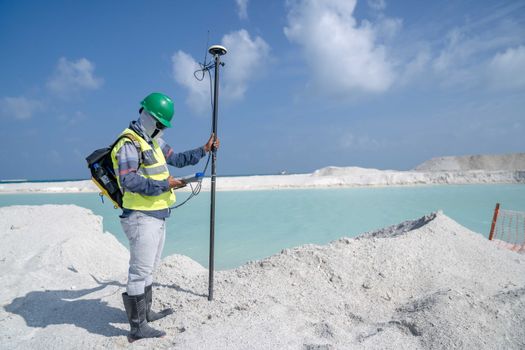
As a qualified Mining Geologist, you could work for mining companies, geological survey organisations, or environmental consultancies. Your work might involve field trips to remote locations, collecting rock and soil samples, using special equipment to map underground areas, and analysing data to decide where to dig. You'll be helping to find the resources we use every day, like the metals in phones and cars!

🎬 Useful Videos

🎯 View Apprenticeships

Explore relevant apprenticeships that can help you kickstart your career in Mining Geologist. Apprenticeships offer hands-on experience and training while earning a wage.

Career Progressions

This page showcases various career options and the pathways to reach them. Each career listed here shares transferable skills and knowledge, making it easier for individuals to transition between them.

Your current career is highlighted to help you see how it fits into the broader landscape of potential career choices. By clicking on any career, you can learn more about it, including the training and education required to pursue it.

Remember, progressing in your career often involves further learning and training. This page provides insights into future career options as well as those that can lead up to your current one.

These career progression decisions are informed by comparing the skills and knowledge needed for different occupations, along with data on how people move between them. Explore the possibilities and discover the exciting journey ahead in your career!

Sample Qualifications

A Mining Geologist primarily applies geological principles and techniques to mineral exploration and extraction, which aligns perfectly with the broader scope of a Geoscientist whose work involves studying the Earth's physical structure, substances, and processes.

How to become

You can get into this job through:

  • a university course
  • an apprenticeship

University

To work as a professional geoscientist you'll need a degree in a relevant subject. Courses often combine theory with fieldwork and practical training.

Degree subjects include:

  • geology
  • geoscience
  • geophysics
  • Earth science

It's becoming more common for new entrants to hold or be working towards postgraduate qualifications like an MSc or PhD.

Integrated postgraduate master's qualifications like a MGeol or MSci can be studied at university. These courses include more independent research and are designed to lead directly onto further study like a PhD.

It's useful to get some work experience through an internship or year in industry placement while you are at university. Your university careers service can help you find opportunities.

Organisations like Geology for Global Development also run projects and placements to help you gain skills.

Entry requirements

You'll usually need:

  • 5 GCSEs at grades 9 to 4 (A* to C), or equivalent, including English, maths and science
  • 2 or 3 A levels, or equivalent, including a science, for a degree
  • a degree in a relevant subject for postgraduate study

More Information

Apprenticeship

You could apply to do a Geoscientist Level 6 Degree Apprenticeship.

You could also apply to do a Geotechnical Engineer Level 7 Integrated Degree Apprenticeship if you already have a first degree in a subject like::

  • engineering
  • science
  • geoscience
  • maths

Entry requirements

You'll usually need:

  • 4 or 5 GCSEs at grades 9 to 4 (A* to C) and A levels, or equivalent, for a higher or degree apprenticeship

More Information

More Information

Career tips

Experience of specialist geological software and computer modelling packages can be an advantage when you are applying for jobs.

Since many employers of geoscientists operate internationally, extra language skills can also be useful.

Further information

You can discover more about careers in geoscience through The Geological Society and Minerals Matter.

Interested in More Career Paths?

Explore other careers or use our AI to discover personalised paths based on your interests.

Stay connected

Join our newsletter to stay up to date on features and releases

Address
Developing Experts Limited
Exchange Street Buildings
35-37 Exchange Street
Norwich
NR2 1DP
UK

Phone
01603 273515

Email
[email protected]

Copyright 2026 Developing Experts, All rights reserved.
