




Creating Career Path...

Finding Further Careers...

Planetary Scientist

View this career for different education levels:

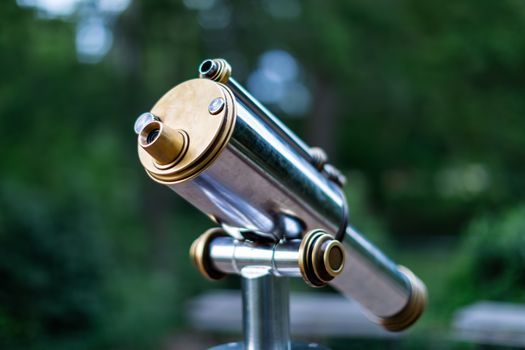
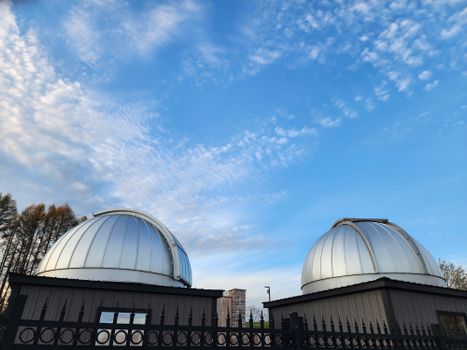
Imagine looking up at the night sky and wondering what it's like on other planets or moons! That's what a Planetary Scientist does. These clever scientists in the UK study planets like Mars, Jupiter, and even our own Earth, as well as moons, asteroids, and comets. They use big telescopes to look at them from far away, or even help design spacecraft that go on amazing journeys to visit them! They want to understand how planets are made, what they're made of, and if there could be life anywhere else in space. It's a bit like being a detective for the universe, solving giant space puzzles! They often work in big universities or special space places, using computers to look at all the information they collect from space. They might also share their discoveries with other scientists and even teach students about the wonders of space.

Planetary Scientist

Flag Media

Please select a reason for flagging this content.

📊 Statistics

Starting Salary

A new Planetary Scientist in the UK might earn around 25,000 to 30,000 pounds per year. This is like getting pocket money every month, but for grown-ups!

Experienced Salary

With more experience, a Planetary Scientist in the UK could earn 35,000 to 50,000 pounds or even more each year. That's enough to buy lots of cool science books!

Number of Jobs

While not as many jobs as some other careers, there are always exciting opportunities for planetary scientists in universities, space agencies, and research centres across the UK. It's a special job for curious people!

🚀 Careers in this path

Flag Media

Please select a reason for flagging this content.

Astronaut

Imagine flying a rocket to the Moon or Mars! Astronauts are super brave explorers who train to live and work in space, studying planets and stars up close.

Flag Media

Please select a reason for flagging this content.

Space Mission Designer

Do you love planning? A Space Mission Designer thinks up amazing journeys for robots to visit other planets, figuring out how to get them there and what cool things they should look for.

Flag Media

Please select a reason for flagging this content.

Meteorite Hunter

Some space rocks fall to Earth! A Meteorite Hunter searches for these special stones from space, which can tell us what other planets are made of. It's like a cosmic treasure hunt!

Exploring the Cosmos at Home

Look Up at the Night Sky

Spend time looking at the stars, the Moon, and any planets you can see from your garden or a local park. Notice how they look different on different nights.

You don't need a super fancy telescope to start! Just using your eyes is a great way to begin your journey into space. Can you spot the 'Big Dipper' or Orion's Belt? What about the bright 'morning star' or 'evening star' (which is actually Venus)? Keep a little notebook to draw what you see and what questions you have about it.

Read Space Books and Watch Documentaries

There are lots of amazing books and TV shows about space. They can teach you about planets, galaxies, and even space travel!

Ask your parents or teachers to help you find age-appropriate books about our solar system, astronauts, and rockets. There are also many fantastic documentaries that show incredible pictures from space missions. Learning about different planets like Mars, Jupiter, and Saturn will help you understand what planetary scientists study.

Do Space-Themed Activities

Try building a model rocket, making a solar system mobile, or drawing your own alien planet. These activities help you think like a scientist!

Making things with your hands helps you understand how they work. You could use craft materials to create models of planets with different colours and textures, or draw what you imagine an alien landscape would look like. You could even try baking a 'planet' cake with different layers to represent its core and crust!

Learning at School

Focus on Science Lessons

Pay close attention in your science classes. You'll learn about important things like gravity, forces, and how matter works, which are all key to understanding planets.

Science lessons at school are super important for a future planetary scientist. They teach you how the world (and the universe!) works. Understanding things like why objects fall to the ground (gravity) or how different materials react to each other (chemistry) are building blocks for understanding planets and moons.

Practise Maths Skills

Maths helps scientists measure things, calculate distances, and understand patterns in space. Being good at maths will be very useful.

Maths is like a secret code that helps scientists understand the universe. You'll use it to work out how far away planets are, how big they are, and how fast rockets need to go. Practising addition, subtraction, multiplication, and division now will make bigger maths problems easier later on.

Join a Science Club or Space Group

If your school has a science club, join it! You might get to do fun experiments or learn even more about space with your friends.

Science clubs are brilliant places to explore your interests beyond normal lessons. You might get to look through a powerful telescope, build small robots, or do experiments that help you understand physics and chemistry better. You could also see if there are local astronomy groups that welcome young explorers.

Future Steps for Aspiring Scientists

Study Science Subjects in Secondary School

When you get to secondary school, choose subjects like Physics, Chemistry, and Maths. These are essential for understanding space.

At secondary school, you'll get to choose specific science subjects. Physics is especially important for planetary science as it deals with how things move and interact in space. Chemistry helps you understand what planets are made of, and strong maths skills will be needed for university studies.

Go to University

After secondary school, you'll usually go to university to study subjects like Planetary Science, Astronomy, Geology, or Physics.

University is where you become an expert! You'll study for a degree, which is like a super-qualification. You might learn about different types of rocks found on other planets, how atmospheres work, or even how to design missions to Mars. This is where you'll really dive deep into what it means to be a planetary scientist.

Work with Other Scientists

Planetary scientists often work in teams at universities, space agencies, or research centres, sharing ideas and making amazing discoveries together.

After your university degree, you could work at places like NASA (in America) or the European Space Agency (ESA) or at universities. You might analyse data from space probes, plan new missions, or even teach others about your discoveries. It's a job where you're always learning and exploring the biggest questions about the universe!

🎬 Useful Videos

🎯 View Apprenticeships

Explore relevant apprenticeships that can help you kickstart your career in Planetary Scientist. Apprenticeships offer hands-on experience and training while earning a wage.

Career Progressions

This page showcases various career options and the pathways to reach them. Each career listed here shares transferable skills and knowledge, making it easier for individuals to transition between them.

Your current career is highlighted to help you see how it fits into the broader landscape of potential career choices. By clicking on any career, you can learn more about it, including the training and education required to pursue it.

Remember, progressing in your career often involves further learning and training. This page provides insights into future career options as well as those that can lead up to your current one.

These career progression decisions are informed by comparing the skills and knowledge needed for different occupations, along with data on how people move between them. Explore the possibilities and discover the exciting journey ahead in your career!

Sample Qualifications

A Planetary Scientist specialises in the study of planets, moons, and planetary systems, which falls directly under the broader discipline of Astronomy, focusing on celestial objects beyond Earth.

How to become

You can get into this job through a university course.

University

You'll need a degree and postgraduate qualification to work as an astronomer. You'll usually need to have achieved a first class honours or 2:1 in your degree.

Relevant subjects include:

  • maths
  • physics
  • astrophysics
  • geophysics
  • astronomy
  • space science

You can also do an extended 4-year degree to get a postgraduate master's qualification. These courses include more independent research and can lead on to a PhD.

Many employers will expect you to have completed, or be working towards, a PhD in your specialist area of interest.

Entry requirements

You'll usually need:

  • 5 GCSEs at grades 9 to 4 (A* to C), or equivalent, including English, maths and science
  • 2 or 3 A levels, or equivalent, including maths and physics
  • a degree in a relevant subject for postgraduate study

More Information

More Information

Career tips

You can join an amateur astronomy group and attend astronomy summer schools to share your interest in space, make connections and get hands-on observation experience.

Further information

You can find out more about careers in astronomy from the Royal Astronomical Society and SpaceCareers.uk.

Interested in More Career Paths?

Explore other careers or use our AI to discover personalised paths based on your interests.

Stay connected

Join our newsletter to stay up to date on features and releases

Address
Developing Experts Limited
Exchange Street Buildings
35-37 Exchange Street
Norwich
NR2 1DP
UK

Phone
01603 273515

Email
[email protected]

Copyright 2026 Developing Experts, All rights reserved.
