
Creating Career Path...

Finding Further Careers...

Blood Donor Technician

View this career for different education levels:

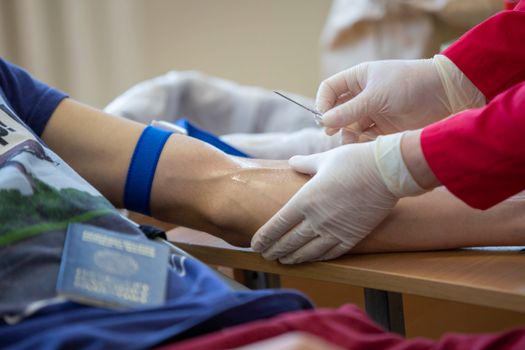
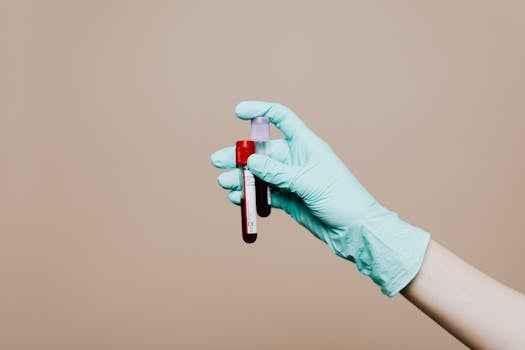
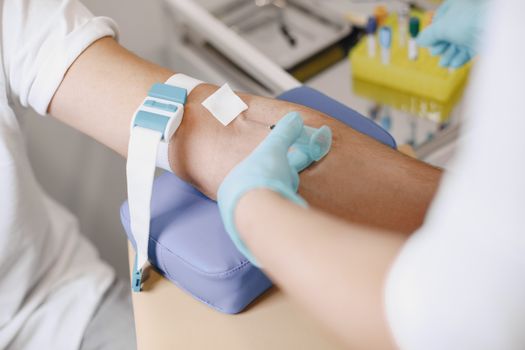
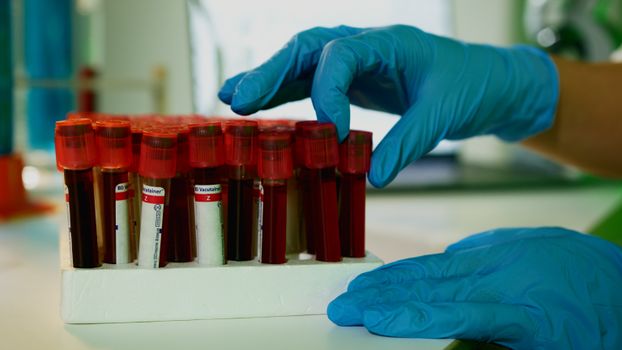
Imagine a superhero who helps save lives every day simply by being kind and careful. That's a bit like a Blood Donor Technician! These special people work in teams at blood donation centres or mobile donation units. Their main job is to welcome brave blood donors and make sure they are comfortable. They carefully check people's information, answer any questions, and make sure everything is ready before a donation. The most important part of their job is taking the blood. They are experts at finding a vein and gently inserting a tiny needle to collect the blood safely. They watch over the donor to make sure they are okay during the donation. Once the blood is collected, they make sure it's labelled correctly and ready to be sent off to help patients. They are super important for keeping our hospitals stocked with blood for emergencies and treatments. It's a job where you get to meet lots of different people and know you are making a big difference.

Blood Donor Technician

Flag Media

Please select a reason for flagging this content.

📊 Statistics

Salary Range

A Blood Donor Technician in the UK can expect to earn between 21,000 and 28,000 a year, especially after gaining some experience. This is a good starting salary for a job that helps so many people!

Working Hours

Most Blood Donor Technicians work around 37.5 hours a week. Sometimes they might work evenings or weekends, as blood donation sessions happen at different times to make it easy for people to donate.

Demand for Role

There are always new opportunities for Blood Donor Technicians in the UK. Many thousands of blood donations are needed every day, so there is a constant need for friendly people to help collect it.

🚀 Careers in this path

Flag Media

Please select a reason for flagging this content.

Phlebotomist Assistant

Helps grown-ups prepare to give blood, making sure they are comfortable and answering their questions. They might help with checking names and making sure everything is ready for the special blood collection.

Flag Media

Please select a reason for flagging this content.

Blood Bank Helper

Works in the place where collected blood is kept safe. They might help to label the blood bags correctly, store them in special fridges, and keep a good record of where each bag is, so it can be found quickly when needed.

Flag Media

Please select a reason for flagging this content.

Hospital Support Worker (Blood Samples)

Assists nurses and doctors in a hospital when they need to take small blood samples from patients. They help get the equipment ready and make sure the patient feels calm and happy before the nurse takes the sample for tests.

Learning About Giving Blood

Ask Questions

Talk to grown-ups, like your teachers or family, about what a Blood Donor Technician does. Ask them why giving blood is important.

Blood Donor Technicians are super important because they help collect blood that is used to help people who are very ill or have had an accident. The blood they collect can save lives! Asking questions is a great way to learn about how they do this and why their job helps so many people every day.

Watch Videos

Look for friendly videos online (with a grown-up's help!) that show how blood donation works and what happens at a blood donation centre.

There are many videos that show the blood donation process in a simple way. You can see how donors are welcomed, how the technician prepares everything, and how they make sure the donor is comfortable. Watching these videos can help you understand the different parts of the job and how technicians make sure everything is safe and easy for donors.

Visit a Doctor's Office or Hospital (virtually)

You could ask a grown-up if there are any virtual tours of hospitals or clinics where blood is used, to see where the blood goes after it's donated.

While you might not be able to visit a real blood donation clinic yet, many hospitals and clinics offer virtual tours or online information that shows how blood is used. This can help you understand the 'journey' of donated blood from the moment it's collected by a technician to when it helps a patient. It really shows how important the technician's job is!

Growing Up and Learning More

Do Well in Science

Pay attention in your science lessons at school, especially when you learn about the human body and how blood works. It's super interesting!

Understanding how the human body works, especially the circulatory system and blood, is really helpful for a Blood Donor Technician. Learning about different blood types, how blood carries oxygen, and how important it is for our bodies will give you a great head start. Science lessons will be your friend!

Practice Being Kind and Helpful

Blood Donor Technicians need to be very kind and make people feel safe. Practice being friendly and helpful to your friends and family.

People giving blood might be a little bit nervous, so a Blood Donor Technician needs to be very good at making them feel calm and happy. Being kind, patient, and good at talking to people are very important skills. You can practice these by helping others, listening carefully, and always being polite.

Learn About Staying Clean and Safe

Understand why it's important to wash your hands and keep things clean to stop germs from spreading. This is a big part of the job!

Blood Donor Technicians always have to make sure everything is super clean to keep both the donor and the blood safe from germs. Learning about hygiene, like why we wash our hands, how to clean surfaces, and why we use special clean tools, is a fundamental part of healthcare. You can learn about this by helping with chores at home and understanding why being tidy and clean is important.

Becoming a Blood Donor Technician

Finish School

You'll need to work hard at school and get good grades, especially in science, to go on to college or special training.

To become a Blood Donor Technician, you usually need to complete secondary school with good results. Subjects like Biology, Chemistry, and Health & Social Care can be particularly useful as they provide a strong foundation for understanding the human body and healthcare practices. Good grades will help you get into the next stage of your education.

Get Special Training

After school, you'll go to a college or a special training centre to learn all the important things about collecting blood safely.

To become a Blood Donor Technician, you will typically need to complete a specialist course. This could be a BTEC in Health and Social Care, an Access to Higher Education Diploma in Health, or a specific Phlebotomy course. These courses teach you everything from how to prepare a donor and collect blood, to important safety rules and how to look after the equipment. You'll learn practical skills in a supervised setting.

Start Your First Job

Once you've finished your training, you can apply for jobs at hospitals or blood donation centres to start helping people!

After getting your qualifications, you can start looking for entry-level positions as a Blood Donor Technician or Phlebotomist. Many roles are available within the NHS Blood and Transplant service, hospitals, or private clinics. You will often begin with supervised practice, working alongside experienced technicians, which helps you gain confidence and apply everything you've learned in a real-world setting. This is where you really start making a difference!

🎯 View Apprenticeships

Explore relevant apprenticeships that can help you kickstart your career in Blood Donor Technician. Apprenticeships offer hands-on experience and training while earning a wage.

Career Progressions

This page showcases various career options and the pathways to reach them. Each career listed here shares transferable skills and knowledge, making it easier for individuals to transition between them.

Your current career is highlighted to help you see how it fits into the broader landscape of potential career choices. By clicking on any career, you can learn more about it, including the training and education required to pursue it.

Remember, progressing in your career often involves further learning and training. This page provides insights into future career options as well as those that can lead up to your current one.

These career progression decisions are informed by comparing the skills and knowledge needed for different occupations, along with data on how people move between them. Explore the possibilities and discover the exciting journey ahead in your career!

Sample Qualifications

A Blood Donor Technician primarily works in a laboratory or medical setting, performing technical tasks related to collecting, processing, and preparing blood samples, which aligns well with the duties of a Laboratory technician.

How to become

You can get into this job through:

  • a university course
  • a college course
  • an apprenticeship
  • applying directly

University

You can do a foundation degree, higher national diploma or degree in a scientific subject to work as a laboratory technician. 

Subjects include:

  • biomedical science
  • environmental science
  • forensic science
  • materials science
  • pharmacy
  • biology, chemistry or physics

Entry requirements

You'll usually need:

  • 5 GCSEs at grades 9 to 4 (A* to C), or equivalent, including English, maths and science
  • 3 A levels or equivalent

More Information

College

You could take a college course to help improve your chances of finding a trainee lab assistant position.

You could do a course such as:

  • applied science
  • environmental science
  • chemistry, physics or biology
  • T Level in Science

Entry requirements

Entry requirements for these courses vary.

  • 4 or 5 GCSEs at grades 9 to 4 (A* to C), or equivalent, including English and maths for a T Level

More Information

Apprenticeship

You could apply for a Laboratory Technician Level 3 Advanced Apprenticeship or a Technician Scientist Level 5 Higher Apprenticeship.

These apprenticeships can take between 2 and 3 years to complete.

Entry requirements

You'll usually need:

  • 5 GCSEs at grades 9 to 4 (A* to C), or equivalent, including English and maths, for an advanced apprenticeship
  • 4 or 5 GCSEs at grades 9 to 4 (A* to C) and A levels, or equivalent, for a higher or degree apprenticeship

More Information

Direct Application

You can apply for work as a lab technician if you have experience in a:

  • university research lab
  • clinical laboratory in a hospital
  • manufacturing or industrial research facility
  • school or college science department

More Information

Professional and industry bodies

You can register with a professional body linked to your area of work for career development and training opportunities.

Further information

You can find out more about becoming a laboratory technician from the Science Council and Health Careers.

Interested in More Career Paths?

Explore other careers or use our AI to discover personalised paths based on your interests.

Stay connected

Join our newsletter to stay up to date on features and releases

Address
Developing Experts Limited
Exchange Street Buildings
35-37 Exchange Street
Norwich
NR2 1DP
UK

Phone
01603 273515

Email
[email protected]

Copyright 2026 Developing Experts, All rights reserved.
