

Creating Career Path...

Finding Further Careers...

Royal Air Force

View this career for different education levels:

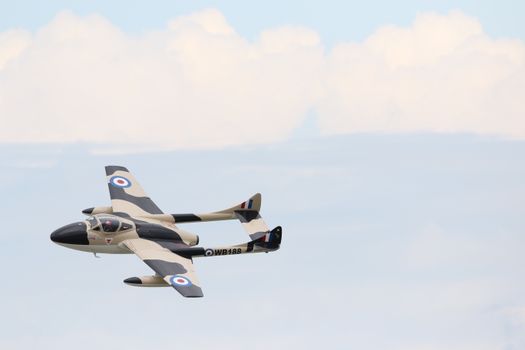
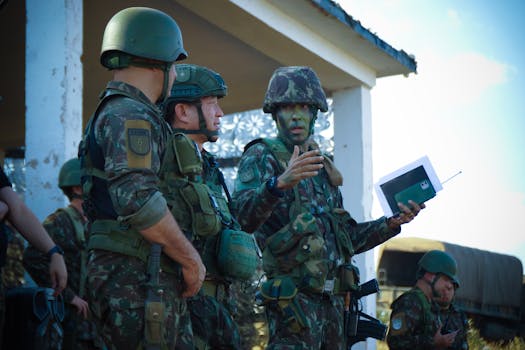
A career as a Royal Air Force (RAF) Officer in the UK is a demanding yet highly rewarding path, offering leadership opportunities across a vast array of specialisms. As an officer, you will be responsible for leading teams, making critical decisions, and upholding the values of the RAF while contributing to national and international security. Roles are incredibly diverse, ranging from flying fast jets as a Pilot or navigating aircraft as a Weapon Systems Officer, to managing complex engineering projects, developing cutting-edge technology, leading logistical operations, or providing critical intelligence analysis. You could find yourself stationed anywhere in the UK or deployed overseas, working alongside allied forces. The training is rigorous, focusing on developing leadership, strategic thinking, and resilience, alongside the specific technical skills required for your chosen specialisation. Beyond the core duties, an RAF Officer career often involves extensive travel, continuous professional development, and opportunities to participate in humanitarian aid missions, global exercises, and operational deployments. It is a career built on teamwork, discipline, and a commitment to service, offering excellent benefits, including a competitive salary, subsidised accommodation, and a comprehensive pension scheme, alongside unparalleled opportunities for personal and professional growth.

Royal Air Force

Flag Media

Please select a reason for flagging this content.

📊 Statistics

Starting Salary

Upon commissioning as an RAF Officer, a graduate typically starts on a salary of approximately 32,000 to 39,000 pounds per annum, depending on specific role and qualifications. This increases significantly with experience and promotion.

Number of Personnel

The Royal Air Force currently has around 33,000 regular personnel and approximately 3,000 reserve personnel. This figure includes a wide range of roles from pilots and engineers to logistics and intelligence officers.

Officer Entry Age

The typical age range for applying to become an RAF Officer is between 17.5 and 37 years old, though some specialist roles may have different upper age limits.

🚀 Careers in this path

Flag Media

Please select a reason for flagging this content.

RAF Pilot

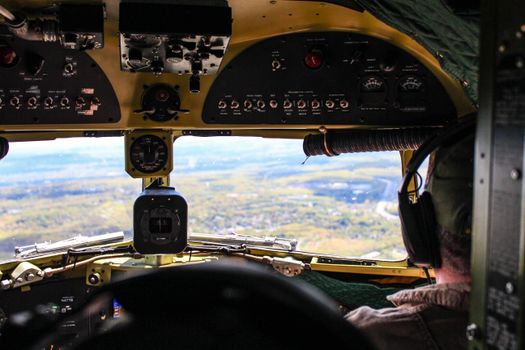
Pilots fly various aircraft types, including fast jets, transport aircraft, and helicopters, on operations and training missions globally. It requires exceptional physical and mental fitness, strong leadership skills, and the ability to perform under pressure.

Flag Media

Please select a reason for flagging this content.

RAF Air Traffic Controller

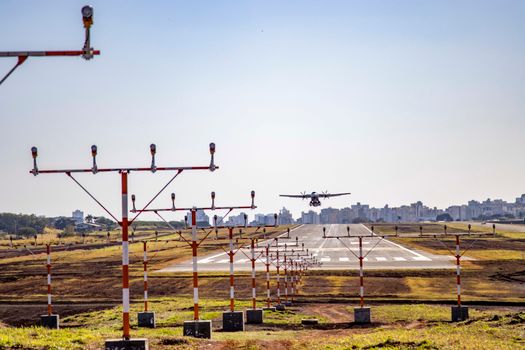
Air Traffic Controllers manage the movement of aircraft in the air and on the ground, ensuring safety and efficiency at RAF airfields and in controlled airspace. This role demands excellent spatial awareness, concentration, and clear communication skills.

Flag Media

Please select a reason for flagging this content.

RAF Cyberspace Communication Specialist

Cyberspace Communication Specialists are responsible for maintaining and protecting the RAF's vital communication and IT systems, both on the ground and deployed globally. This involves networking, cybersecurity, and ensuring secure data transfer for operational success.

Initial Preparation and Application

Meet Eligibility Criteria

Ensure you meet the essential academic, physical, and nationality requirements before applying.

To apply as an RAF Pilot, you typically need to be a UK citizen, aged between 17.5 and 37 years old (on entry to Officer Training). Academic requirements usually include at least five GCSEs (grades 9-4/A*-C), including English Language and Maths, and two A-Levels (grades A*-E) or equivalent. Crucially, you must also pass stringent medical and fitness tests, including specific vision requirements and a minimum standard for the Multi-Stage Fitness Test (Bleep Test).

Research and Experience

Thoroughly understand the role and gain relevant experience or knowledge to strengthen your application.

Spend time researching the RAF and the pilot role specifically. Understand the different aircraft types, missions, and the lifestyle. Attending RAF careers events, air shows, or speaking to current serving personnel can provide invaluable insight. Consider joining an Air Cadet squadron or gaining some flying experience (even glider or light aircraft) to demonstrate genuine interest and aptitude, although this is not a mandatory requirement.

Complete Online Application

Submit a comprehensive online application form detailing your qualifications and motivations.

The first formal step is to complete the detailed online application form on the RAF Recruitment website. This form will ask for your personal details, academic history, work experience, and most importantly, your motivations for wanting to join the RAF as a pilot. Be honest and articulate your reasons clearly, demonstrating your understanding of the commitment required. Double-check all information for accuracy before submitting.

Selection Process

Initial Tests and Interview

Undertake a series of aptitude tests and an interview at a local Armed Forces Careers Office (AFCO).

After your online application is accepted, you'll be invited to an AFCO for initial assessments. These typically include computer-based aptitude tests covering areas like numeracy, verbal reasoning, and spatial awareness, along with a structured interview to assess your communication skills, motivation, and understanding of the RAF and the pilot role. This stage is designed to filter candidates who meet the basic cognitive and personal requirements.

Aircrew Selection Centre (ASC)

Attend a multi-day assessment at the RAF Aircrew Selection Centre to evaluate your suitability for aircrew roles.

The ASC at RAF Cranwell is a critical stage. Over several days, you will undergo a comprehensive series of psychological assessments, advanced aptitude tests (specifically designed for aircrew, testing coordination, reaction time, and decision-making under pressure), medical examinations (including eye tests, hearing, and general health), and a formal interview with an Aircrew Selection Officer. This stage is highly competitive and designed to identify candidates with the innate abilities required for flying.

Fitness and Medical Examination

Pass rigorous physical fitness tests and a full medical examination to confirm you meet RAF standards.

Your physical health and fitness are paramount for an RAF Pilot. You will undergo a thorough medical examination to ensure you are fit for service and meet the specific medical requirements for aircrew, which are stricter than for ground roles. This includes checks on vision, hearing, lung function, and general physical condition. You will also be required to pass the RAF Physical Fitness Test, which typically includes shuttle runs (bleep test), press-ups, and sit-ups, demonstrating your physical robustness.

Officer and Flying Training

Officer Training at RAF Cranwell

Complete initial officer training to develop leadership, teamwork, and military skills.

Upon successful selection, you will commence Initial Officer Training (IOT) at the RAF College Cranwell. This challenging course, typically around 24 weeks long, focuses on transforming civilians into military officers. It covers leadership, command, teamwork, military ethos, drill, and physical fitness. You'll learn about RAF values, history, and the responsibilities of being an officer. Passing IOT is essential before progressing to flying training.

Elementary Flying Training (EFT)

Begin basic flying instruction on a light aircraft to learn fundamental flying techniques.

After IOT, you'll proceed to Elementary Flying Training (EFT), usually at Cranwell or Barkston Heath, flying aircraft like the Grob Tutor. This stage introduces you to the basics of flight, including take-offs, landings, navigation, and basic aerobatics. You'll work towards your first solo flight and develop the core skills and airmanship required for more advanced flying. Your performance here determines your suitability for more complex aircraft types.

Advanced Flying Training & Specialisation

Undertake specialised flying training based on your chosen stream (e.g., Fast Jet, Multi-Engine, Rotary).

Following EFT, you'll be streamed into one of the main pilot specialisations: Fast Jet, Multi-Engine, or Rotary (helicopters), based on your aptitude and RAF requirements. Each stream involves extensive training on progressively more advanced aircraft (e.g., Hawk T2 for Fast Jet, Phenom T1 for Multi-Engine, Juno/Jupiter for Rotary). This phase culminates in earning your 'Wings' and being assigned to an Operational Conversion Unit (OCU) where you will learn to fly the specific aircraft you will operate in your first frontline squadron, mastering its systems and operational role.

🎬 Useful Videos

🎯 View Apprenticeships

Explore relevant apprenticeships that can help you kickstart your career in Royal Air Force. Apprenticeships offer hands-on experience and training while earning a wage.

Career Progressions

This page showcases various career options and the pathways to reach them. Each career listed here shares transferable skills and knowledge, making it easier for individuals to transition between them.

Your current career is highlighted to help you see how it fits into the broader landscape of potential career choices. By clicking on any career, you can learn more about it, including the training and education required to pursue it.

Remember, progressing in your career often involves further learning and training. This page provides insights into future career options as well as those that can lead up to your current one.

These career progression decisions are informed by comparing the skills and knowledge needed for different occupations, along with data on how people move between them. Explore the possibilities and discover the exciting journey ahead in your career!

Sample Qualifications

While 'Royal Air Force' is a distinct branch of the UK armed forces, 'Royal Navy officer' is the closest available option that represents a commissioned officer role within the British military, involving leadership and command duties similar to those in the RAF but within a naval context. None of the other options cover a general military service role.

How to become

You can get into this job through:

  • a university course
  • applying directly

University

If you have a degree, you can apply through the Direct Graduate Entry route.

For some officer roles you'll need specific qualifications and experience, for example:

  • a degree in science, technology, engineering or maths (STEM) to be an air engineering officer
  • an approved degree in medicine to join as a medical officer

You can start applying before you finish your studies, as the process can take up to 6 months. If you're accepted, you'll attend Britannia Royal Naval College in Dartmouth, Devon, to begin officer training.

Entry requirements

You'll usually need:

  • 2 to 3 A levels, or equivalent, for a degree

More Information

Volunteering

You can join the Royal Navy Reserve to get some experience of what life is like in the service, and to learn new skills at the same time.

You'll need to:

  • be between 18 and 42
  • commit to basic training which includes a 2-week course at Britannia Royal Naval College in Dartmouth

If you're between 12 and 18 years old, you can join the Sea Cadets.

Direct Application

You can apply directly for officer training.

You'll need a minimum of:

Age limits vary depending on which officer role you're interested in.

If your application is accepted, you'll be invited to talk to someone at your local armed forces careers office about what you want to do. You'll also have a medical and fitness check.

There will be further assessments and interviews to complete and if you're successful, you'll be offered a place on a full officer training programme.

More Information

Career tips

You will need to pass physical fitness assessments, including swimming, to be accepted into the Royal Navy. Get fit to Join has information on how to check your current fitness and how to improve to the level required.

Further information

You'll find more details about how to become an officer from Royal Navy Careers.

Interested in More Career Paths?

Explore other careers or use our AI to discover personalised paths based on your interests.

Stay connected

Join our newsletter to stay up to date on features and releases

Address
Developing Experts Limited
Exchange Street Buildings
35-37 Exchange Street
Norwich
NR2 1DP
UK

Phone
01603 273515

Email
[email protected]

Copyright 2026 Developing Experts, All rights reserved.
