


Creating Career Path...

Finding Further Careers...

RAF

View this career for different education levels:

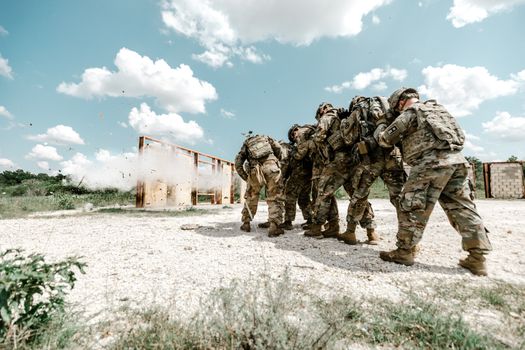
The RAF stands for the Royal Air Force. It is the United Kingdom's aerial warfare force, meaning they use aircraft to protect the country and its interests. Being part of the RAF means you could be involved in many different jobs, from flying powerful jets and helicopters, to fixing them, or even helping with important missions on the ground. You might be a pilot, a ground crew engineer making sure planes are safe to fly, or a logistics specialist ensuring supplies get to where they're needed. It is a very varied career path, offering roles in engineering, communications, air traffic control, and even medical support. You would receive excellent training and have the chance to travel and work as part of a highly skilled team. Working in the RAF is about serving your country and being ready to protect it. It requires discipline, teamwork, and a willingness to learn and adapt. You would be part of a strong community, learning valuable life skills and potentially seeing different parts of the world. It is a challenging but very rewarding career, with opportunities for constant personal and professional development.

RAF

Flag Media

Please select a reason for flagging this content.

📊 Statistics

Starting Salary

As an RAF Airman or Airwoman, you could start on around 20,600 pounds a year during basic training, rising to around 25,200 pounds once you complete training. Officers start on around 31,300 pounds, rising to 37,400 pounds.

RAF Personnel Numbers

The Royal Air Force currently has about 32,000 regular personnel and around 2,500 reserves, working in various roles across the UK and overseas.

Age Range for Joining

You can typically apply to join the RAF from age 15 and 9 months, and start training once you turn 16. The upper age limit varies by role, but for most, it's around 30 to 32 for officers and up to 55 for airmen and airwomen, though some specialist roles may differ.

🚀 Careers in this path

Flag Media

Please select a reason for flagging this content.

RAF Pilot

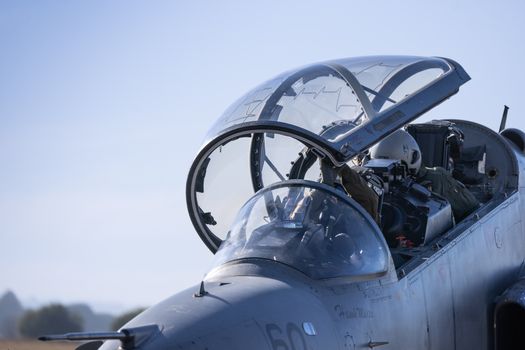
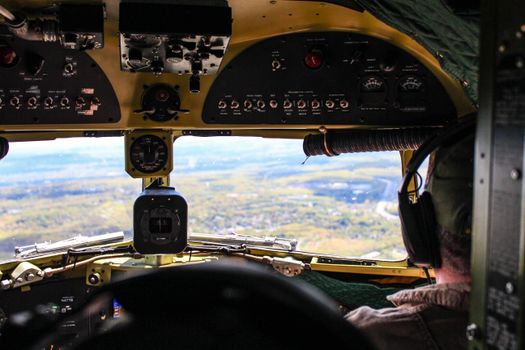
Being an RAF Pilot means you get to fly awesome aircraft like fighter jets or transport planes. You'd be trained to fly safely and skillfully, often going on missions to protect our country or deliver important supplies. It's a job that needs lots of training and a real passion for flying.

Flag Media

Please select a reason for flagging this content.

RAF Engineer

As an RAF Engineer, you would be responsible for making sure all the amazing aircraft and equipment work perfectly. You could specialise in electronics, mechanics, or even software. Your job would be to fix things, carry out checks, and help design new technology to keep the RAF flying safely and effectively.

Flag Media

Please select a reason for flagging this content.

RAF Air Traffic Controller

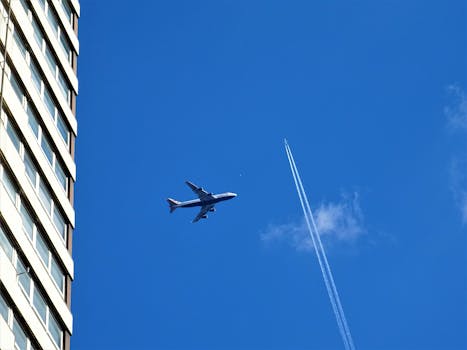
An RAF Air Traffic Controller has a really important job guiding planes safely through the sky and on the ground at airfields. You'd use radar and radio to communicate with pilots, telling them when and where to fly, take off, and land. It's a job that needs excellent communication skills and the ability to stay calm and focused.

Build a Strong Foundation (Age 13-16)

Excel in Academics

Focus on getting good grades in school, especially in Maths, Physics, and English, as these subjects are really important for understanding how planes work and for communication.

To become an RAF Pilot, you'll need to achieve strong GCSEs (or equivalent) across a range of subjects. Aim for grades 9-5 (A*-C) in Maths, English Language, and at least one science subject like Physics. These subjects provide the fundamental knowledge base required for the technical aspects of aviation and the rigorous training you'll undertake. While not strictly mandatory, choosing subjects like Geography or Design and Technology can also be beneficial for developing spatial awareness and problem-solving skills.

Stay Physically Fit

Keep yourself active and healthy by playing sports, running, or doing other exercises. Being fit is essential for a pilot's job.

The RAF demands a high level of physical fitness from its pilots. This means engaging in regular aerobic exercise (like running, swimming, or cycling) and strength training to maintain overall health and stamina. Good eyesight and hearing are also crucial, so look after your health. Participating in team sports can also help develop teamwork and leadership skills, which are vital in the RAF.

Join Youth Organisations

Consider joining the Air Cadets or Combined Cadet Force (CCF) to learn about aviation, flying, and military life, and make new friends.

Joining organisations like the Air Cadets (Air Training Corps - ATC) or the Combined Cadet Force (CCF) at school offers fantastic opportunities. You can experience flying in gliders and powered aircraft, learn about navigation, gain leadership skills, and understand more about the RAF culture. These experiences not only look great on your application but also help you decide if a career in the RAF is truly for you.

Advanced Preparation (Age 16-18+)

Achieve Strong A-Levels

Continue your studies and aim for good grades in A-Levels, especially in Maths and Physics, which are preferred subjects for pilot training.

To apply for an RAF Pilot role as an officer, you will typically need at least two A-Levels (or equivalent Level 3 qualifications) at grade C or above, including Maths and/or Physics. Some candidates may pursue a degree, but A-Levels are the common entry route directly after college. Strong academic performance at this stage demonstrates your ability to handle complex information and technical training.

Gain Flying Experience (Optional)

If possible, try to get some flying experience, like gliding lessons or introductory flights. This isn't essential but shows your passion.

While not a mandatory requirement for joining the RAF, any prior flying experience, such as completing a gliding scholarship, taking introductory flying lessons, or even using flight simulators, can be very beneficial. It demonstrates genuine enthusiasm for aviation and can help you understand the basics of flight controls and airmanship. Even without formal lessons, spending time understanding aircraft controls and aerodynamics can be helpful.

Research and Application

Start researching the RAF website for specific pilot entry requirements and how to apply. Attend open days if you can.

Visit the official RAF recruitment website (raf.mod.uk/recruitment) to find the most up-to-date entry requirements, eligibility criteria, and application process. Pay close attention to age limits, medical standards, and academic qualifications. Attending RAF careers events or open days can provide valuable insights and allow you to speak directly with serving personnel. Begin preparing your application, focusing on highlighting your academic achievements, fitness, leadership potential, and passion for aviation.

The Selection Process and Training

Pass Selection Tests

You'll go through various tests, including aptitude tests (to check your natural abilities for flying), medical checks, and interviews.

The RAF selection process is rigorous. It includes a comprehensive medical examination to ensure you meet the stringent health requirements for pilots (e.g., eyesight, hearing, cardiovascular health). You'll also undertake aptitude tests, such as the Officer and Aircrew Selection Centre (OASC) tests, which assess your hand-eye coordination, spatial reasoning, problem-solving abilities, and other core skills vital for pilots. Finally, interviews will assess your motivation, leadership potential, and understanding of the RAF and the pilot role.

Officer Training

If successful, you'll complete initial officer training at RAF Cranwell, where you'll learn leadership, discipline, and military skills.

All RAF Pilots are commissioned officers. This means that if you pass selection, your first step will be to complete Initial Officer Training (IOT) at RAF Cranwell in Lincolnshire. This intensive course teaches you the fundamental skills of leadership, discipline, teamwork, and military knowledge, preparing you for a career as an officer in the Royal Air Force. It's a challenging but rewarding period where you'll develop resilience and camaraderie.

Pilot Training

After officer training, you'll begin specialised pilot training, learning to fly different aircraft, from basic trainers to advanced jets or helicopters.

Upon successful completion of IOT, you'll embark on extensive and world-class pilot training. This multi-stage process typically starts with elementary flying training (EFT) on basic propeller aircraft, progressing to advanced jet trainers or multi-engine aircraft, depending on the stream (fast jet, multi-engine, or rotary wing) you are selected for. This training is demanding, involving both ground school academics and practical flying, and will teach you everything from basic flight manoeuvres to complex operational procedures, culminating in you earning your 'wings'.

🎬 Useful Videos

🎯 View Apprenticeships

Explore relevant apprenticeships that can help you kickstart your career in RAF. Apprenticeships offer hands-on experience and training while earning a wage.

Career Progressions

No career progressions found for RAF

Sample Qualifications

The term 'RAF' refers to the Royal Air Force, and 'RAF officer' is the most encompassing and direct official job title from the list that represents a career within the Royal Air Force, covering various roles requiring officer qualifications.

How to become

You can get into this job by applying directly.

Direct Application

You can apply directly for roles as an RAF officer.

Although entry requirements vary for each role, you'll typically need a minimum of:

If your application is accepted, you'll be invited to talk to an adviser at your local armed forces careers office about what you want to do. You'll also take an aptitude test.

If you're successful, you'll be invited to attend the Officers and Aircrew Selection Centre at RAF College, Cranwell in Lincolnshire. You'll take part in a one-day selection process which includes tests for aptitude, initiative and fitness. You'll then have an interview and a medical examination.

RAF Reserve

You can join the RAF Reserve in some roles as a part-time officer. This will give you experience of what life is like in the Royal Air Force, and you'll learn new skills at the same time.

You'll need to:

  • be between 18 and 54
  • commit to at least 27 days a year
  • attend a 2-week residential training course each year, though this may not always be the case

Air Cadets

If you're between 13 and 17 years old, you can join the Air Cadets.

The skills you learn and experiences you gain will benefit you whatever career path you choose. Cadets have many opportunities, including UK and overseas camps, leadership courses and air experience flights.


More Information

Career tips

Most RAF officers join as direct entrants and receive specialist officer training rather than doing an apprenticeship.

Visit RAF Recruitment for information on the apprenticeships and training and development that the RAF does offer.

Further information

You'll find more details about how to become an officer through RAF Recruitment.

Interested in More Career Paths?

Explore other careers or use our AI to discover personalised paths based on your interests.

Stay connected

Join our newsletter to stay up to date on features and releases

Address
Developing Experts Limited
Exchange Street Buildings
35-37 Exchange Street
Norwich
NR2 1DP
UK

Phone
01603 273515

Email
[email protected]

Copyright 2026 Developing Experts, All rights reserved.