


Creating Career Path...

Finding Further Careers...

Seismologist

View this career for different education levels:

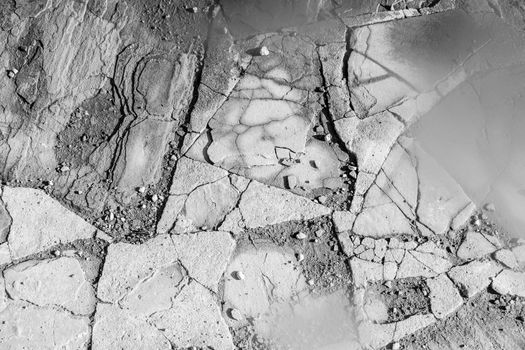
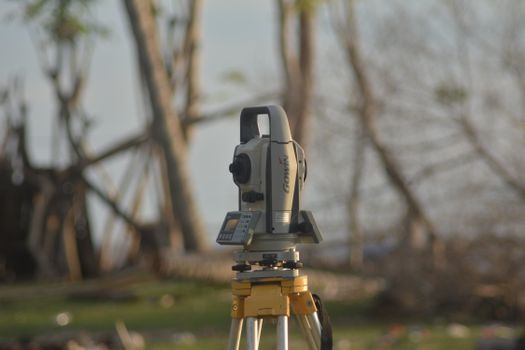
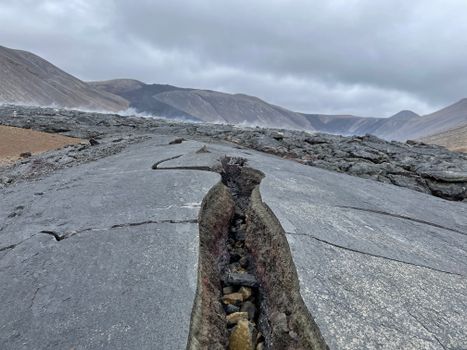
A Seismologist is like a detective for the Earth's hidden movements! Their main job is to study earthquakes and the waves they create, called seismic waves. They use special equipment to measure these waves, which helps them understand what's happening deep inside our planet. This can involve setting up instruments in the field, analysing complex data on computers, and creating maps of the Earth's interior. Seismologists also help us understand why earthquakes happen, where they might happen next, and how they could affect buildings and people, which is really important for safety. Beyond just earthquakes, Seismologists also use seismic waves to explore for natural resources like oil and gas, or to check the stability of ground for big construction projects. They might work in universities teaching students, in research centres trying to discover new things about the Earth, or for companies that need to understand the ground beneath their feet. It's a job that requires a lot of scientific thinking, problem-solving, and often involves using advanced technology.

Seismologist

Flag Media

Please select a reason for flagging this content.

📊 Statistics

Starting Salary Range

For a newly qualified Seismologist in the UK, you might expect to earn between 25,000 to 35,000 pounds per year.

Experienced Salary Range

With more experience, a Seismologist in the UK could earn from 35,000 to 60,000 pounds or more annually, especially in senior roles or specific industries.

Number of Positions

While there isn't one exact number for 'Seismologists' specifically, related roles in geophysics and earth science in the UK are in the hundreds, with opportunities arising in universities, research centres, and industries like oil and gas, and environmental consultancies.

🚀 Careers in this path

Flag Media

Please select a reason for flagging this content.

Geophysicist

Geophysicists study the Earth's physical processes, like earthquakes and volcanoes, using scientific methods and special equipment. They might look for oil, gas, or minerals, or help understand natural hazards.

Flag Media

Please select a reason for flagging this content.

Volcanologist

Volcanologists are scientists who study volcanoes. They research how and why volcanoes erupt, monitor their activity, and predict when they might erupt to help keep people safe.

Flag Media

Please select a reason for flagging this content.

Earthquake Engineer

Earthquake engineers design and build structures, like buildings and bridges, that can withstand earthquakes. They figure out how to make things strong enough so they don't fall down when the ground shakes.

Build Your Foundations

Excel in Science and Maths

Focus on your science subjects like Physics and Chemistry, and definitely Maths! These are super important for understanding how the Earth works and for analysing data later on.

In secondary school (Years 7-11), try to take all three sciences (Biology, Chemistry, Physics) if possible, and aim for strong grades in Maths. These subjects will give you the core knowledge you need for higher education and to understand the complex principles behind seismology. Even topics like waves, forces, and data analysis in these subjects will be directly relevant.

Explore Geology and Geography

Learning about the Earth's structure, rocks, and landscapes through subjects like Geography or Geology can give you a great head start in understanding seismology.

If your school offers Geology, it's an excellent choice. If not, Geography will cover topics like plate tectonics, volcanoes, and earthquake zones, which are fundamental to seismology. Reading books or watching documentaries about natural disasters and the Earth's interior can also spark your interest and build your knowledge.

Join Science Clubs or Projects

Get involved with science clubs, competitions, or projects at school. This is a fun way to explore science outside of lessons and meet other curious minds.

Many schools have science clubs, or you might find local community groups that do science-based activities. Participating in a STEM fair, building a science project, or even just exploring science experiments at home can deepen your understanding and show you how exciting science can be in real life. These activities also help you develop problem-solving and teamwork skills.

Higher Education & Specialisation

A-Levels or Equivalent

Choose A-levels or equivalent qualifications that focus on science and maths. Good choices include Maths, Further Maths, Physics, Chemistry, and Geology.

Most universities will require strong A-level grades in at least two science subjects, usually Maths and Physics, for a Geophysics or Earth Sciences degree. Geology is highly recommended if available, as it provides a direct link to the field. Other relevant subjects like Chemistry or Computer Science can also be beneficial, especially for data analysis aspects of seismology. Check specific university entry requirements carefully.

University Degree

You'll need a university degree in a relevant subject like Geophysics, Geology, Earth Sciences, or Physics.

Look for Bachelor's degrees (BSc) in subjects like Geophysics, Geology, Earth Science, or Physics with a specialisation in geophysics. These courses will teach you about the Earth's structure, plate tectonics, seismic waves, and how to use scientific instruments. Some universities offer specific 'Geophysics with Seismology' courses. You'll learn to use mathematical models and computational tools to analyse seismic data.

Postgraduate Study (Recommended)

For many specialist seismologist roles, especially in research, a Master's (MSc) or PhD is highly recommended.

A Master's degree in Seismology or Geophysics allows you to specialise and gain deeper knowledge and practical skills in seismic data acquisition, processing, and interpretation. If you're interested in research or a university career, a PhD (Doctor of Philosophy) is usually required. This involves conducting original research and contributing new knowledge to the field, often focusing on a specific area of seismology.

Gain Experience & Career

Internships and Fieldwork

Try to get some work experience or join fieldwork expeditions during your studies. This gives you real-world experience and helps you see what the job is really like.

Many university courses include fieldwork components, which are invaluable for hands-on experience. Look for summer internships with geological surveys, oil and gas companies (who use seismology for exploration), environmental consultancies, or research institutions. These experiences are crucial for building your CV, making connections, and applying the theoretical knowledge you've gained in a practical setting.

Develop Technical Skills

Learn to use specialist software and data analysis tools. Seismologists often work with complex computer programs.

Proficiency in programming languages like Python or MATLAB, along with experience using specialist seismic processing software (e.g., Seismic Unix, OpendTect), is highly valued. You'll also need strong data interpretation skills and the ability to work with large datasets. Universities often provide training in these areas, but extra self-study or online courses can give you an edge.

Job Search and Specialise

Look for entry-level positions in relevant industries or research institutions. You can specialise in areas like earthquake prediction, oil and gas exploration, or civil engineering.

Seismologists can work in various sectors: government geological surveys (like the British Geological Survey), universities (research and teaching), oil and gas companies, environmental consultancies, and civil engineering firms (assessing ground stability for construction). Networking, attending industry conferences, and tailoring your CV to specific job requirements will be important for securing a role. Many start in junior geophysicist or research assistant positions.

🎯 View Apprenticeships

Explore relevant apprenticeships that can help you kickstart your career in Seismologist. Apprenticeships offer hands-on experience and training while earning a wage.

Career Progressions

No career progressions found for Seismologist

Sample Qualifications

How to become

You can get into this job through:

  • a university course
  • working towards this role

University

You can do a degree or postgraduate qualification in:

  • geology
  • geography
  • Earth science
  • geophysics
  • environmental science
  • computer science

Many employers will expect you to be working towards a PhD on a relevant research project.

Entry requirements

You'll usually need:

  • 5 GCSEs at grades 9 to 4 (A* to C), or equivalent, including English, maths and science
  • 2 or 3 A levels, or equivalent, including a science, for a degree
  • a degree in a relevant subject for postgraduate study

More Information

Work

You could start as a PhD research assistant, for example in a university Earth sciences or geophysics engineering department. With further training and experience you could become a seismologist.

More Information

Further information

You can discover more about working in seismology from The Geological Society and the British Geological Survey.

Interested in More Career Paths?

Explore other careers or use our AI to discover personalised paths based on your interests.

Stay connected

Join our newsletter to stay up to date on features and releases

Address
Developing Experts Limited
Exchange Street Buildings
35-37 Exchange Street
Norwich
NR2 1DP
UK

Phone
01603 273515

Email
[email protected]

Copyright 2026 Developing Experts, All rights reserved.
