


Creating Career Path...

Finding Further Careers...

Coastal Engineer

View this career for different education levels:

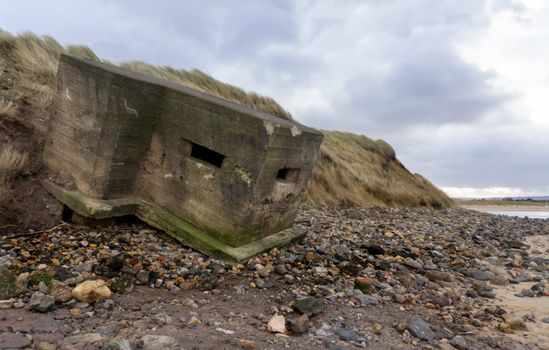
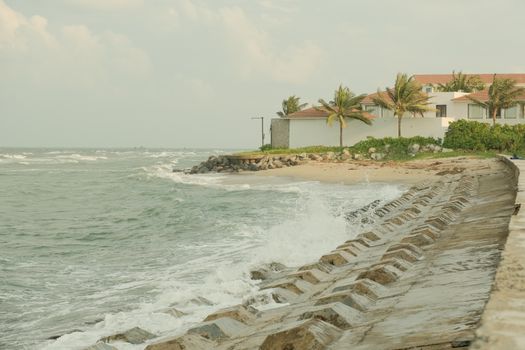
A Coastal Engineer is like a superhero for our beaches, coastlines, and the sea! Their main job is to understand how the sea, waves, and weather affect our shores and then design solutions to protect them. This could involve creating sea walls to stop erosion, designing harbours for ships, or figuring out how to stop floods in coastal towns. They use their knowledge of science and maths to make sure our coasts are safe and sound for people and wildlife, especially with challenges like rising sea levels. They might spend time outdoors looking at beaches and waves, or indoors using computers to model how water moves and design structures. They work on really important projects that help communities, protect habitats, and keep our coastal areas beautiful and safe for everyone to enjoy. It's a job where you get to use your brain to solve real-world problems and make a big difference to the environment.

Coastal Engineer

Flag Media

Please select a reason for flagging this content.

📊 Statistics

Average Starting Salary

For a graduate Coastal Engineer in the UK, you could expect to earn around 25,000 to 30,000 pounds per year.

Experienced Salary Range

With more experience, a Coastal Engineer in the UK can earn between 35,000 and 60,000 pounds annually, and even more for senior or specialist roles.

Number of Opportunities

While not as common as some other engineering fields, there are regular opportunities for Coastal Engineers across the UK, especially in coastal towns, port cities, and with environmental consultancies, often linked to government projects and climate change initiatives.

🚀 Careers in this path

Flag Media

Please select a reason for flagging this content.

Coastal Protection Officer

Imagine helping to build and look after things like sea walls or sandy beaches to stop the land from being washed away by the sea. You'd be involved in making sure our coastlines are safe from big waves and storms, protecting homes and wildlife.

Flag Media

Please select a reason for flagging this content.

Marine Habitat Restorer

This job is about helping nature bounce back along the coast. You could be involved in planting special grasses to stop erosion, creating new homes for sea animals like crabs and fish, or even helping to grow coral reefs. It's like being a doctor for the ocean's edge!

Flag Media

Please select a reason for flagging this content.

Waterfront Development Planner

If you like thinking about how towns and cities grow, this could be for you. You'd help decide where new jetties, marinas, or lovely beachside parks should go, making sure they're built in a way that's good for people and doesn't harm the sea or land.

Build Your Foundations

Excel in STEM Subjects

Focus on getting good grades in Science, Technology, Engineering, and Maths (STEM) subjects, especially Physics and Maths. These are the building blocks for understanding coastal engineering.

At school, aim for high marks in subjects like Physics, Maths, Chemistry, and even Geography. Physics helps you understand forces and movement, Maths is essential for calculations and design, and Geography gives you a better grasp of natural processes like erosion and weather. These subjects will be crucial for university applications and the foundational knowledge required for engineering.

Explore Your Interests

Get curious about the sea, beaches, and how things are built. Read books, watch documentaries, or visit coastal areas to see engineering in action.

Start exploring your interest in coasts by visiting places like beaches, harbours, or even looking at pictures of coastal defence projects. Pay attention to how waves interact with the land, what structures are in place, and what challenges these areas face. Reading up on environmental issues affecting coasts, like sea-level rise, can also spark your interest and give you a head start on understanding the importance of this career.

Join Clubs & Activities

Look for school clubs or local groups related to science, engineering, or environmental protection. This is a great way to learn more and meet like-minded people.

Participating in school science clubs, robotics clubs, or even environmental groups like beach clean-up initiatives can be really beneficial. These activities can help develop problem-solving skills, teamwork, and an understanding of environmental conservation. They also look great on future university applications, showing your passion and commitment beyond just classroom learning.

Academic Journey

Choose A-Levels Wisely

When you choose your A-levels (or equivalent qualifications), make sure to pick subjects that universities will look for in engineering degrees.

For a university degree in Civil Engineering, Ocean Engineering, or a related field, A-levels in Maths and Physics are usually essential. Further Maths, Chemistry, and Geography can also be very helpful and are often preferred or recommended by universities. These subjects provide the strong theoretical background needed for an engineering degree and open up a wider range of university course options.

Go to University

Study for a degree in Civil Engineering, Coastal Engineering, or a similar subject at a university.

A Bachelor's degree (BEng or MEng) in Civil Engineering is the most common path, often with modules or specialisations in hydraulics, water resources, or coastal management. Some universities offer specific Coastal or Ocean Engineering degrees. An MEng (Master of Engineering) is a four-year integrated degree that often includes more advanced study and is a good option if you want to become a Chartered Engineer later on. Look for courses accredited by the Institution of Civil Engineers (ICE) or similar professional bodies.

Seek Work Experience

Try to get some work experience during your university holidays. This could be with an engineering firm, a local council, or an environmental organisation.

Internships or summer placements with engineering consultancies, construction companies working on coastal projects, or even government agencies dealing with coastal management, are incredibly valuable. They give you a real taste of the job, help you apply your academic knowledge, and build your professional network. Sometimes these placements can even lead to graduate job offers!

Start Your Career

Apply for Graduate Roles

After university, look for entry-level positions or graduate schemes with engineering companies that work on coastal projects.

Many large engineering consultancies and some government bodies (like the Environment Agency) offer structured graduate programmes. These programmes often provide excellent training, mentorship, and a clear path towards professional qualification. Look for roles that specify involvement in marine, water, or civil engineering projects with a coastal focus.

Work Towards Chartership

Begin working towards becoming a Chartered Engineer. This is a recognised professional qualification that shows you are highly skilled and competent.

Most aspiring engineers work towards becoming a Chartered Engineer (CEng) through professional bodies like the Institution of Civil Engineers (ICE). This usually involves several years of supervised practical experience, recording your professional development, and passing a professional review. Being chartered significantly boosts your career prospects, earning potential, and allows you to take on more responsibility and leadership roles.

Continuous Learning & Specialisation

Keep learning throughout your career and consider specialising in a particular area of coastal engineering.

The field of coastal engineering is always evolving, especially with new technologies and the challenges of climate change. Attend workshops, conferences, and undertake further training to stay up-to-date. You might choose to specialise in areas like flood defence design, port and harbour engineering, offshore renewable energy, coastal modelling, or nature-based solutions. This continuous professional development ensures you remain at the forefront of the industry.

🎬 Useful Videos

🎯 View Apprenticeships

Explore relevant apprenticeships that can help you kickstart your career in Coastal Engineer. Apprenticeships offer hands-on experience and training while earning a wage.

Career Progressions

This page showcases various career options and the pathways to reach them. Each career listed here shares transferable skills and knowledge, making it easier for individuals to transition between them.

Your current career is highlighted to help you see how it fits into the broader landscape of potential career choices. By clicking on any career, you can learn more about it, including the training and education required to pursue it.

Remember, progressing in your career often involves further learning and training. This page provides insights into future career options as well as those that can lead up to your current one.

These career progression decisions are informed by comparing the skills and knowledge needed for different occupations, along with data on how people move between them. Explore the possibilities and discover the exciting journey ahead in your career!

Sample Qualifications

A Coastal Engineer typically applies principles of civil engineering to design, construct, and maintain coastal structures, manage coastal erosion, and protect coastlines from natural hazards, aligning closely with the broader scope of a Civil Engineer.

How to become

You can get into this job through:

  • a university course
  • a college course
  • an apprenticeship
  • working towards this role

University

You can do a foundation degree, higher national diploma or degree in civil engineering.

Many universities specialise in particular areas of civil engineering, like:

  • transport engineering
  • environmental engineering
  • coastal and maritime engineering

You can search for accredited courses through the Institution of Civil Engineers. Some courses include a work placement, which can be useful for making industry contacts to help you find work after university.

You can also do further study for a postgraduate master's qualification in civil engineering, if you've got a degree in a related subject like maths, science or geology.

Entry requirements

You'll usually need:

  • 2 or 3 A levels, or equivalent, including maths and a science for a degree
  • a degree in a relevant subject for postgraduate study

More Information

College

You could take a course at college, which might help you to get work as a trainee civil engineer, or to apply for further study at university.

Subjects include:

  • civil engineering
  • maths, physics or geography
  • construction and the built environment

Entry requirements

Entry requirements for these courses vary.

More Information

Apprenticeship

You can apply to do a Civil Engineer Level 6 Degree Apprenticeship with an engineering or construction company.

This takes around 5 years to complete.

Entry requirements

You'll usually need:

  • 4 or 5 GCSEs at grades 9 to 4 (A* to C) and A levels, or equivalent, for a higher or degree apprenticeship

More Information

Work

You could work as a civil engineering technician and study on the job for a degree or apprenticeship.

You'll usually need 5 GCSEs at grades 9 to 4 (A* to C), or equivalent, including English, maths and science. Employers may also look for 1 or 2 A levels, or equivalent qualifications.

More Information

Professional and industry bodies

You can join the Institution of Civil Engineers (ICE) for professional development opportunities and to make industry contacts.

Further information

You can learn more about how to become a civil engineer from the Institution of Civil Engineers (ICE).

Interested in More Career Paths?

Explore other careers or use our AI to discover personalised paths based on your interests.

Stay connected

Join our newsletter to stay up to date on features and releases

Address
Developing Experts Limited
Exchange Street Buildings
35-37 Exchange Street
Norwich
NR2 1DP
UK

Phone
01603 273515

Email
[email protected]

Copyright 2026 Developing Experts, All rights reserved.
